Palm Trees at Bordighera by Claude Monet
Claude Monet's 'Palm Trees at Bordighera,' painted in 1884, captures the distinct light and exotic flora of the Italian Riviera, a departure from his more famous French landscapes. This oil painting, held at The Metropolitan Museum of Art, showcases his fascination with new environments.
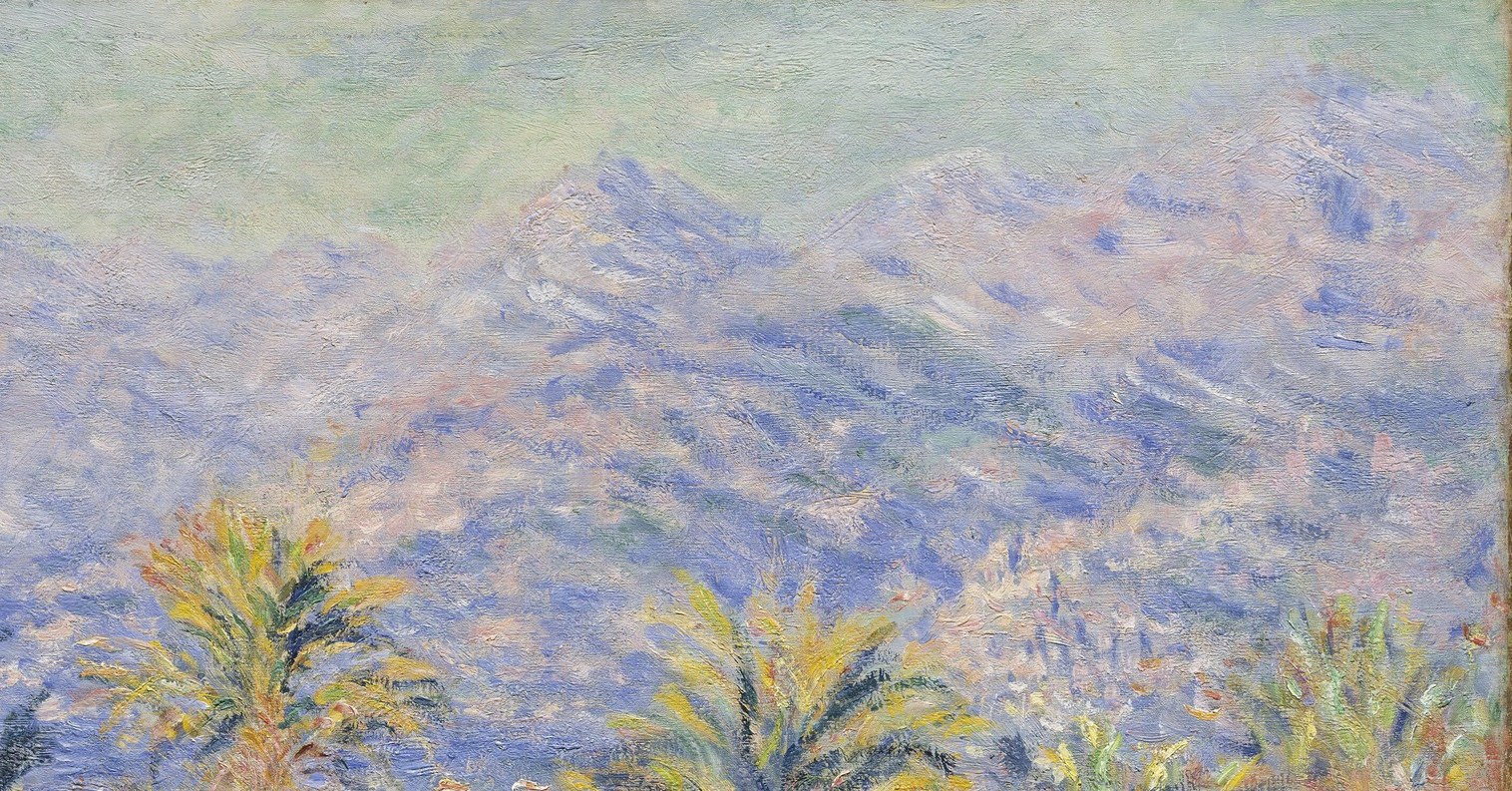
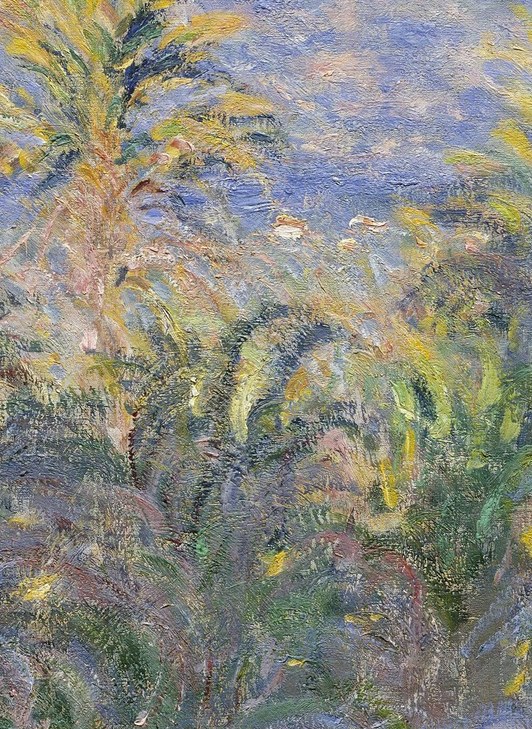
Look for the thick, expressive brushstrokes that give the palm tree trunks a tactile quality. Then, let your eye wander to the middle distance, where tiny specks of buildings reveal the hidden town of Bordighera, giving scale to the natural grandeur.
Monet journeyed to Bordighera in 1884, drawn by the vibrant colors and unique Mediterranean light. This trip marked a period of intense artistic exploration, as he sought to capture the essence of these new surroundings through his Impressionistic lens. The subtle details, like the wildflowers in the foreground, invite a closer, more personal viewing of his work.
What other hidden details do you notice in his work?
Details
Transcript
Monet painted this, but it’s not his usual water lilies. In 1884, he traveled to the Mediterranean coast of Italy. The light here, on palm trees and hazy mountains, captivated him. He used thick impasto strokes for the rough palm trunks. But look closely in the middle distance. Tiny buildings hint at a town, Bordighera, nestled in the landscape. He also painted delicate pink and white wildflowers into the foreground.