Hunting near Hartenfels Castle by Lucas Cranach the Elder
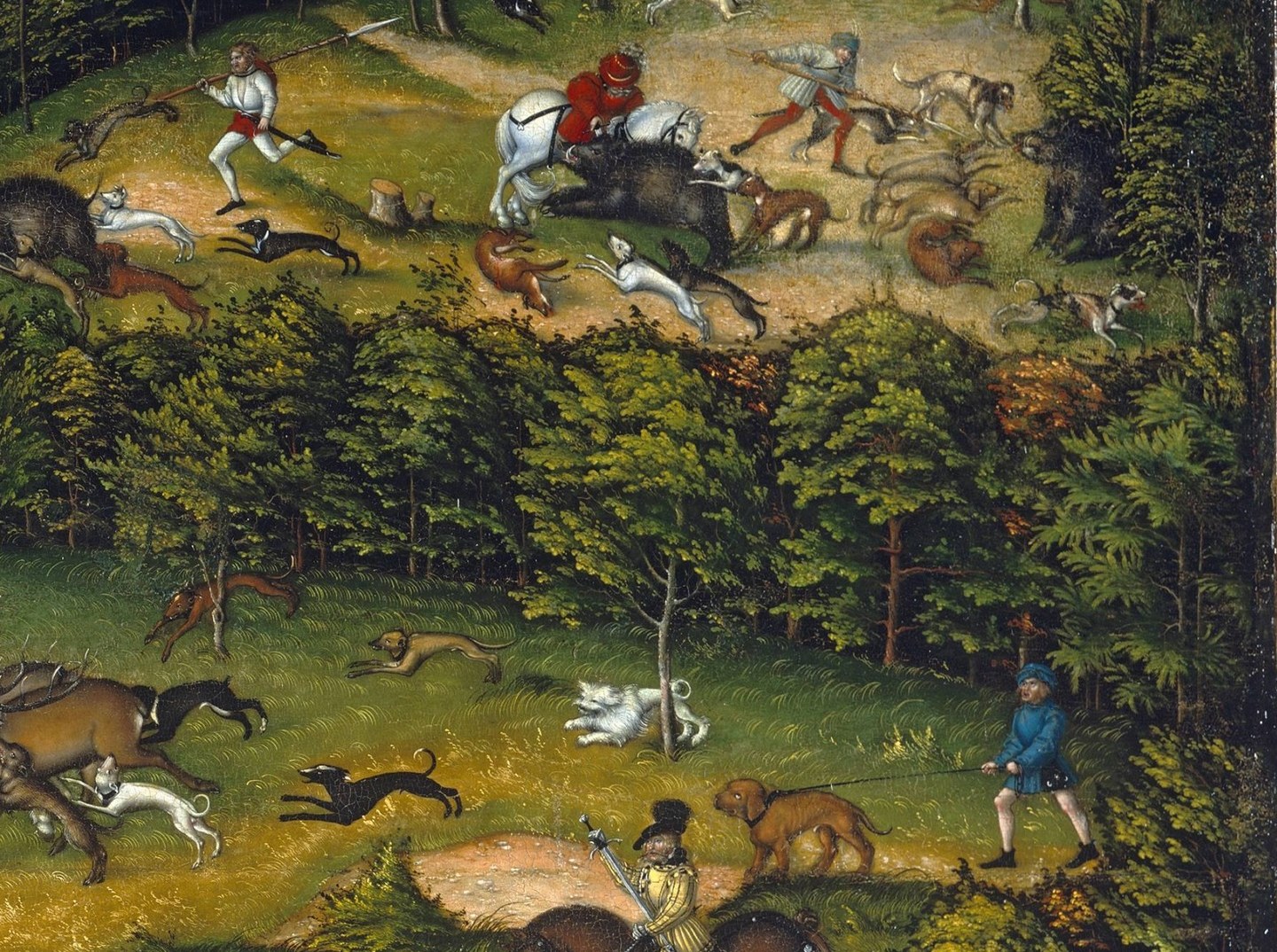
Lucas Cranach the Elder's 'Hunting near Hartenfels Castle' (1540) is not a romantic vision of the chase. It is a precise, almost bureaucratic depiction of a managed massacre. The painting is currently held at the Cleveland Museum of Art, a jewel of the German Renaissance that records the absolute, unequaled power of Cranach's patron.
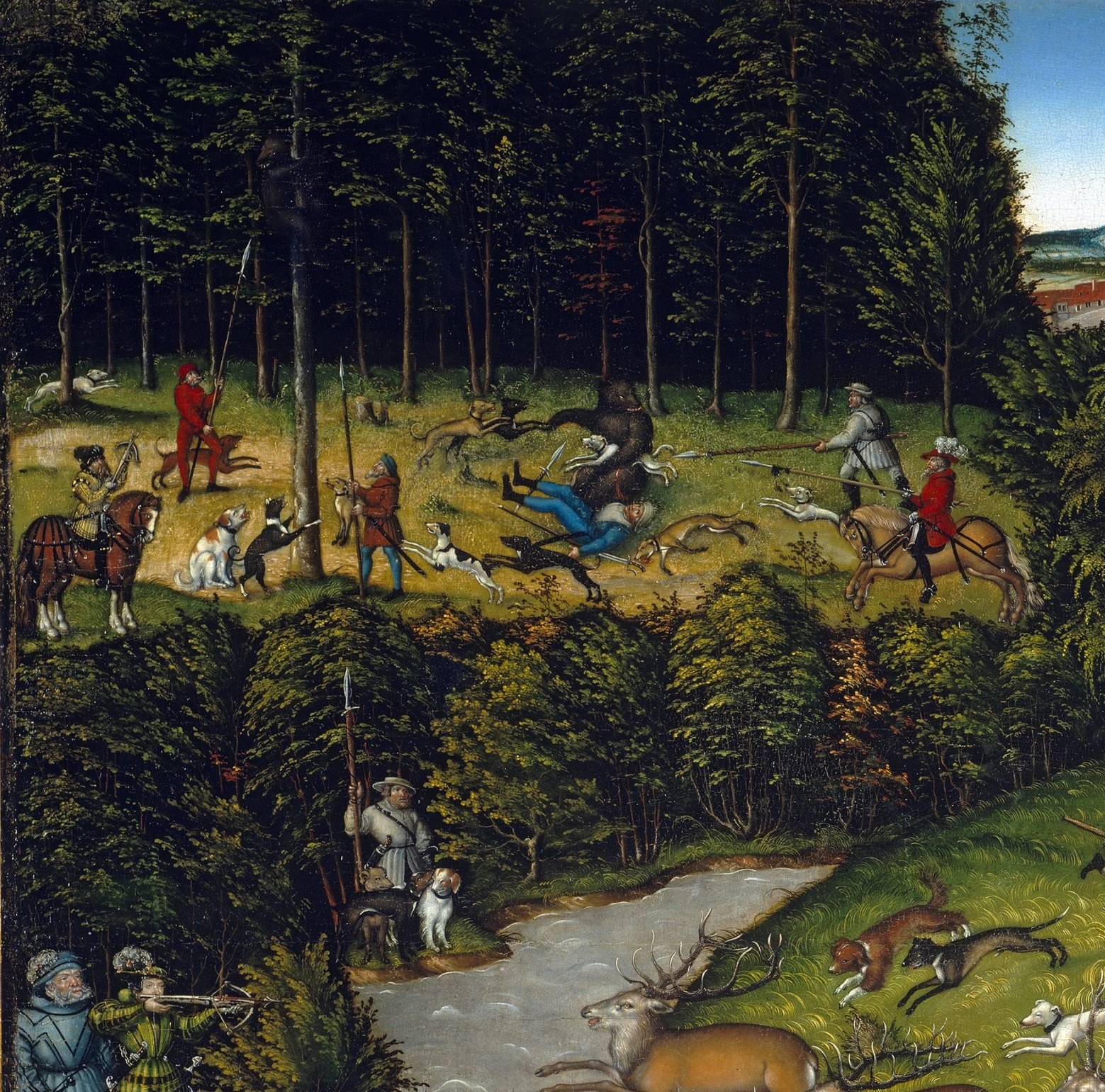
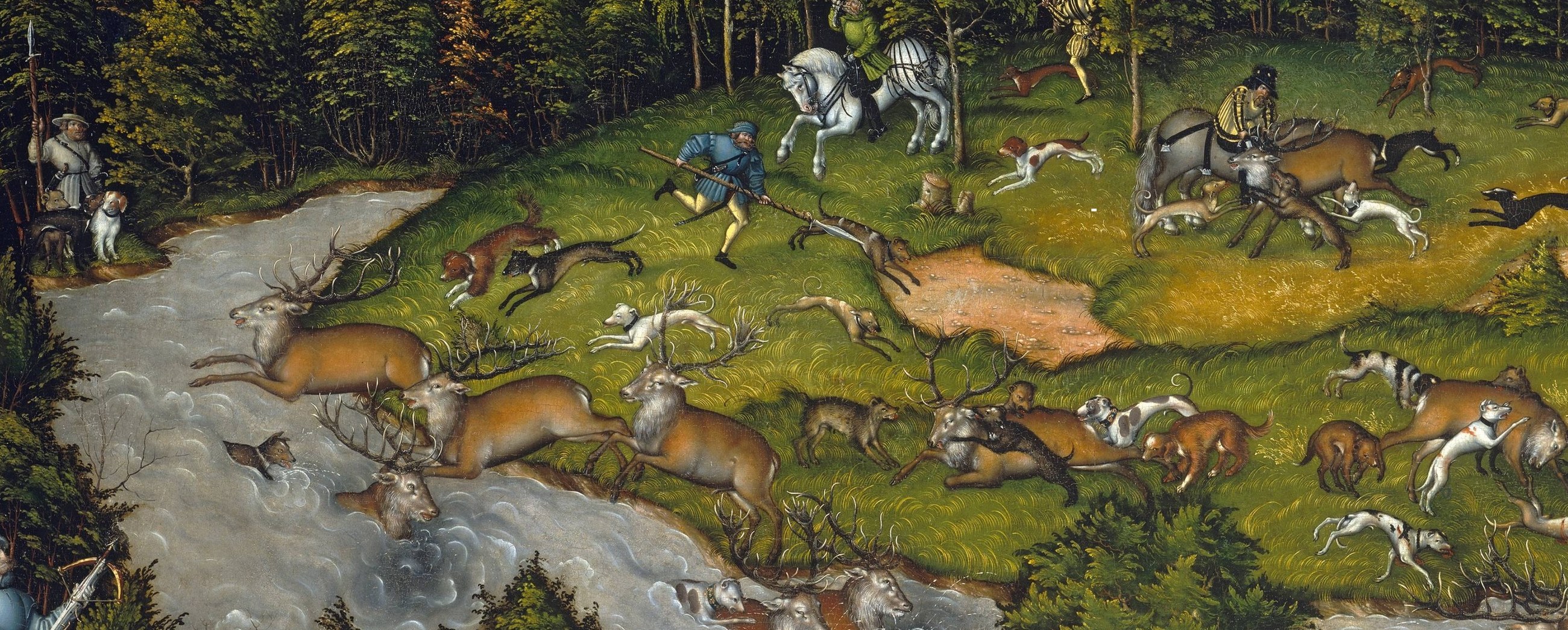
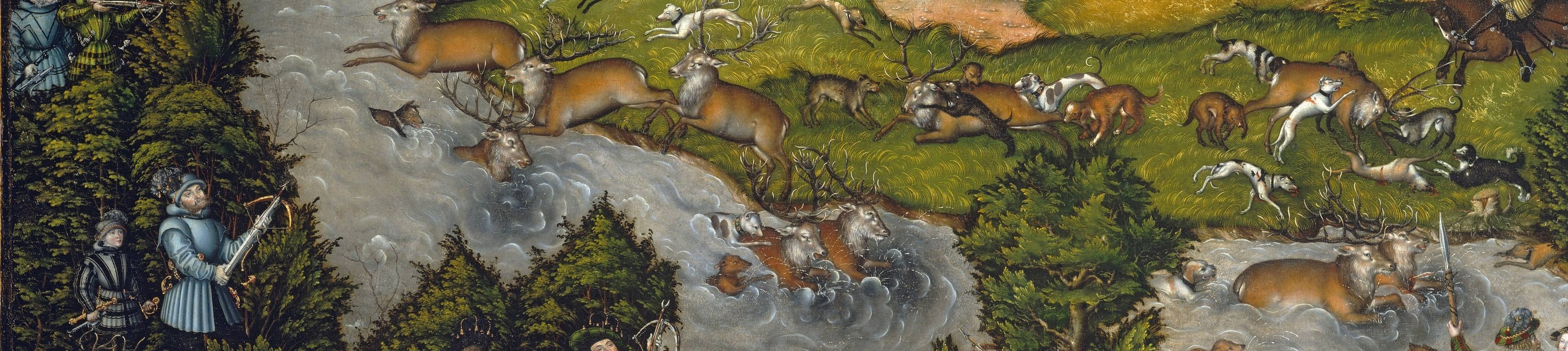
Look past the bright colors and the sense of motion. The deep green forest does not represent untouched nature. It forms the dark, impenetrable walls of an arena. Inside this theater, dozens of deer are driven into a dense mass, corralled together in a clearing. The river cuts diagonally across the scene, a calculated geographical trap where animals slow down and become easy targets for the waiting horsemen. Every element, from the beater figures on the left margin to the gilded boat of spectators, reinforces the choreography of a staged spectacle.
Cranach served as court painter to the Electors of Saxony for most of his career, a position he held under three successive rulers. He was more than an artist; he was a close friend of Martin Luther and a central witness to the Reformation. This painting, however, is a secular record of feudal dominion. Year after year, Cranach painted these elaborate hunts, commemorating the Elector's power over his lands and his beasts. The hunt was not a sporting chance. It was a ritualized display of absolute control, a violent ballet performed for an invited audience.
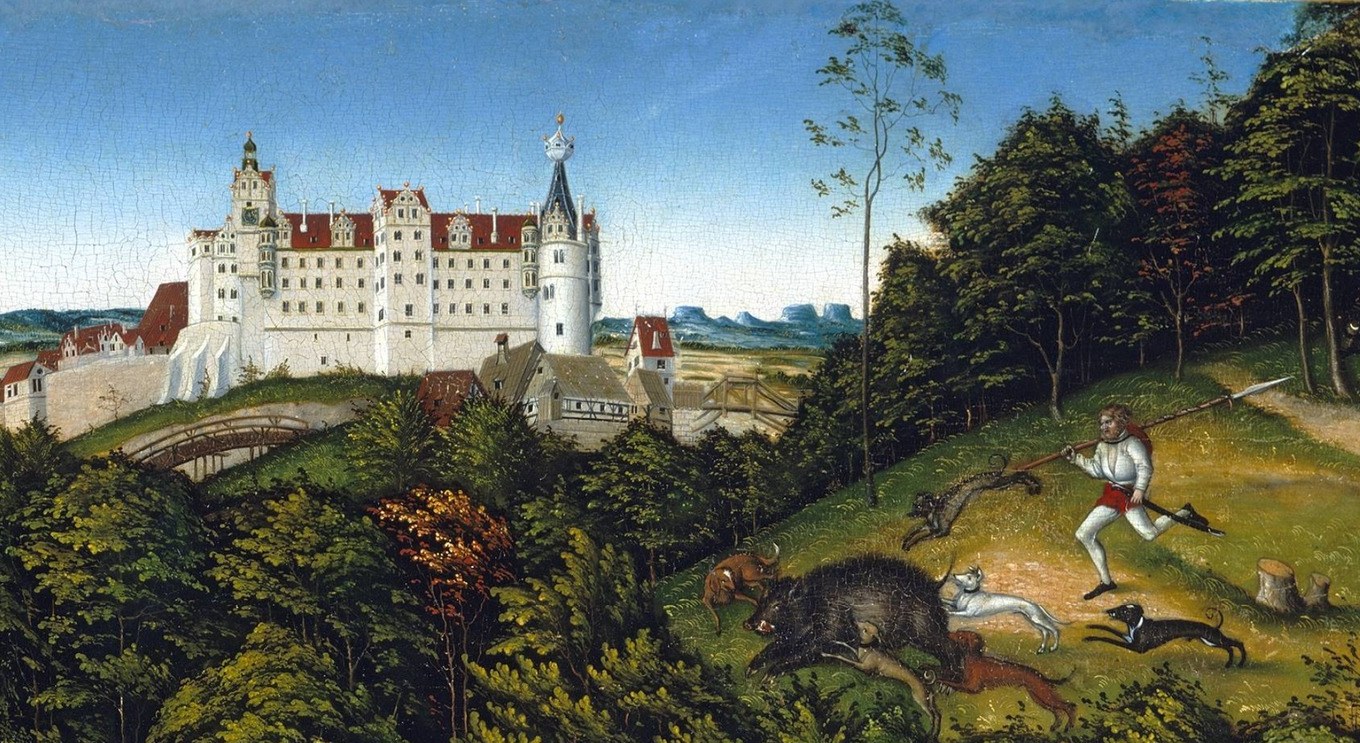
The elevated castle on the hilltop, Hartenfels, anchors the scene geographically, naming the seat of the power being celebrated. The painting functions as a historical document, affirming that nothing on this land, not even a wild boar, escaped the Elector's reach.
Details
Transcript
At first glance, a lively Renaissance hunt. But look closer. This is not wilderness. The dark forest forms the walls of a managed arena. Dozens of deer are packed together, corralled, not stalked. The river cuts through like a trap, slowing them down for the kill. Cranach painted this for the Elector of Saxony in 1540. Year after year, he documented the Elector's ritualized power. A spectacle designed to turn a forest into a killing floor.