A Bog with Peat Cutters. Høsterkøb, North Zealand by Fritz Petzholdt
Fritz Petzholdt painted A Bog with Peat Cutters. Høsterkøb, North Zealand in 1828, and it is now in the collection of Statens Museum for Kunst. The painting is a document of a pre-industrial fuel economy. Before coal and oil, peat was the primary heating fuel across much of northern Europe, cut by hand from bogs and dried on tall wooden frames.
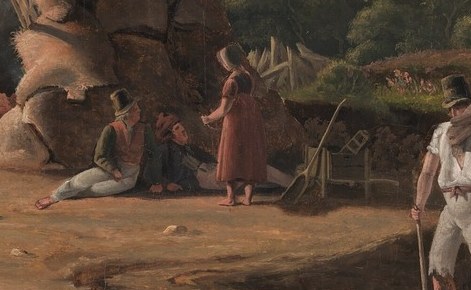
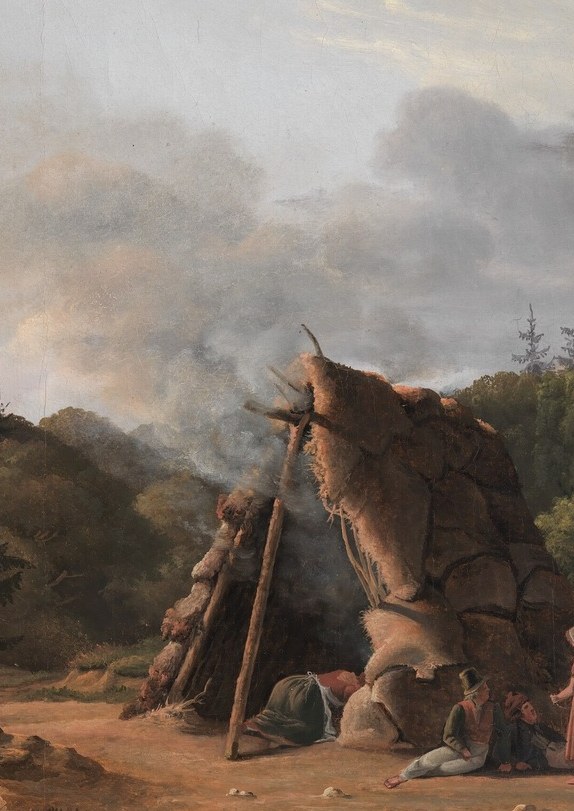
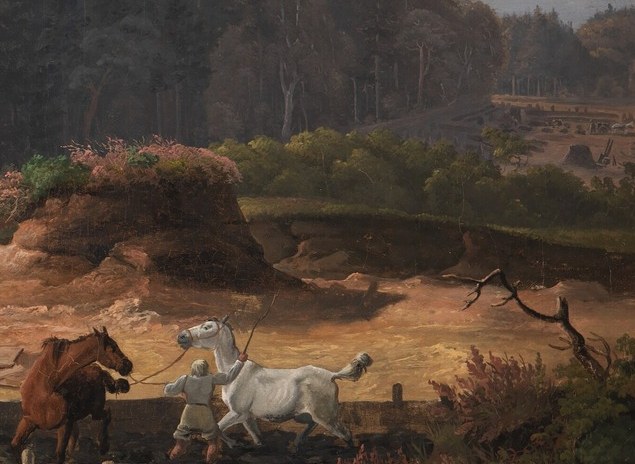
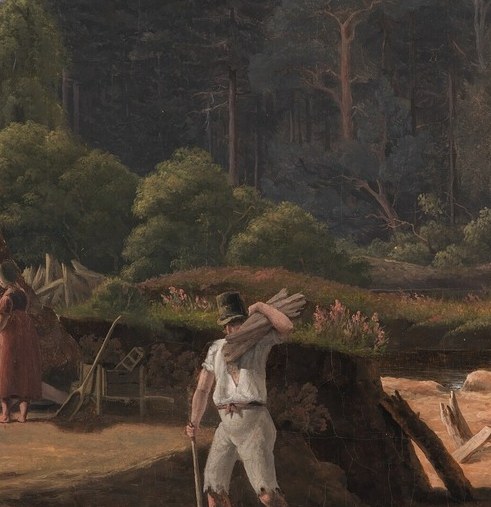
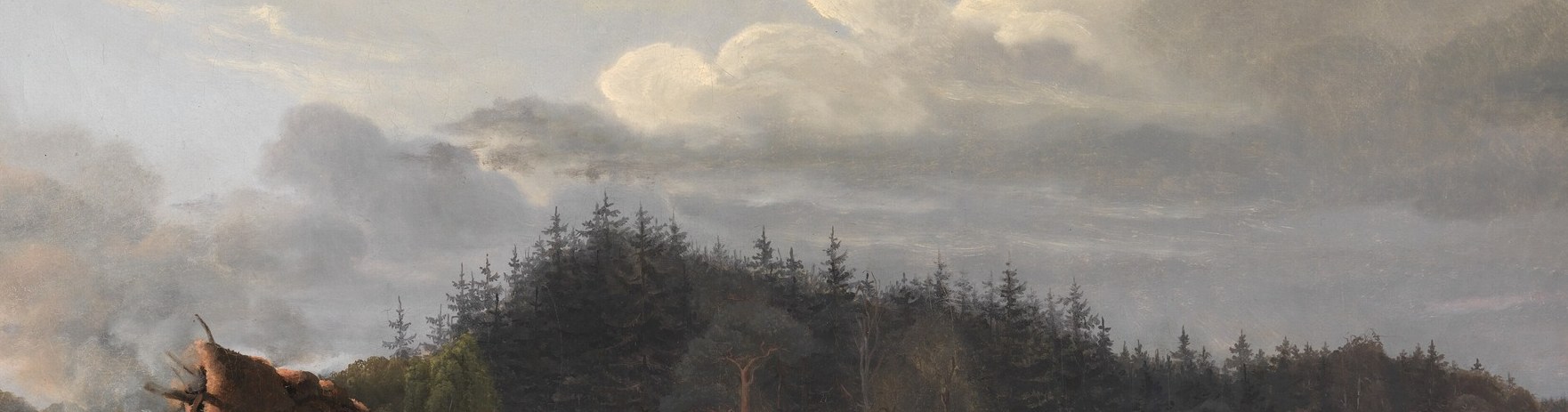
The painting reads like a diagram of that labor. The central worker bends to cut. Stacked blocks wait to be dried. The tall tripod on the left is the drying frame. A horse and cart at the right edge carry the finished fuel away. Every stage of the process, from excavation to transport, is visible in a single landscape view.
Petzholdt was a Danish landscape painter of the Copenhagen School, part of the Golden Age of Danish Painting. He spent much of his career in Italy but painted this scene of his native Zealand at age 23. He died young, possibly by suicide, just ten years later. His work bridges local Danish subjects with the atmospheric ambition of German Romanticism, visible here in the dramatic, light-struck clouds that lift a working bog into something sublime.
What daily labor do you see in the landscape around you that future centuries might find unrecognizable?
Details
Transcript
1828. A Danish bog. Workers cut black fuel from the earth. Look at these stacked dark blocks on the left. That is peat, the fuel that heated homes before coal. Now look behind him. A tall wooden tripod. Cut peat was stacked on the frame to dry for burning. The cart carries dried peat away from the bog. The painter recorded a whole vanished fuel economy here.