Salome Dancing before Herod by http://www.wikidata.org/.well-known/genid/c5eaa3919b92775d1d0a8554c314012e
This is Salome Dancing before Herod, painted around 1500 by an anonymous master now called the Master of the Drapery Studies. It hangs in the Musée des Beaux-Arts de Dijon. The painter is unknown, but his obsession is visible everywhere in this work: how cloth and flat decorated surfaces can build a convincing space.
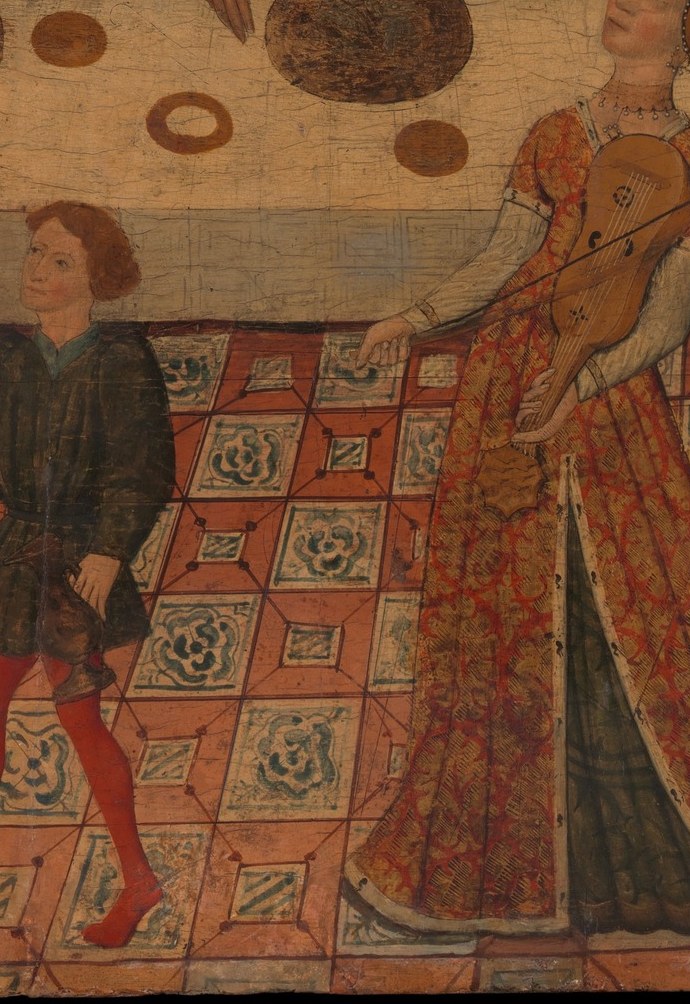
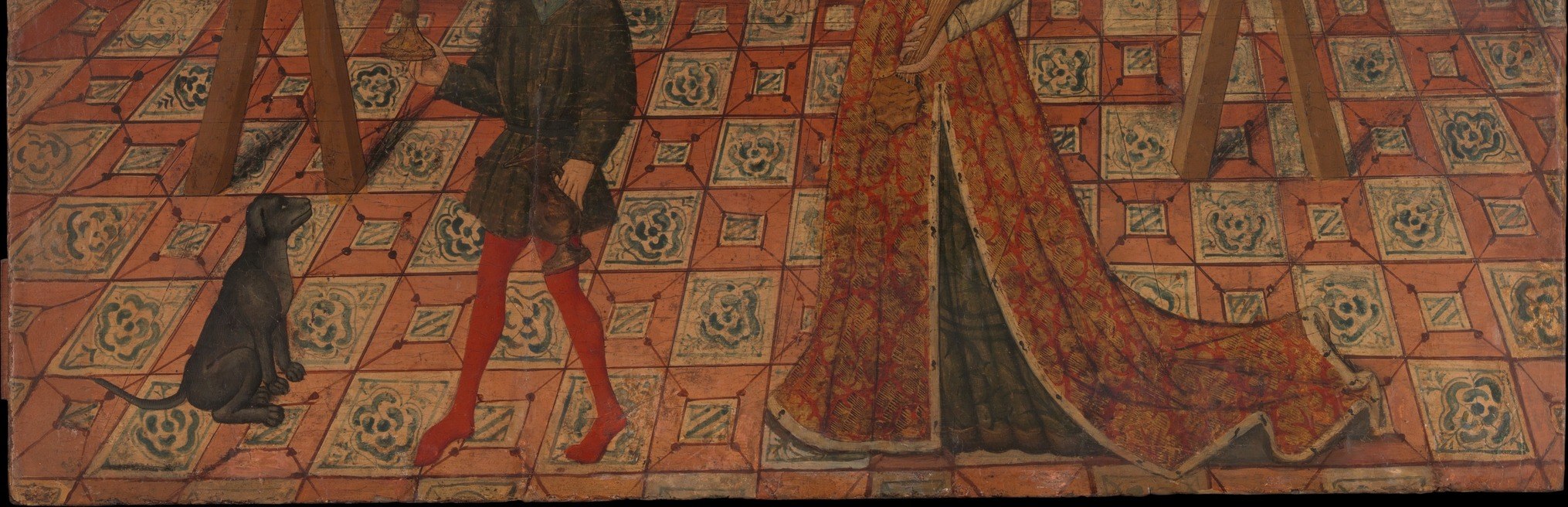
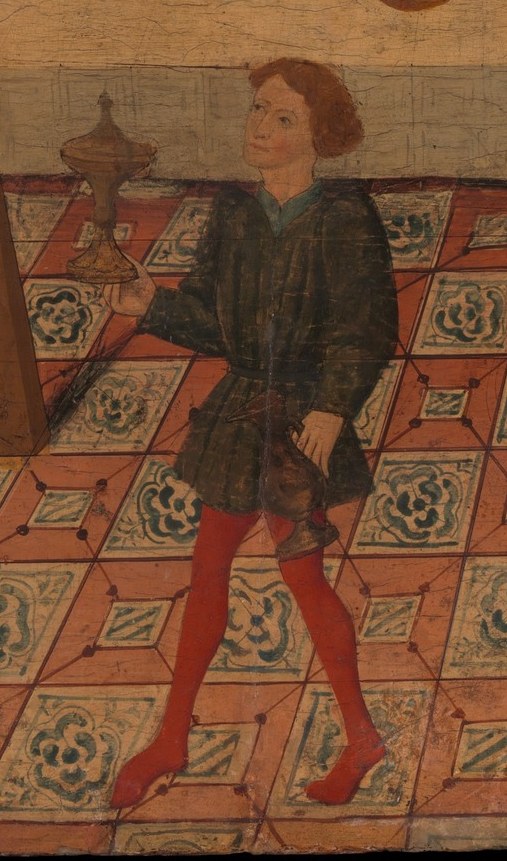
The first thing that holds the eye is obvious, the dancer in the red hat and gold gown, her body in motion before a seated king. But the real structural feat is underfoot. That geometric carpet is not just decoration. It is a perspective machine. Each colored tile is drawn to recede toward a single vanishing point behind the banquet table, creating a floor that feels flat and deep at the same time. This is pure geometry, executed freehand in oil on wood.
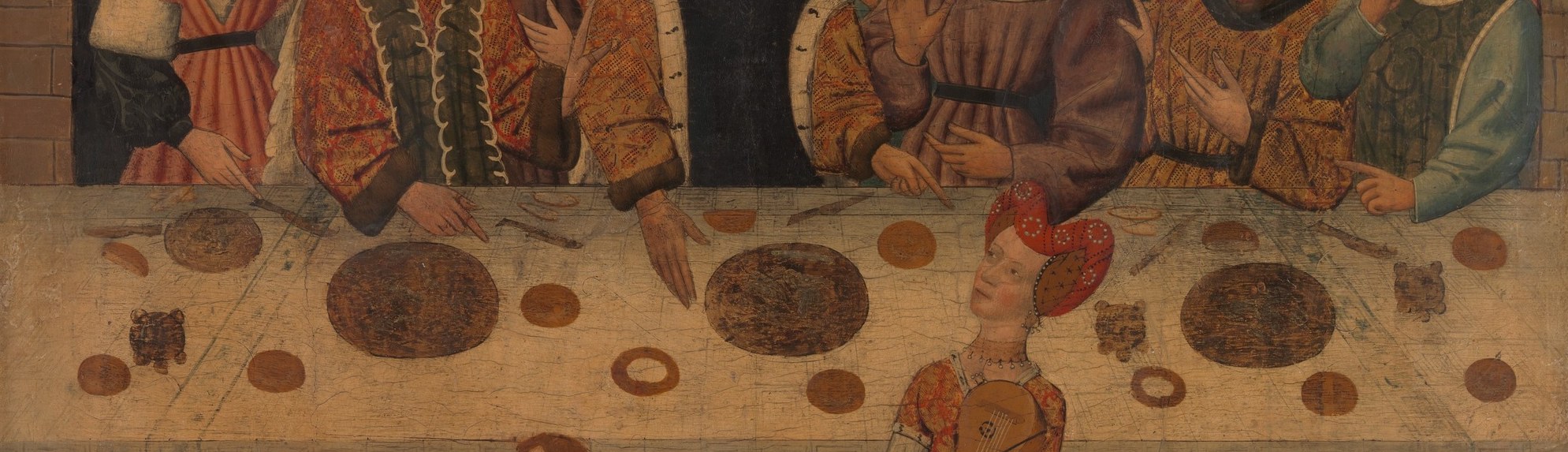
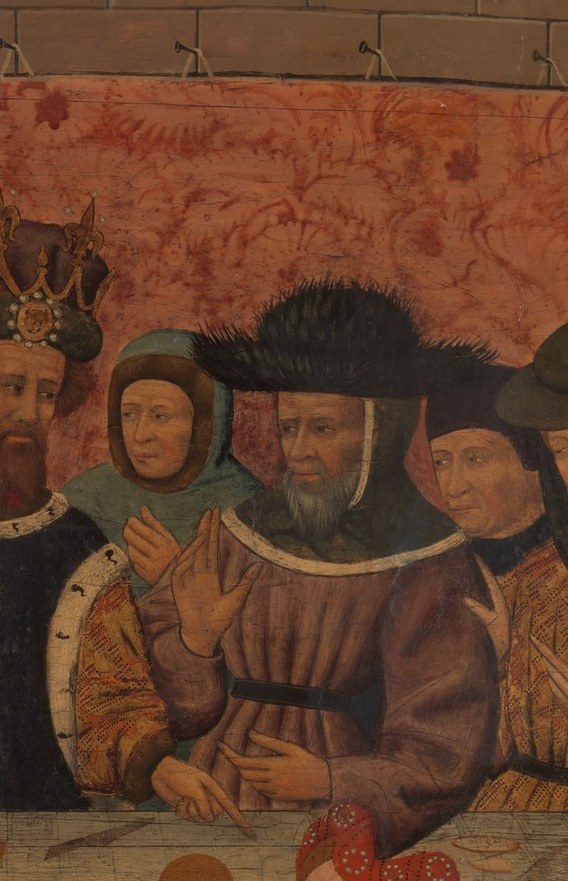
The red tablecloth does the same job horizontally. It stretches across the composition as a band of patterned crimson, visually separating the dancer below from the court above and anchoring the banquet table in space. Together, carpet and cloth create a believable room without any architectural framework, just ornament, rhythm, and a single mathematical idea.
The biblical story is grim: Salome dances, Herod promises her anything, and she asks for the head of John the Baptist. The coins on the table are the reward made visible. But the painter seems most interested in showing you how skillfully he can make a flat panel hold depth, drama, and luxury all at once.
Look again at the tiles. Would you have believed they alone could carry that much space?
Details
Transcript
Four figures. A gold dress. A red hat. She dances. The king watches. Now look down at the floor. Each tile is painted as geometry, not just pattern. The carpet recedes into depth using only flat shapes and a single vanishing point. The tablecloth does the same work laterally, pressing the figures into a believable room. Early 1500s. Northern painters were already solving perspective through ornament.