Seascape (Gravelines) by Seurat, Georges
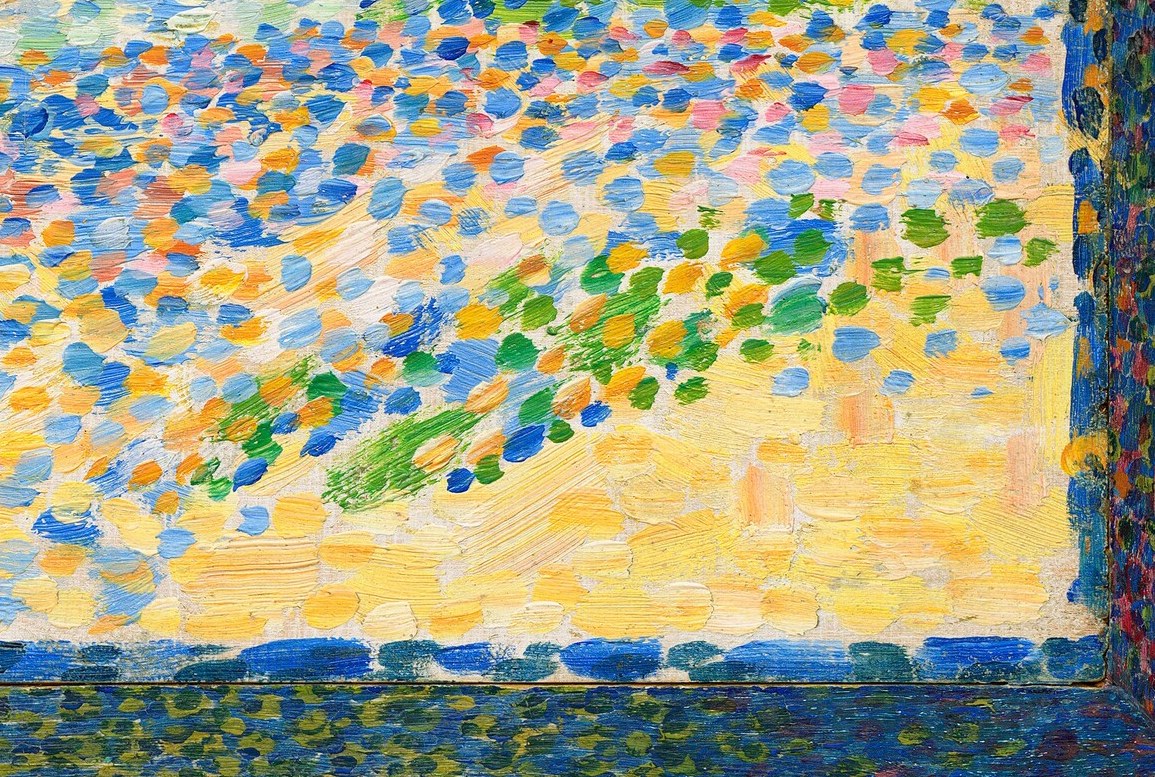
Georges Seurat's *Seascape (Gravelines)*, painted in 1890 and now in a private collection, is a remarkable example of Pointillism, a technique where small, distinct dots of color are applied in patterns to form an image.
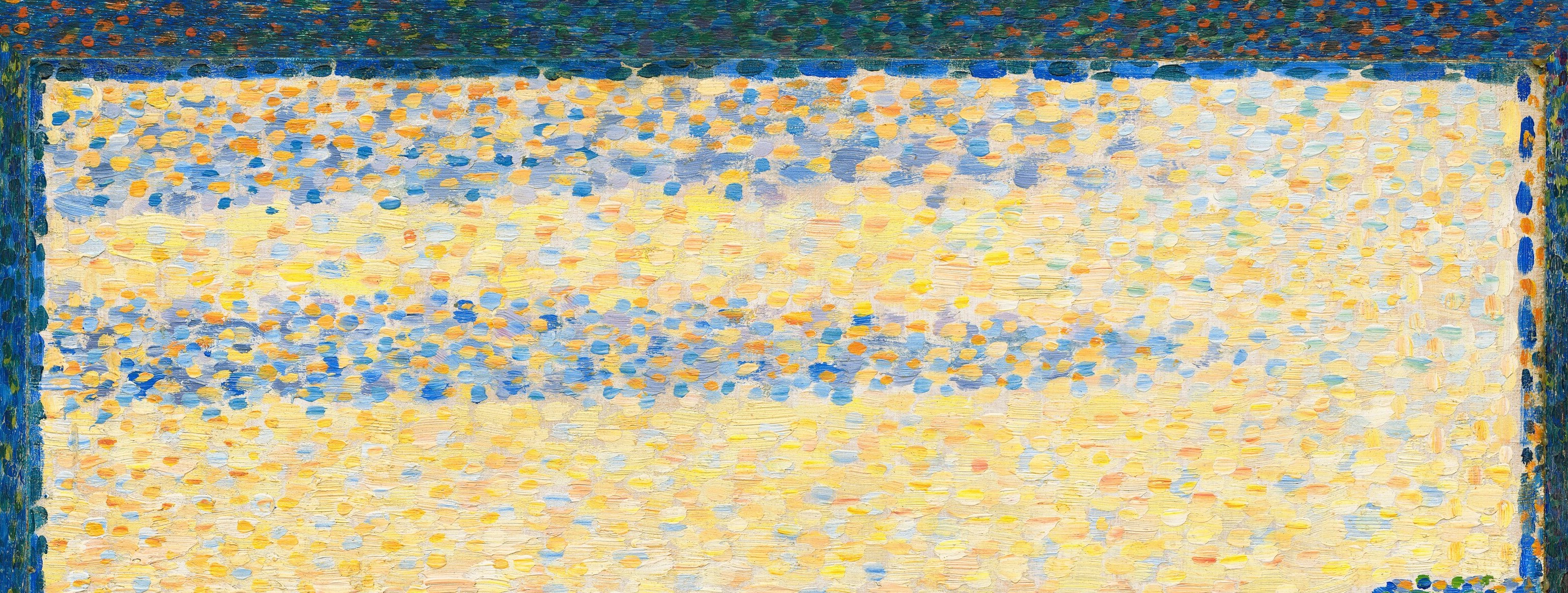
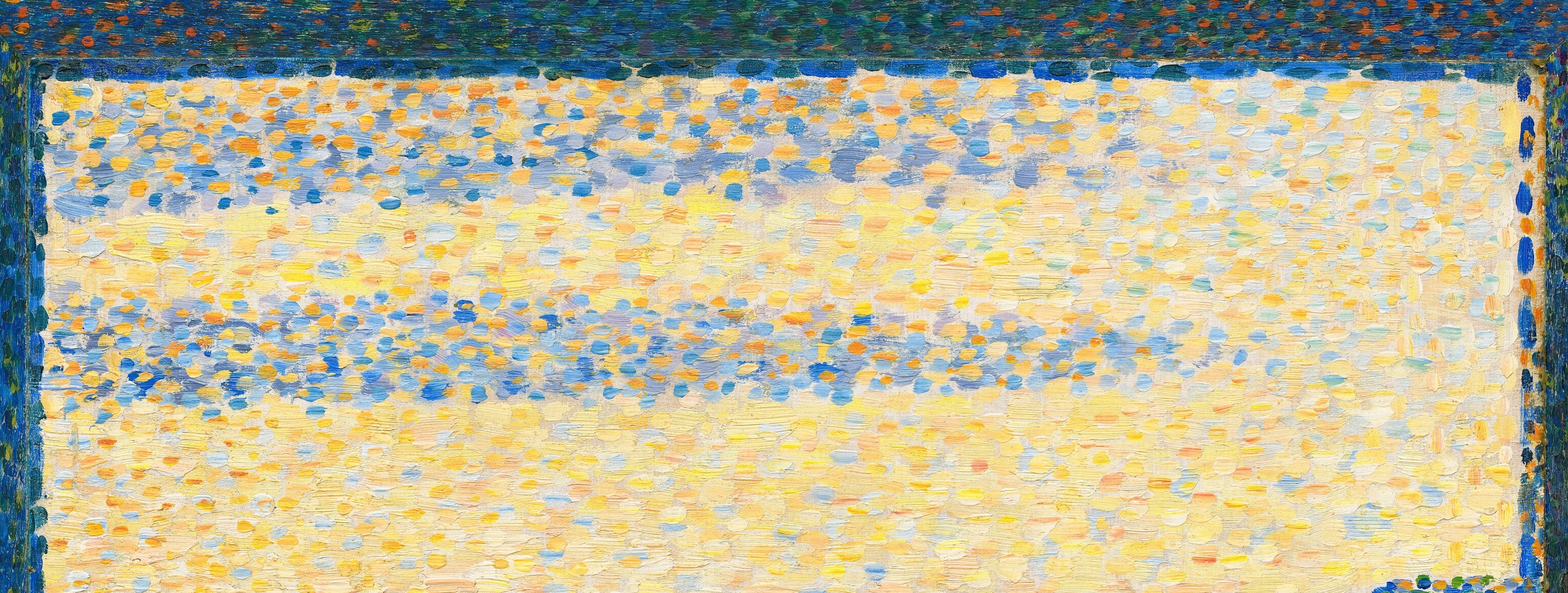
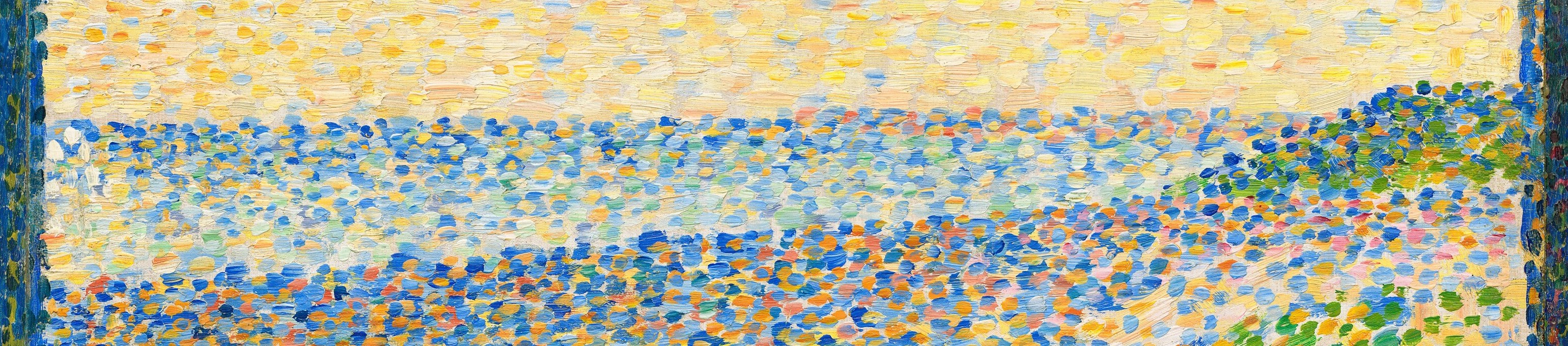
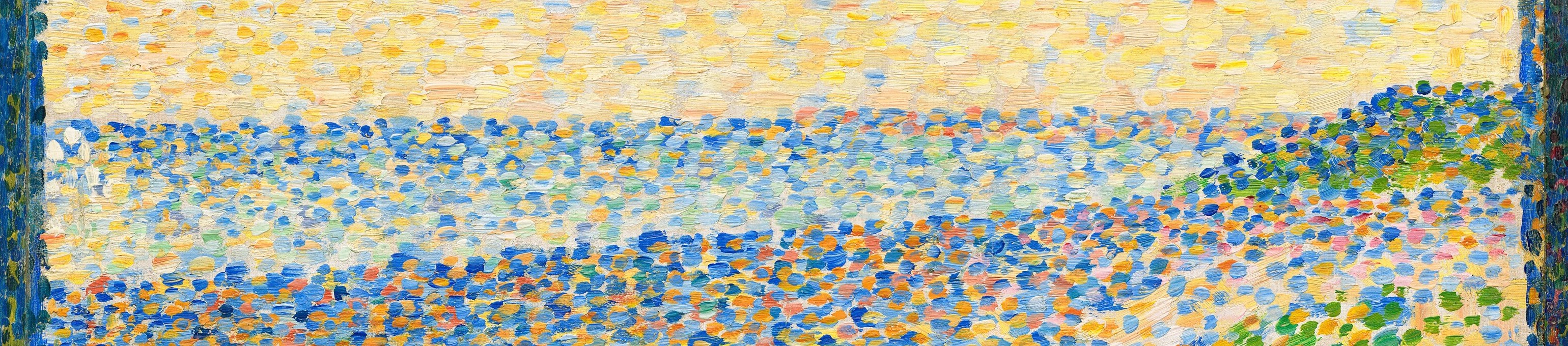
Look closely at how the sky, water, and shoreline are meticulously constructed from these tiny, individual pigment applications. The optical mixing of colors by the viewer's eye creates a vibrant, almost shimmering effect, a hallmark of Seurat's systematic approach to art.
Seurat developed this method to bring a scientific rigor to painting, believing that color could be fragmented and reassembled in the eye to achieve greater luminosity and harmony. This painting captures a serene coastal view, likely from his time spent near Gravelines, France.
It's fascinating to consider how a scene could be rendered with such precision and impact, not through traditional brushstrokes, but by hundreds of thousands of individual points.
Details
Transcript
This isn't a blurry photograph, but a painting from 1890. Look closely at the sky, made of countless tiny dots. This technique, called pointillism, built color from fragmented hues. Seurat applied thick, distinct dots to create this visual texture. It was a systematic, scientific approach to painting light. The artist spent time near Gravelines, where he painted this seascape.