The Colonnade of St. Peter's, Rome, during the Conclave by Hubert Robert
Hubert Robert, a master of architectural fantasies, created 'The Colonnade of St. Peter's, Rome, during the Conclave' in 1769. This oil painting, part of The Cleveland Museum of Art's collection, is a prime example of his unique style, blending reality with imagination.
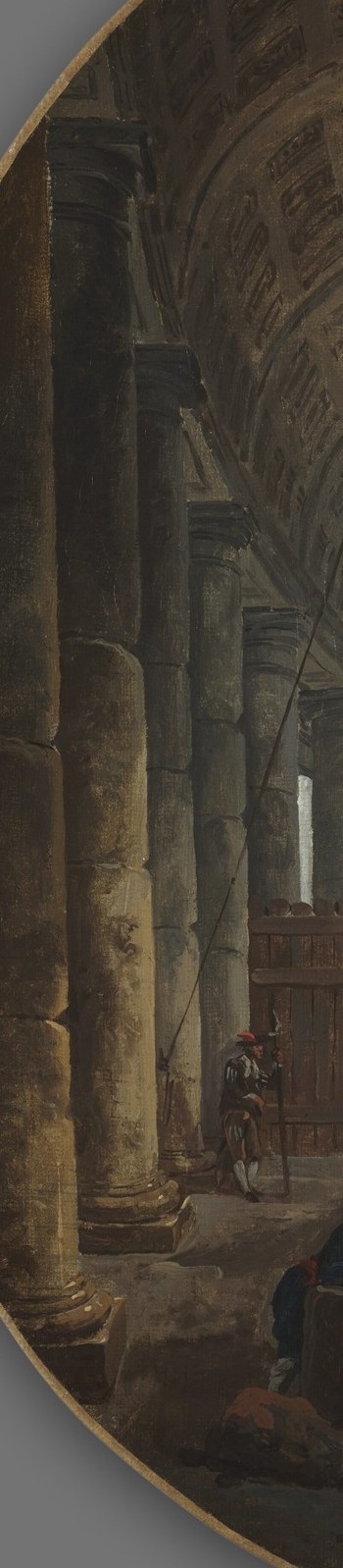
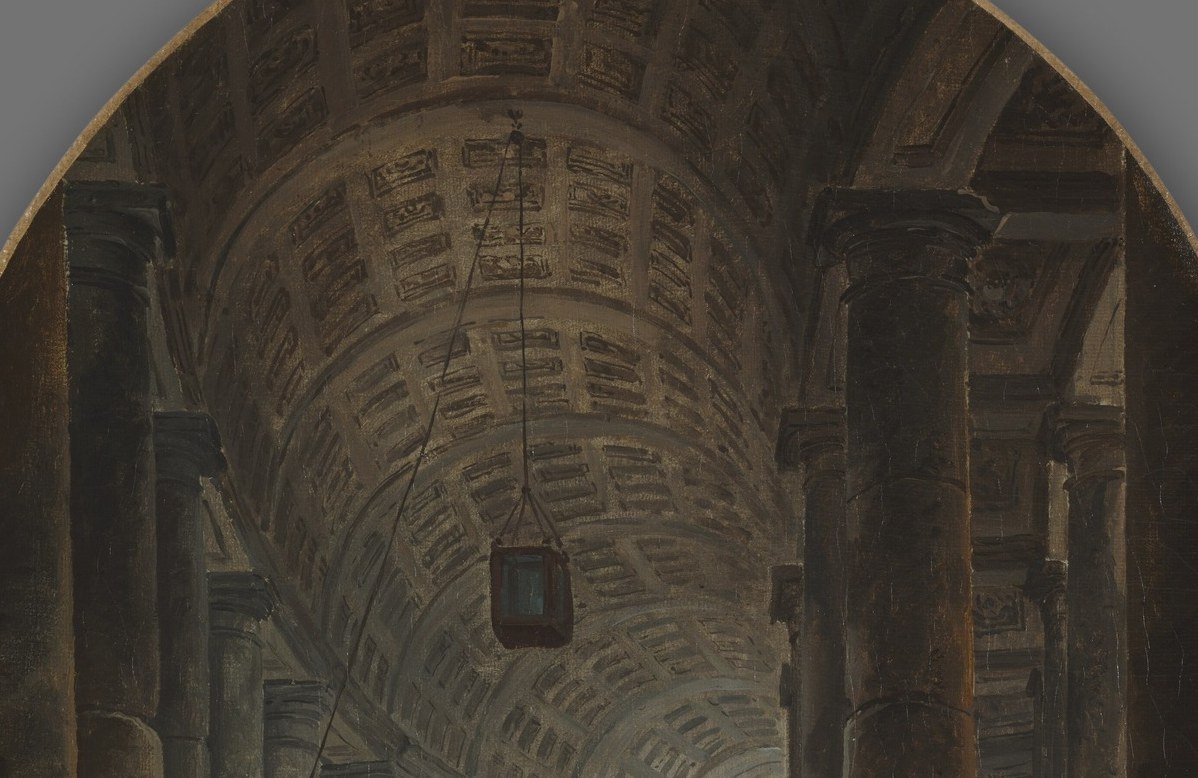
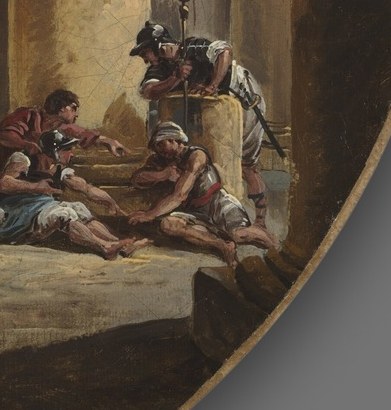
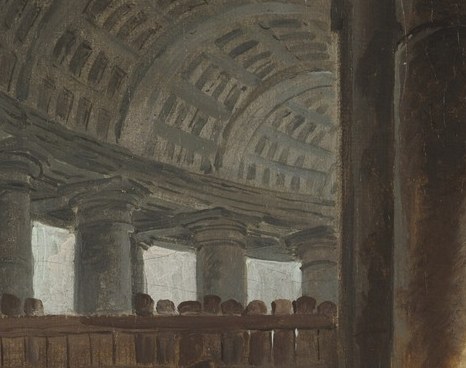
Take a moment to observe the dramatic light shafts and the way the figures, even the man in the blue tunic, are dwarfed by the immense architecture. Robert's skill in combining real elements of St. Peter's with his own invented details, known as 'capricci,' brings a theatrical quality to the scene.
Robert was a prominent French painter associated with Romanticism, famous for his picturesque depictions of ruins and grand architectural settings. He infused historical sites with a sense of both monumental scale and transient human activity, making his paintings compelling narratives.
His works invite us to consider the interplay between human presence and monumental structures. What details do you notice first in this imagined world?
Details
Transcript
This isn't just St. Peter's Colonnade, it's a dramatic reimagining. In 1769, the artist Hubert Robert painted this scene in Rome. Robert often combined real places with his own invented details. Here, two small figures almost disappear into the background. He was known for these 'capricci,' or architectural fantasies. The dramatic shafts of light are entirely his invention. His imagined world still makes us stop and look closer.