The Nativity by Lotto, Lorenzo
View the artwork: The Nativity →
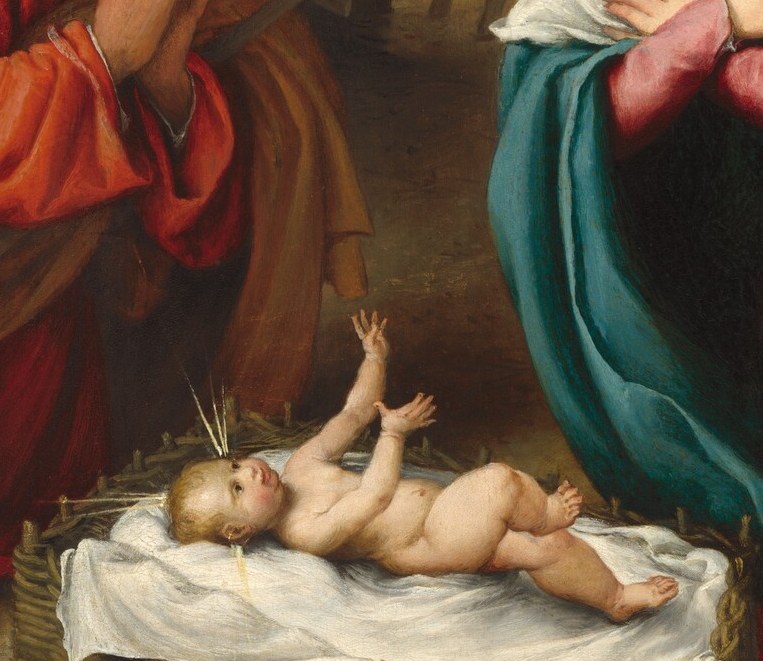
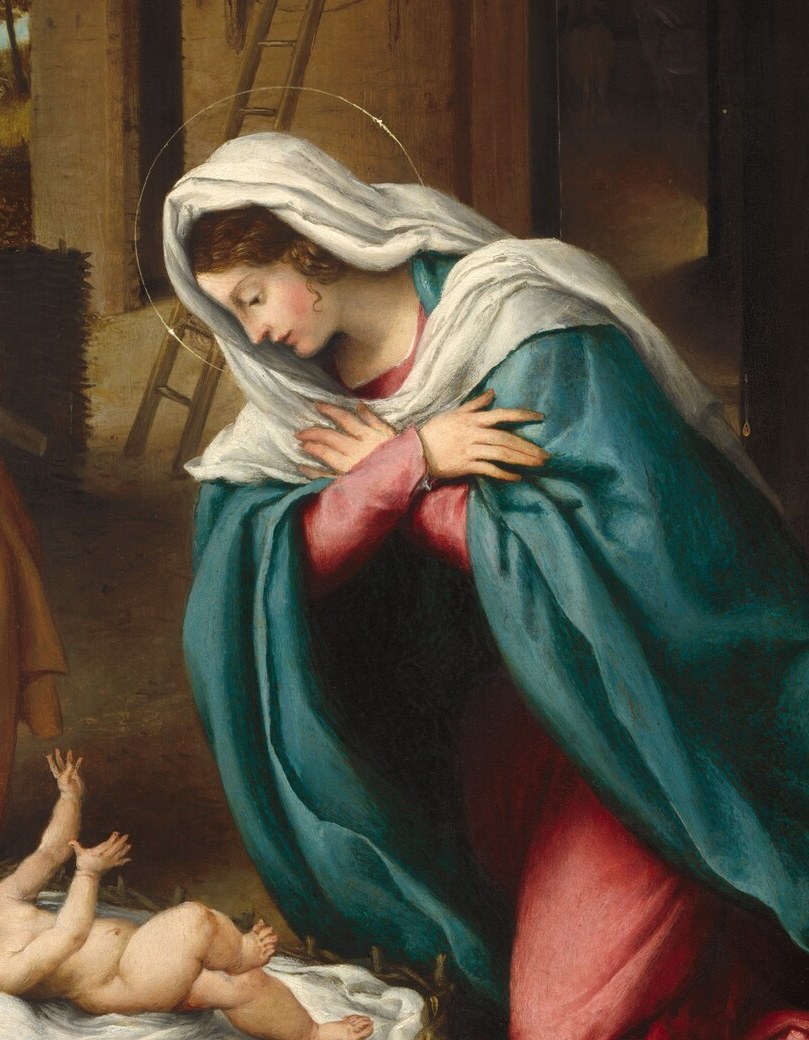
Lorenzo Lotto’s The Nativity, painted in 1523, is a small oil on panel made for someone’s private prayer. It now hangs in the National Gallery of Art in Washington, D.C. The title says Nativity, but the scene is more accurately the Adoration of the Christ Child: only Mary, Joseph, and the infant, no shepherds, no kings. Just two parents and a baby in the straw.
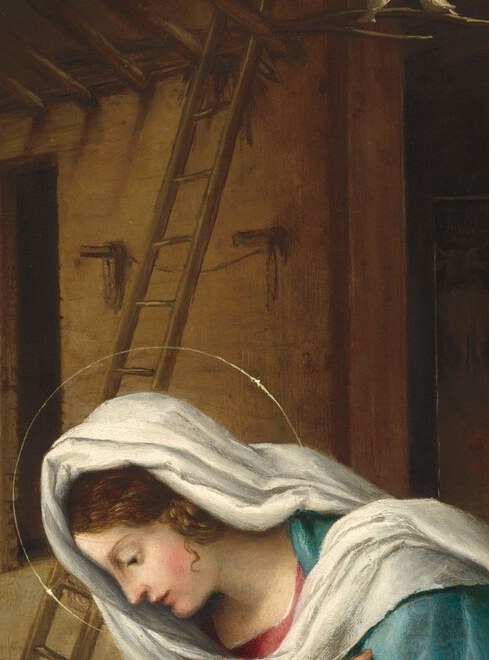
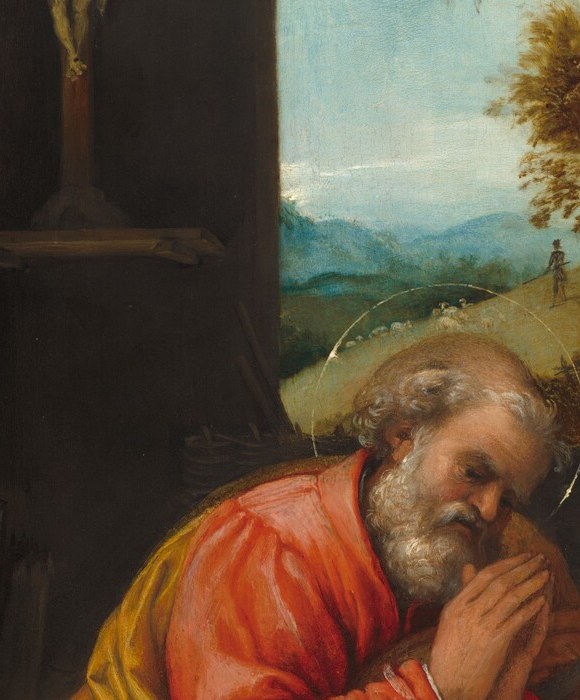
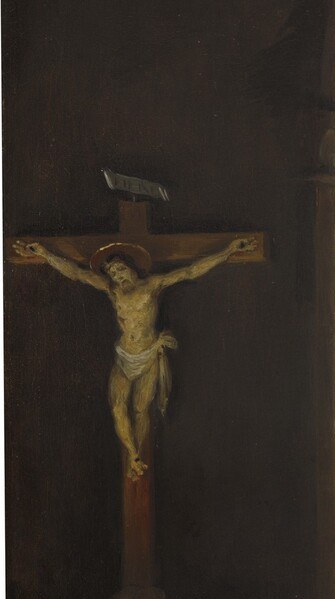
Look first at the faces. Joseph’s eyes are wide, his mouth slightly open in a kind of startled awe. Mary’s expression is quieter, her head inclined, her eyelids heavy. Lotto gives each of them a distinct emotional register: one is wonder meeting the unknown, the other is intimate, knowing love. Then find the crucifix, small and wooden, mounted on the stable wall behind them. It does not belong there historically. Lotto added it after the first layers of paint had dried, a deliberate choice to place the shadow of the Crucifixion inside the scene of the Nativity.
Lotto was a Venetian painter who spent much of his career in the cities of northern Italy, never quite settling into one school or style. His work could be nervous, deeply felt, unafraid of strange details. This painting traveled quietly through private collections in Bergamo and Milan before Samuel H. Kress acquired it in 1937 and brought it to America. He gave it to the National Gallery two years later.
A birth and a death, held in one small wooden panel. Lotto knew what the child in the hay would become, and he made sure anyone kneeling before this painting would know it too.
#arthistory #renaissance #lorenzolotto
Details
Transcript
He was a restless, eccentric painter. When Lorenzo Lotto painted a holy family, he painted real people. Joseph stares, wide-eyed, barely breathing. Mary simply looks down. She knows. Lotto put a crucifix on the stable wall. He added it last, on purpose. At a birth, a death. Joseph folds his hands. A father, praying.