Artwork
The Nativity
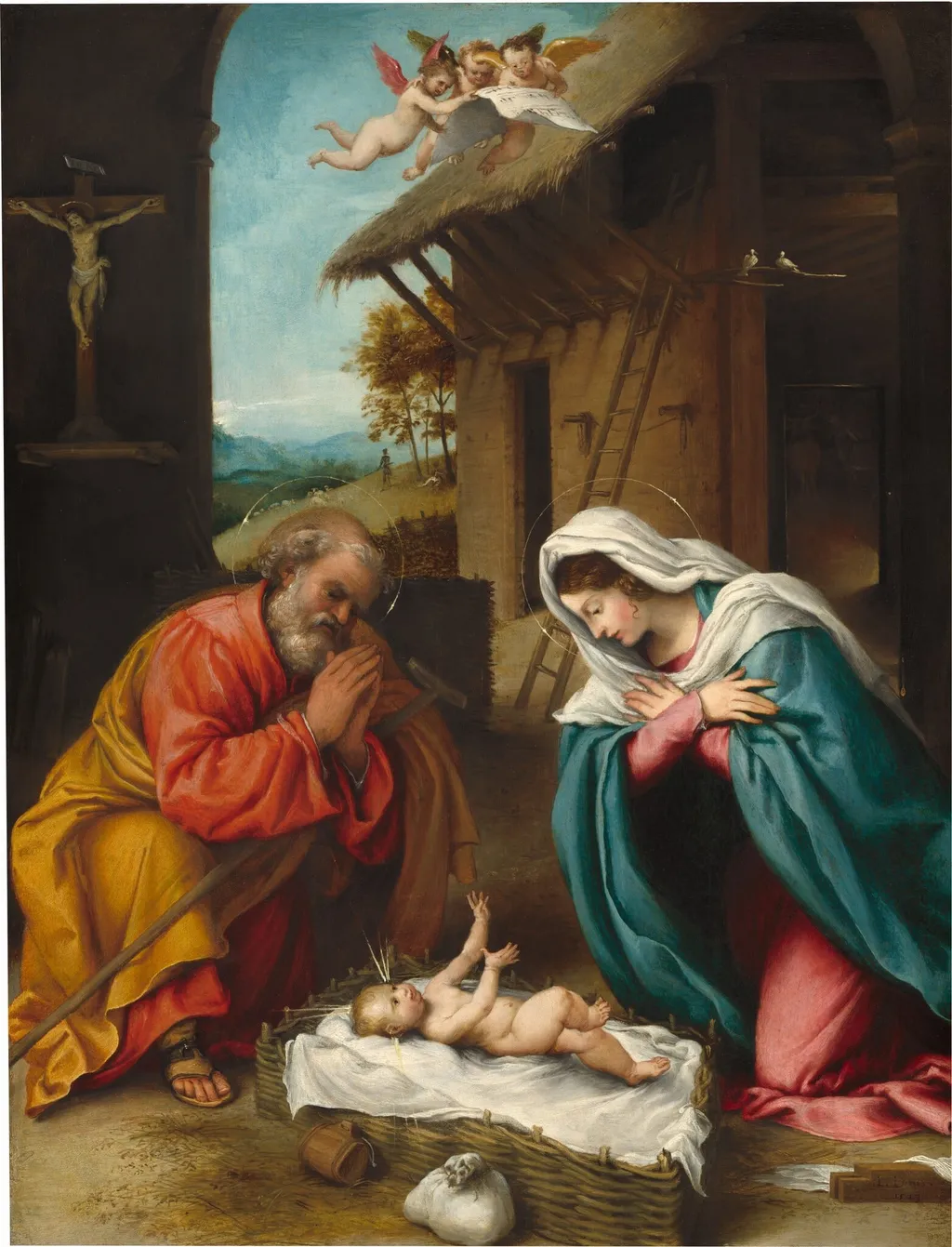
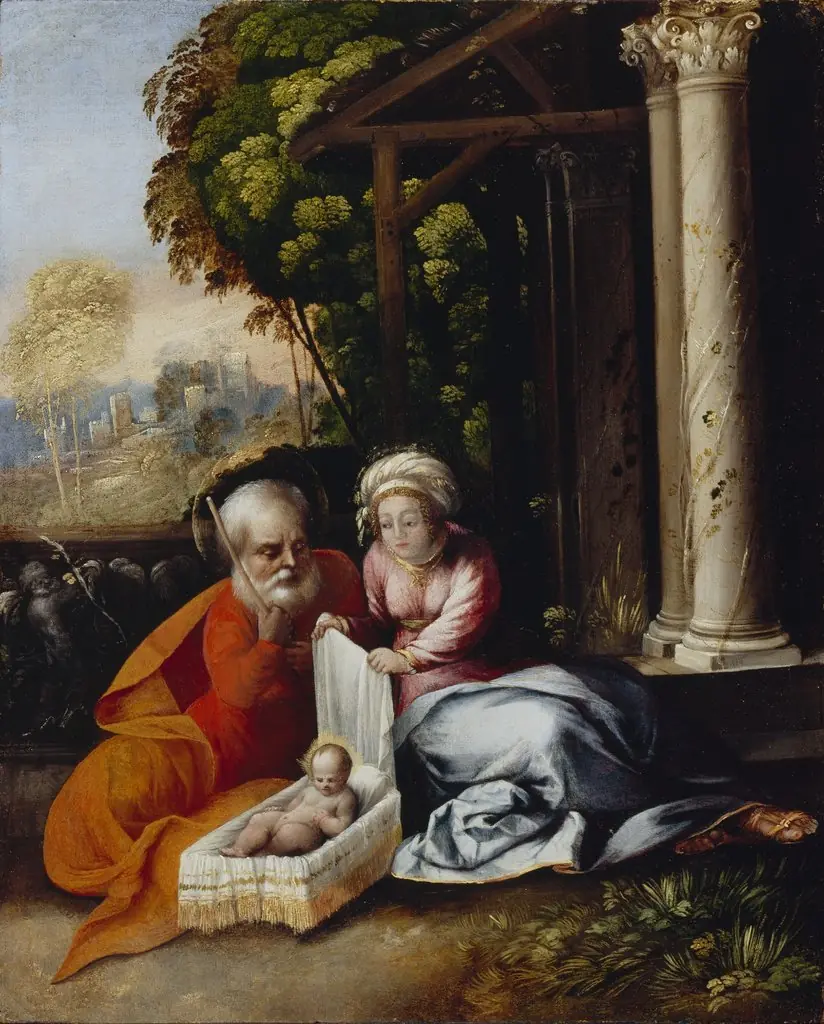
The Nativity is an oil painting by the Mannerist artist Lorenzo Lotto. It dates from 1523 and is held in the collection of the National Gallery of Art.
- Inscription
- Inscribed:lower right: L. Lotus. / 1523
About this work
A crucifix on the back wall foreshadows the Passion; X-rays later showed Lotto added it after the paint dried.
In a Bergamo workshop in 1523, Lorenzo Lotto signed a small wooden panel L. Lotus and packed it with unsettling detail. Below three child-angels fumbling their sheet music, the Holy Family kneels in close intimacy, Mary and Joseph given equal stature, two turtledoves under the manger eaves. A crucifix on the back wall foreshadows the Passion; X-rays later showed Lotto added it after the paint dried.
Subject & Meaning
The painting depicts the Adoration of the Christ Child, showing only Mary, Joseph, and the newborn Jesus in a humble stable. Jesus lies nude in a wicker basket, a motif recalling his impending sacrifice. An anachronistic crucifix placed in shadow on the left prefigures the Passion, while a ladder alludes to Jacob's dream and the connection between heaven and earth.
A pair of turtledoves symbolizes fidelity to the Church. The wood plank bearing Lotto's signature has been interpreted as both a carpenter's tool (reflecting Joseph's trade) and a mousetrap, referencing Saint Augustine's metaphor of the Cross as the devil's trap. Joseph is shown kneeling in adoration, a departure from traditional portrayals that reflected the contemporary devotion of the Confraternity of Saint Joseph.
The work was created for private devotion and emphasizes the humility of the Incarnation and the redemptive destiny of the child.
Technique & Style
Executed in oil on panel, The Nativity (1523) measures 46 × 35.9 cm. Its support is a wooden panel, and the medium is oil paint applied with Lotto's characteristic attention to detail. X-ray examination reveals that the left side was reworked by the artist, indicating a compositional change during execution. Stylistically, the painting employs warm, vivid tones and strong chiaroscuro, creating an intimate interior scene.
The composition places the Christ Child naked in a wicker basket at the foreground, with Mary and Joseph kneeling in adoration under an arch. Joseph is notably depicted smiling and kneeling, an unconventional choice. The work includes symbolic objects such as a sack, barrel, ladder, and a pair of turtle doves, all rendered with precise handling. This small-scale devotional panel exemplifies Lotto's blend of naturalistic detail and symbolic complexity.
History & Provenance
Lorenzo Lotto painted The Nativity in 1523, dating and signing the work on a wooden plank at lower right. Commissioned for private devotion, the panel appears to have been ordered by members of the Confraternity of Saint Joseph. X-ray analysis reveals that Lotto himself reworked the left side, altering the iconographic program.
The painting entered the collection of Count Morlani in Bergamo, passed to Luigi Bonomi in Milan, and was then acquired by Alessandro Contini-Bonacossi in Florence. In 1937 the Samuel H. Kress Foundation purchased the work from Contini-Bonacossi and brought it to New York; two years later, in 1939, the foundation donated it to the National Gallery of Art in Washington, D.C., where it remains in the Samuel H. Kress Collection.
Context
Scholarship on Lotto's Nativity has focused on its private devotional function and its theological sophistication. X-rays reveal that Lotto reworked the left side, altering the iconographic program. The anachronistic crucifix and the unprecedented depiction of Joseph kneeling in adoration (instead of standing apart) have been linked to the Confraternity of St. Joseph, which commissioned the work.
The art historian Fern Rusk Shapley interpreted the wooden object near Lotto's signature as a mousetrap, citing Augustine's metaphor of the Cross as the devil's trap. Such detailed symbolism, including doves, a ladder, and travel implements, exemplifies Lotto's meticulous attention and theological preparation. The painting thus occupies a significant place as a refined example of early sixteenth-century Venetian private devotion, merging human tenderness with complex iconography.
Overview
Lorenzo Lotto's The Nativity, painted in oil on panel in 1523, offers an intimate portrayal of the Holy Family. This work, signed by the Venetian artist, was originally conceived for private devotional use. It is now housed in the National Gallery of Art in Washington D.C., forming part of the esteemed Samuel H. Kress Collection. The painting's small scale and focused subject matter underscore its intended personal engagement.
Own this work as a print
Artist & collection

Artist
Lorenzo Lotto (c. 1480 – 1556/57) was an Italian Renaissance painter, draughtsman, and illustrator, traditionally placed in the Venetian school, though much of his career was spent in other north Italian cities. He…





- The Nativity
 The Nativity
 The Nativity
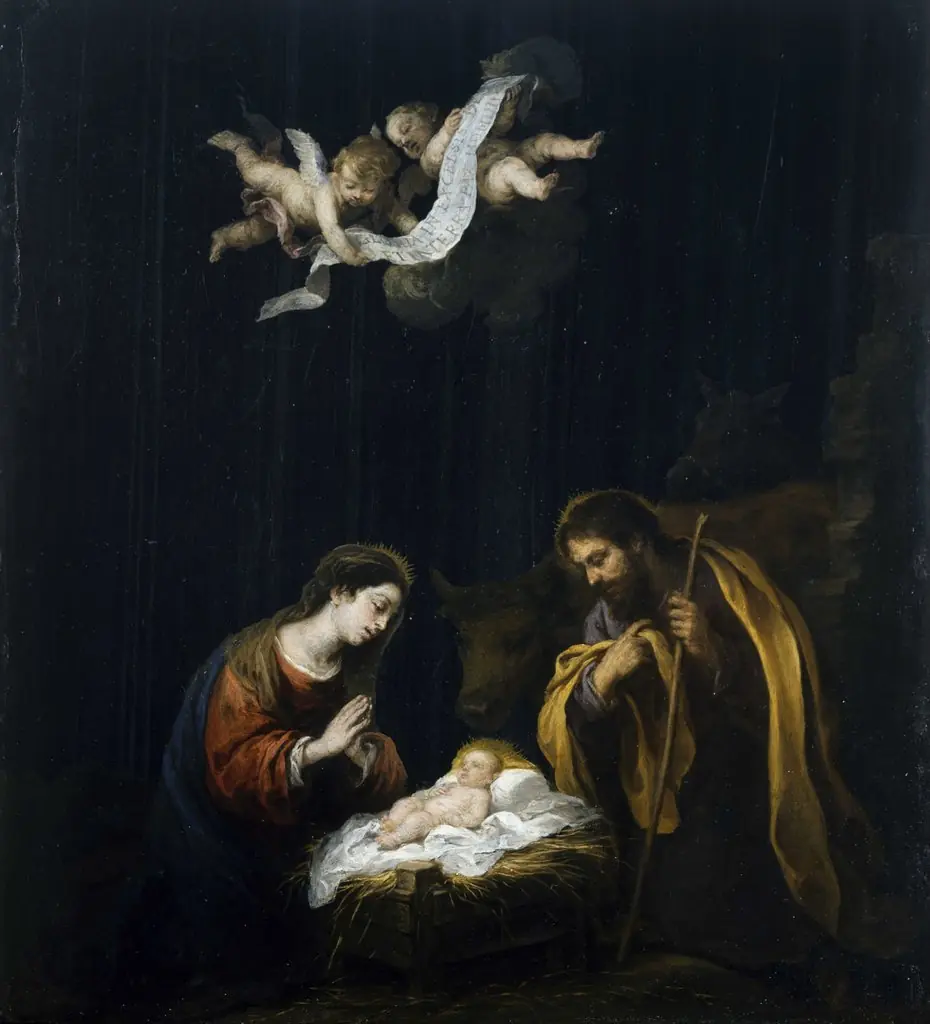 The Nativity
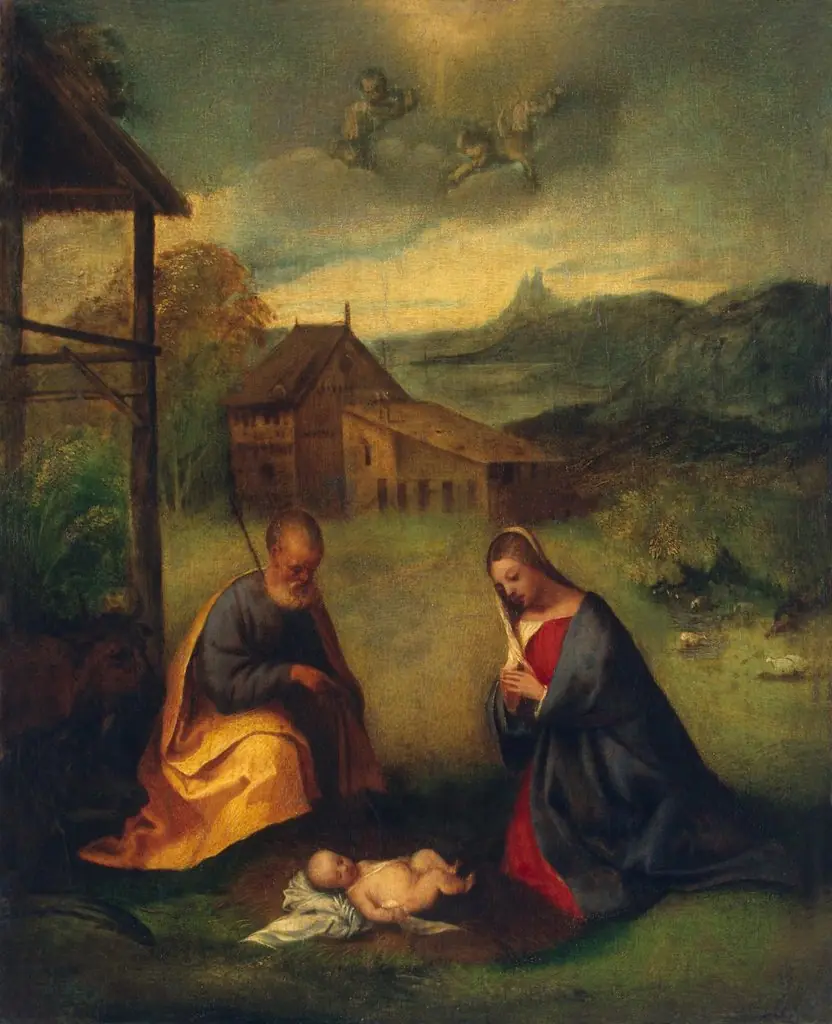 Adoration of the Christ Child
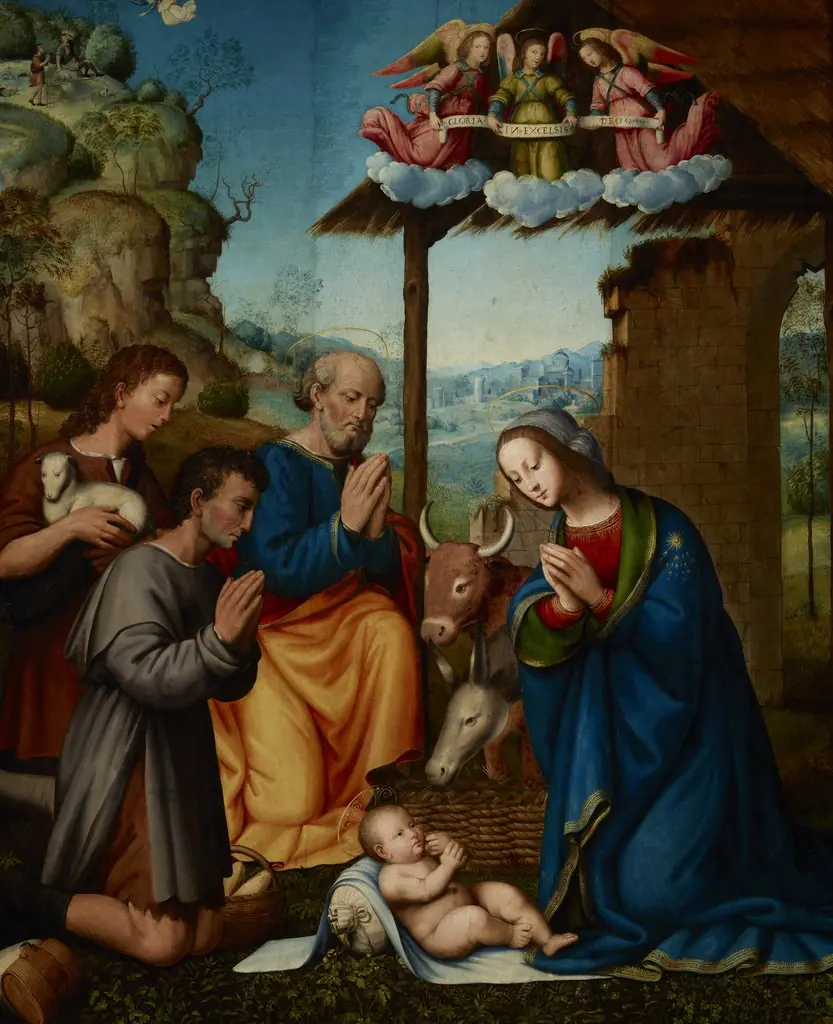 Adoration of the Shepherds (Adoration of the Child by Mary, St Joseph and Shepherds)
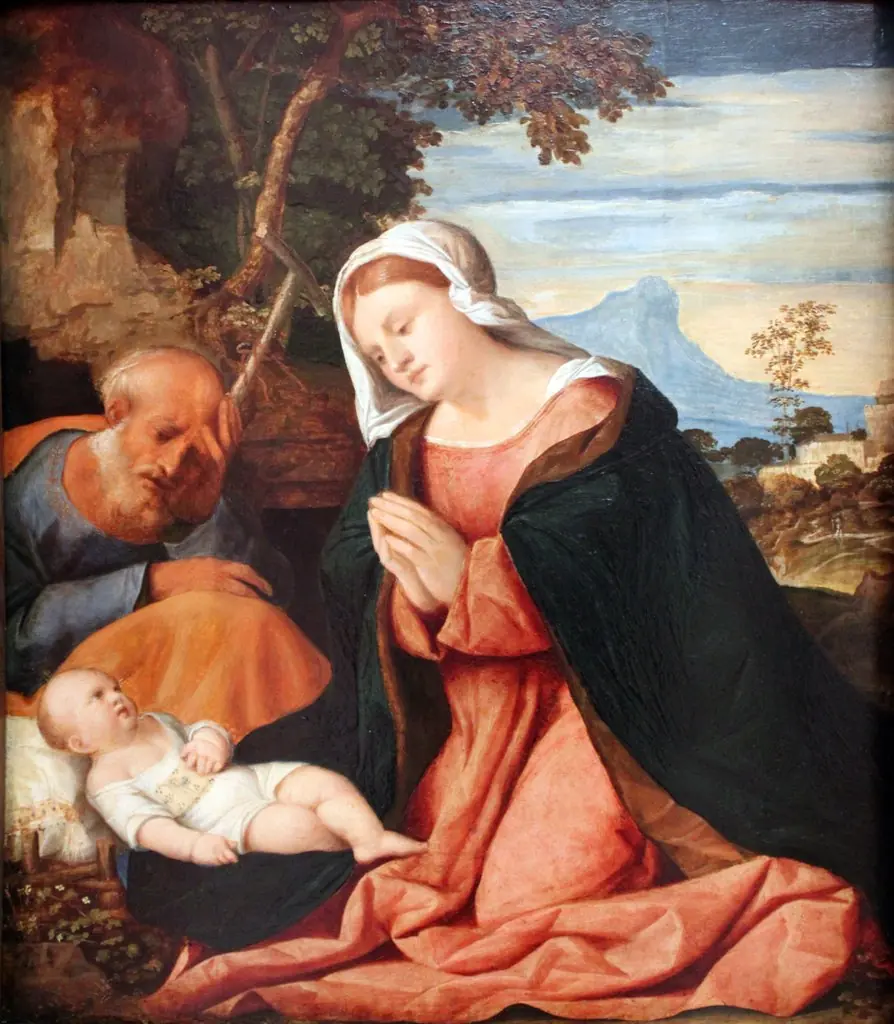 The Holy Family
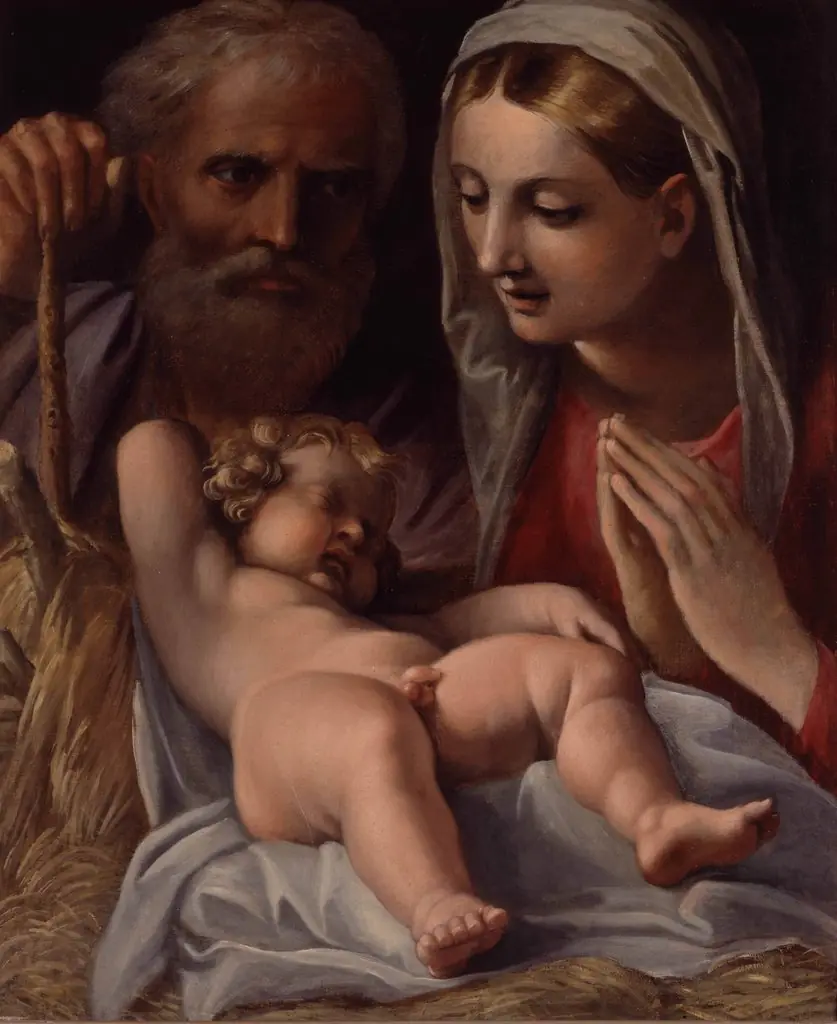 Holy Family
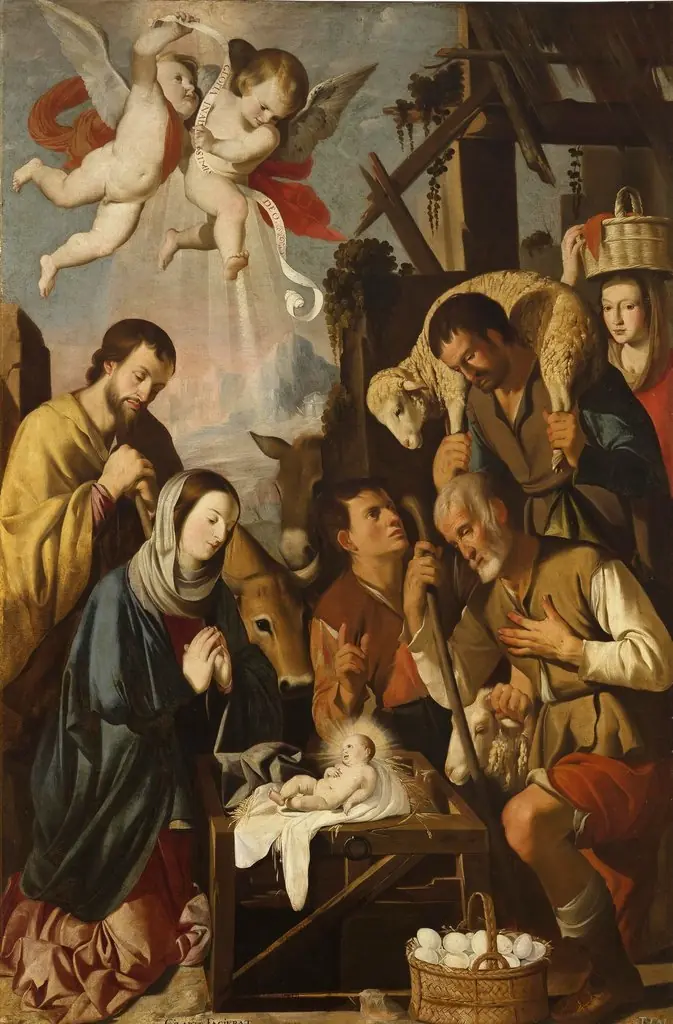 The Adoration of the Shepherds
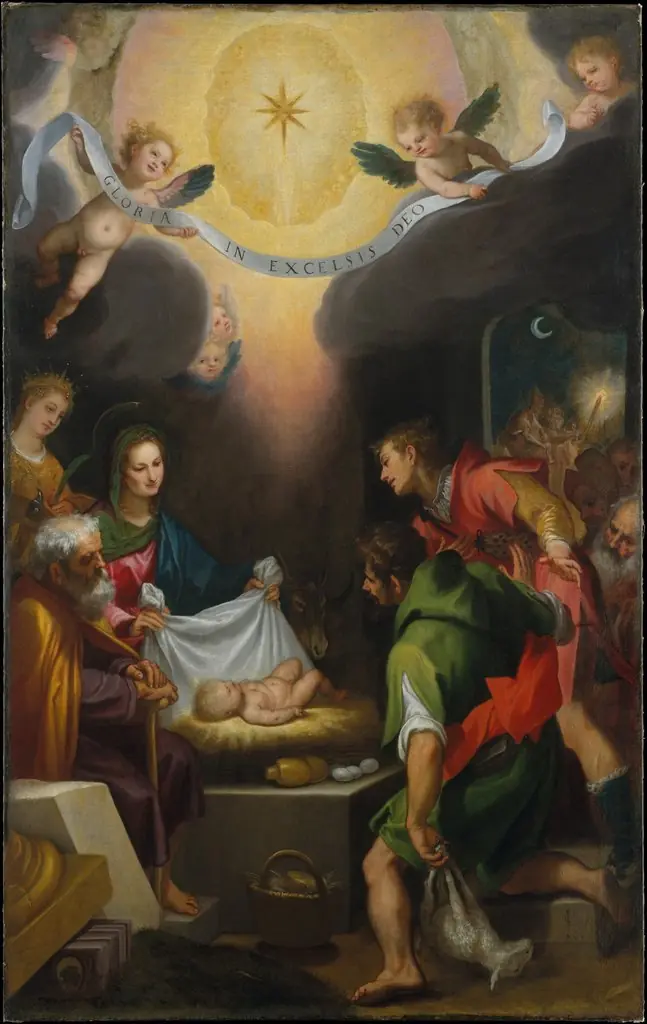 The Adoration of the Shepherds with Saint Catherine of Alexandria
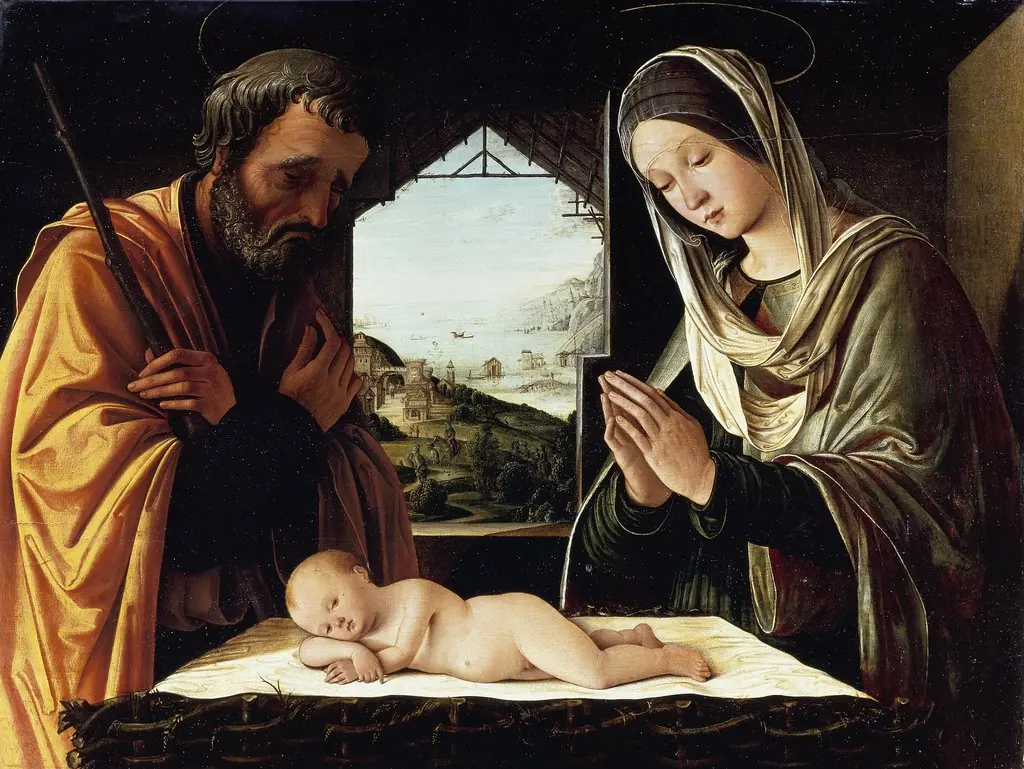 Holy Family (Nativity)
 The Holy Family