Louis XV at the Age of Five in the Costume of the Sacre by Hyacinthe, Rigaud
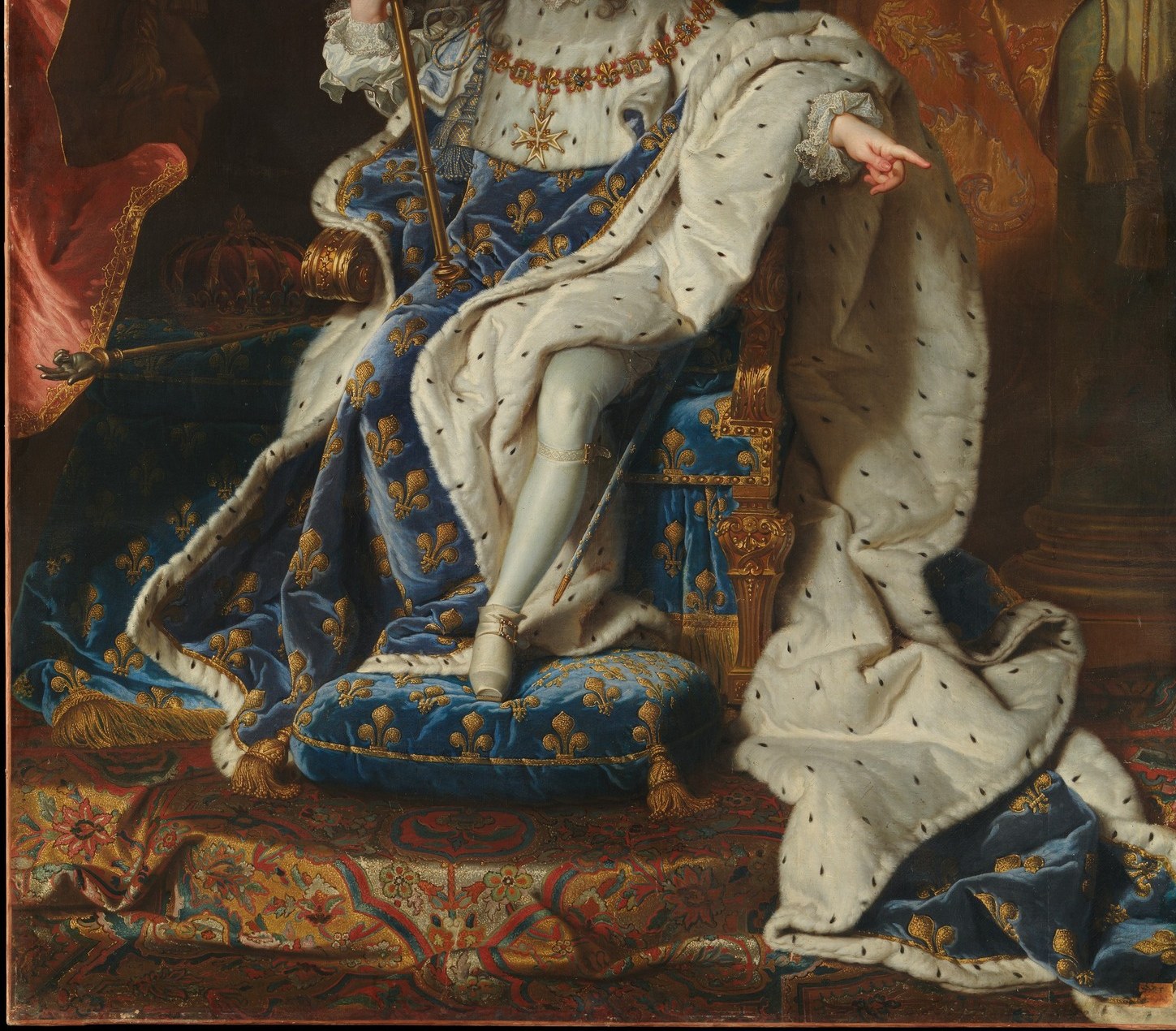
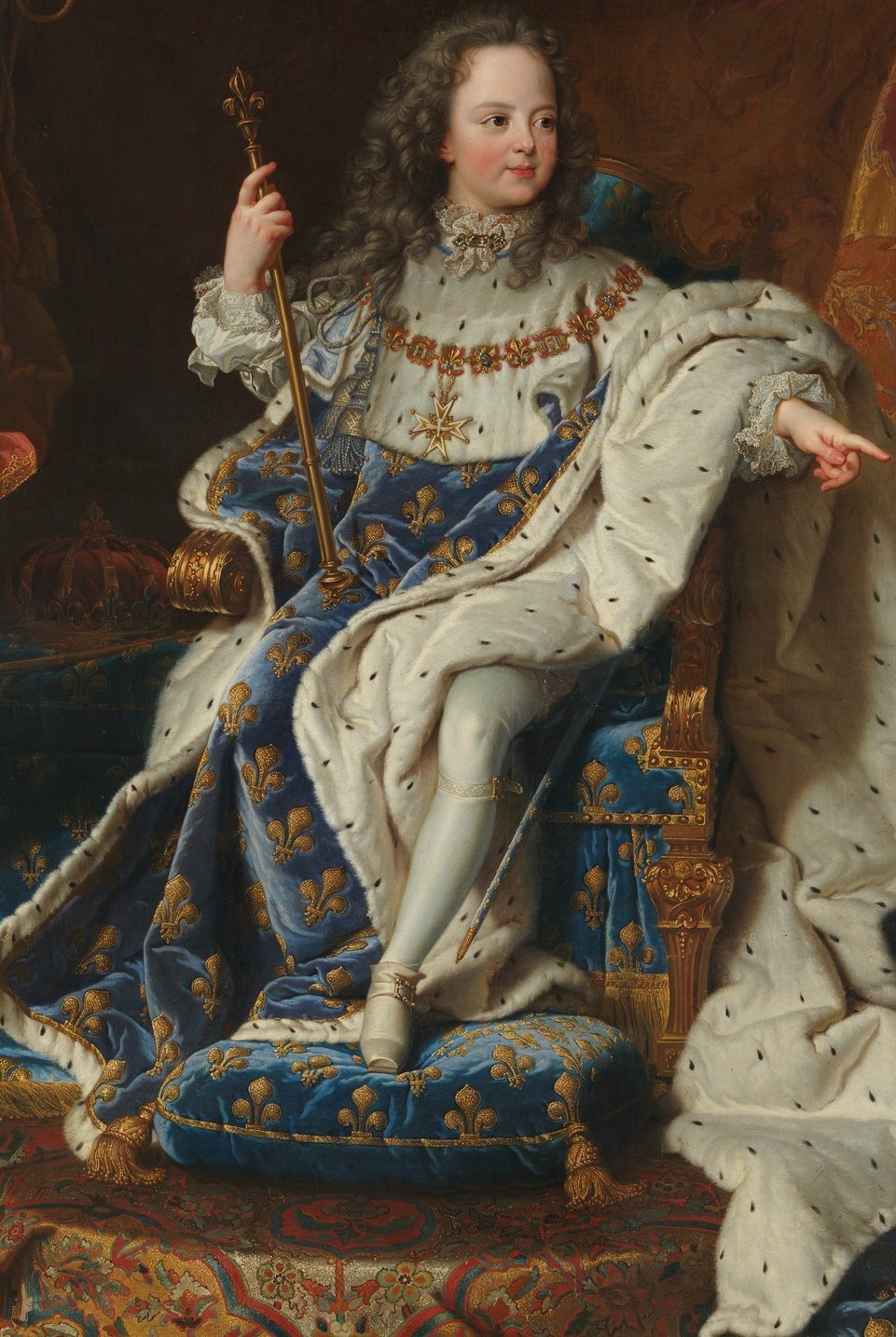
This is Hyacinthe Rigaud's *Louis XV at the Age of Five in the Costume of the Sacre*, painted in 1715 and now held at the Palace of Versailles. The Great Plague of Marseille was still five years away, but the court had already weathered its own catastrophe: a measles and smallpox outbreak in 1711-1712 that killed Louis XV's grandfather, father, mother, and elder brother in a span of fourteen months, leaving a five-year-old as the sole dynastic survivor. This portrait was commissioned to project absolute stability from total fragility.
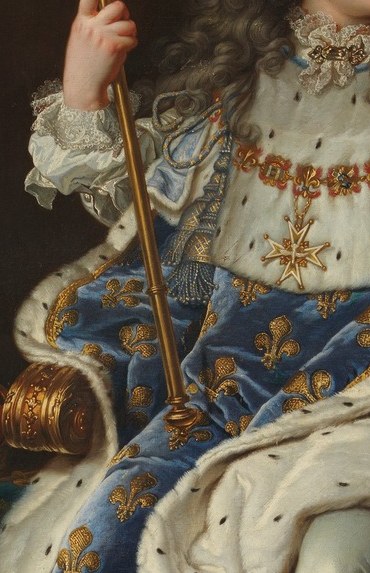
Look first at the face. Rigaud painted the features of a real child, soft cheeks, a small chin, but arranged them into the composed mask of adult kingship. The tension between the two is the painting's central engine. Then drop your eyes to the right hand: a tiny grip closed around a gilded scepter lifted nearly at arm's length. The object outweighs the boy. Rigaud makes sure you feel that.
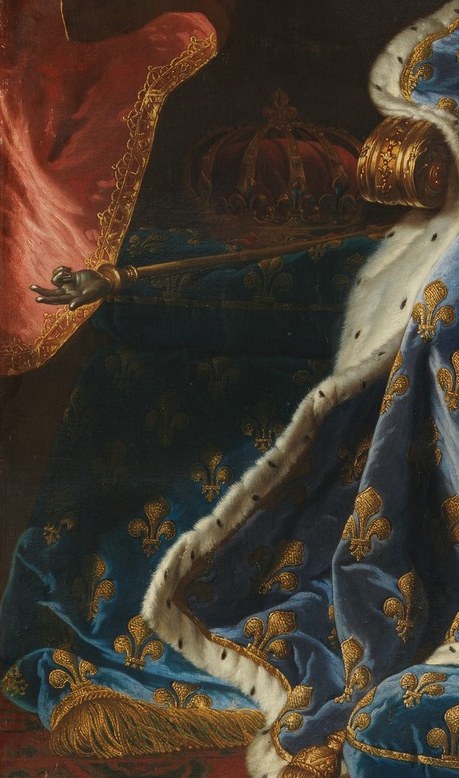
The ermine cape was not decoration. European sumptuary law reserved ermine exclusively for royalty, and Rigaud treated the material as a bravura passage: every black tail spot on the white fur was laid down with a separate fine brushstroke. The blue velvet mantle behind it carries thousands of individually rendered gold fleurs-de-lis, France's heraldic emblem since the twelfth century. None of this was optical accident. Rigaud was the most expensive portraitist in France, his fee for a full-length royal portrait could exceed the cost of a substantial Parisian residence.
The boy in the painting would reign for fifty-nine years, the second-longest rule in French history after his great-grandfather Louis XIV, whose own state portrait Rigaud had painted just fourteen years earlier. The pose, the props, the ermine are a direct visual quotation. The message: the king is dead; the king is five; nothing has changed.
Details

Transcript
In 1715, France was ruled by a five-year-old. The crown fell to him after a smallpox outbreak erased his entire immediate family. His face is a child's. His expression is the state's. This ermine cape, by law, could touch only royal skin. Each black tail spot was painted individually, a separate brushstroke. The painter, Hyacinthe Rigaud, charged more for this portrait than a Parisian townhouse cost. His tiny hand grips a scepter taller than he is.