Dance in a Subterranean Roundhouse at Clear Lake, California by Jules Tavernier
Jules Tavernier painted Dance in a Subterranean Roundhouse at Clear Lake, California in 1878, and it is one of the very few painted records of a living Pomo or Patwin ceremonial gathering from inside the roundhouse itself.
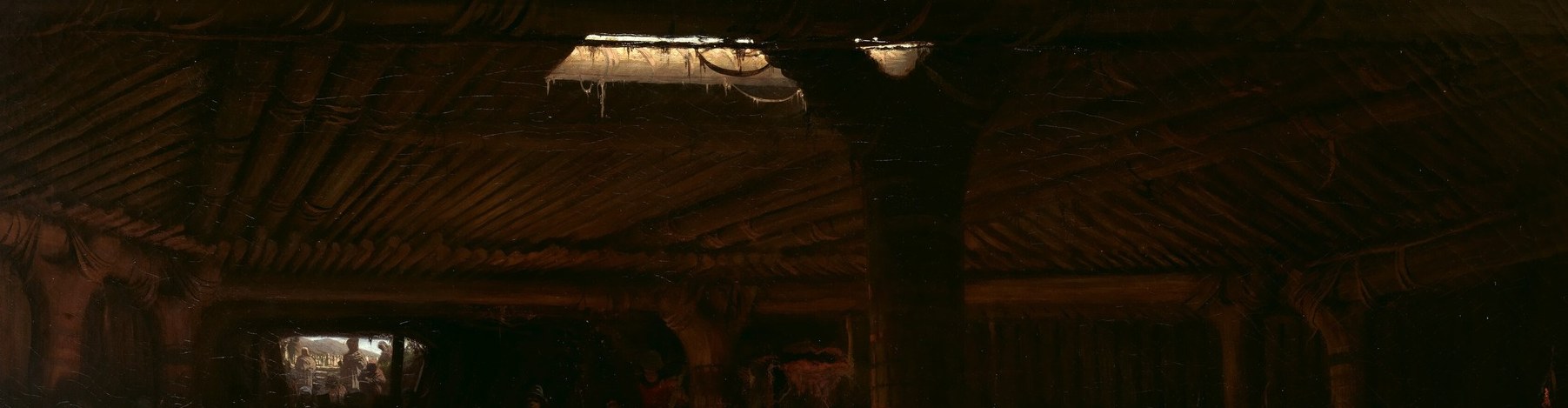
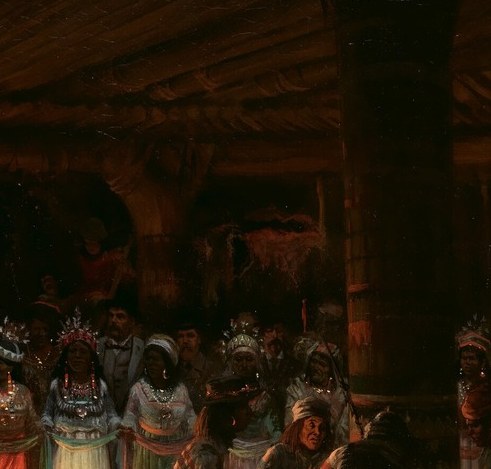
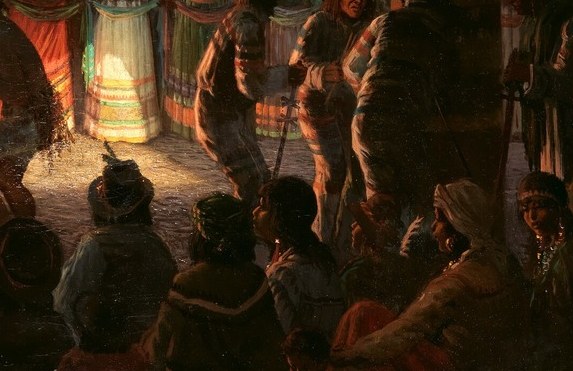
The first thing the painting does is involve you. Those dark, cropped silhouettes in the extreme foreground are not a mistake, Tavernier has placed you inside the crowd, your shoulder against the next spectator, your eyes adjusting to the lantern glow and the smoke just as theirs would. Look past the central dancers, into the haze near the roof, and you will find the upper tier: more figures, a second ring of watchers, completing the circle of community.
Tavernier was a French-born painter who had come west, eventually joining what would be called Hawaii's Volcano School. But before that, he traveled through California recording landscapes and scenes of indigenous life with an Impressionist's attention to atmosphere. He died young, at forty-four, in 1889. This painting, now at The Metropolitan Museum of Art, captures a specific night inside a specific architecture, the subterranean roundhouse, roofed with timber and earth, a structure that kept ceremony hidden and warm.
There is something quietly radical about this canvas for its time: a French-trained painter renders an Indigenous ritual not as romantic spectacle but as communal witness, the viewer merely one more person in the dark.
Details


Transcript
California, 1878. The ceremony has been going for hours. This roundhouse is underground, a wooden roof covered with earth. Look past the lanterns into the smoke. More spectators line the upper tier, wrapped all the way around the back. The headdresses mark this as a ritual gathering, not a performance. Tavernier placed us inside the crowd, these dark heads are our own shoulder. A fire at the center below warms the dancers from beneath. In just three years, Tavernier will be dead at forty-four. This evening survived him.