On Their Way to Camp by Johnson, Eastman
Eastman Johnson's 1873 painting, "On Their Way to Camp," at the Metropolitan Museum of Art, captures the physical endurance of rural labor in winter. It’s a quiet testament to everyday life in post-Civil War America.
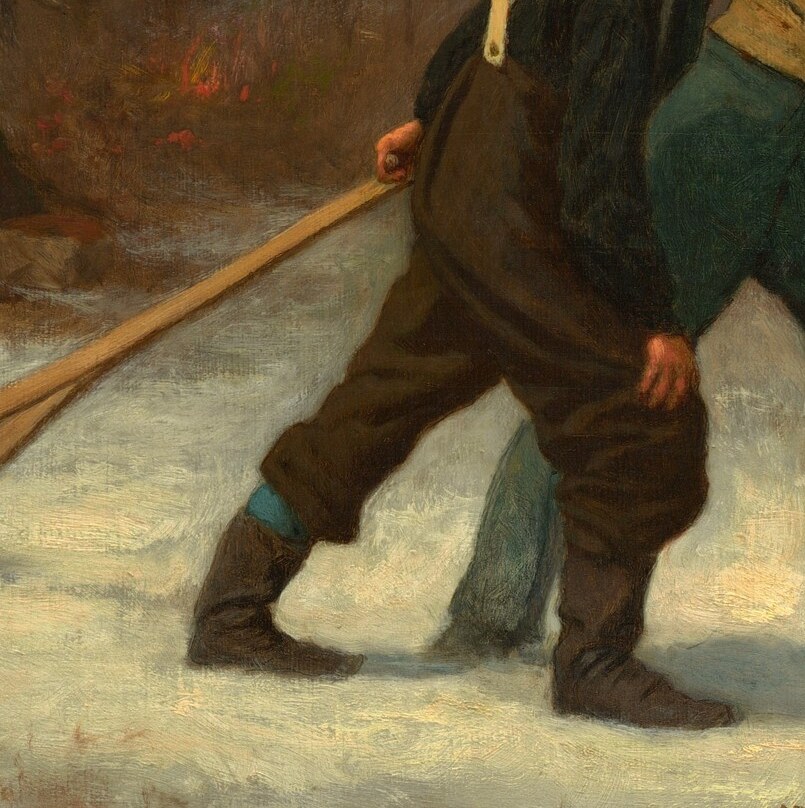
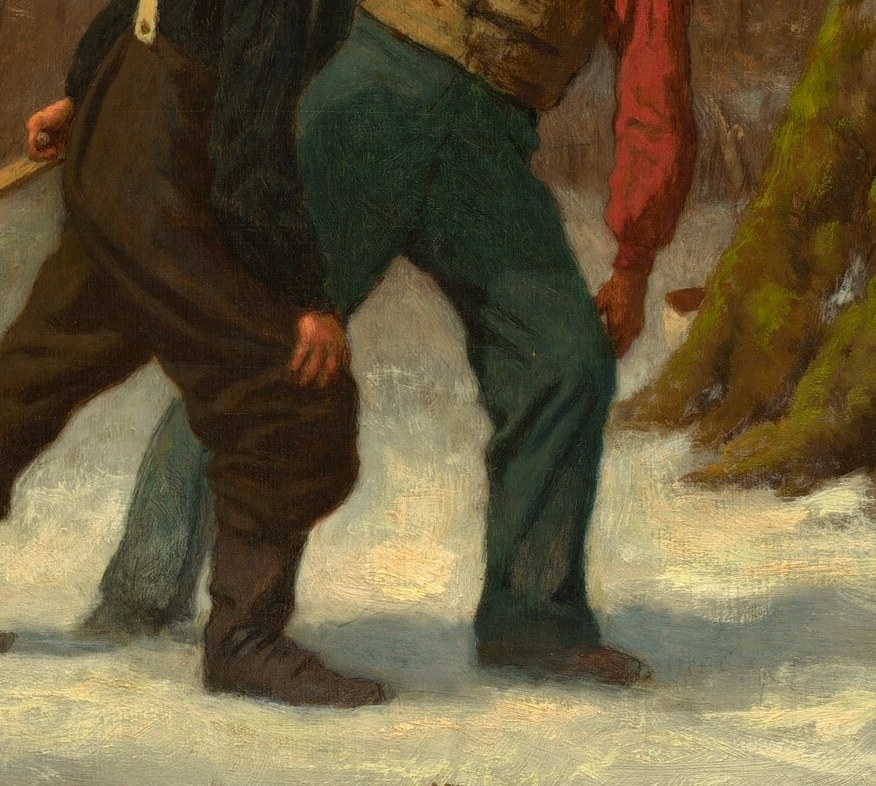
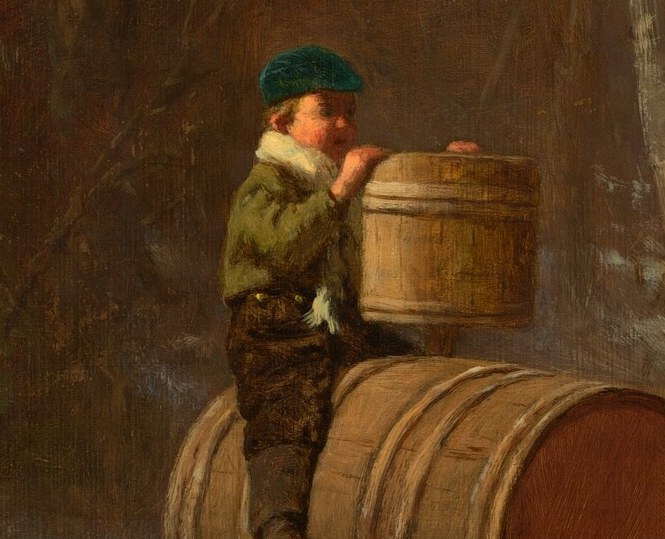
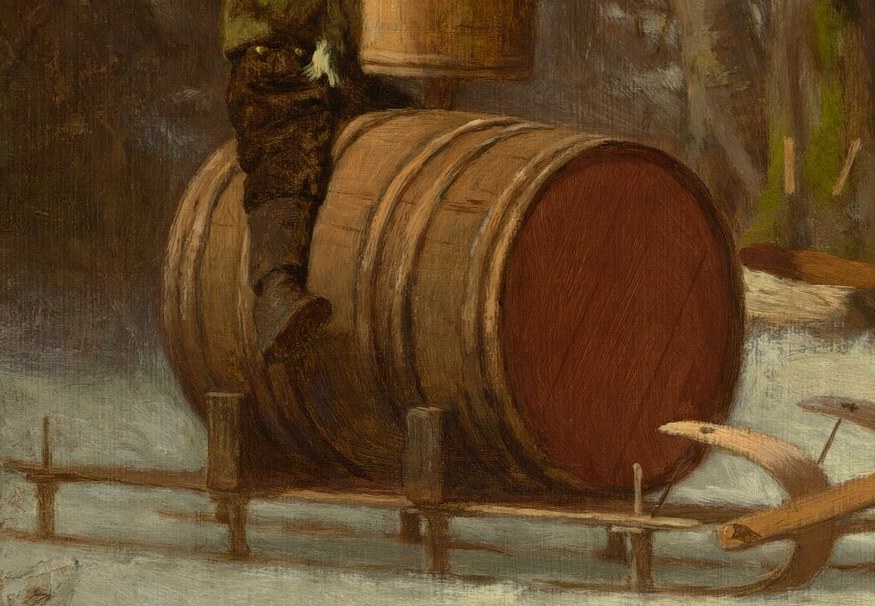
Observe the details: the bowed backs of the men, the heavy sled, and the boy, a silent passenger, whose expression tells its own story of a long day.
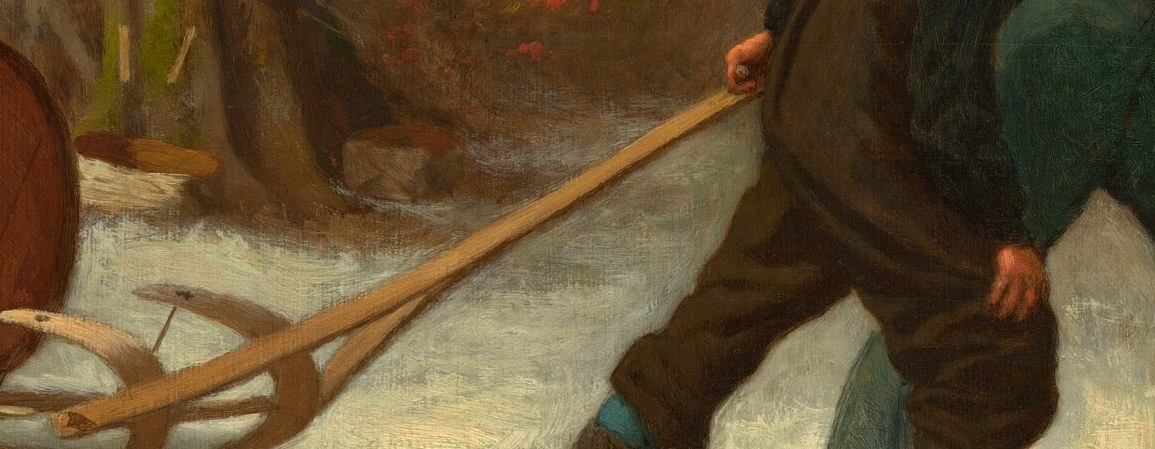
Johnson was known for his American genre scenes, depicting ordinary people and their work with a realist's eye. This painting reflects his meticulous attention to light and texture, especially in the rendering of snow and wood, anchoring the scene in a palpable sense of cold.
The simple act of moving goods becomes a profound statement on human effort and survival against the elements. What emotions does this scene evoke for you?
Details
Transcript
Winter, 1873. Two men move a heavy load through the snow. One man pulls, his back bent against the weight. The other pushes, his face showing the strain of the work. Their tools are simple: a sled, barrels, and their own strength. The painter focused on everyday labor, a common theme then. But look closely at the boy, perched atop the barrel. His weary gaze hints at a long, hard journey.