Capriccio by Francesco Guardi
Francesco Guardi's "Capriccio," painted around 1780, is not a depiction of a real place, but an imagined city scene. Held at The Metropolitan Museum of Art, it's a prime example of a "capriccio", a genre of painting that blends real and fantastical architectural elements into a picturesque, often playful, composition.
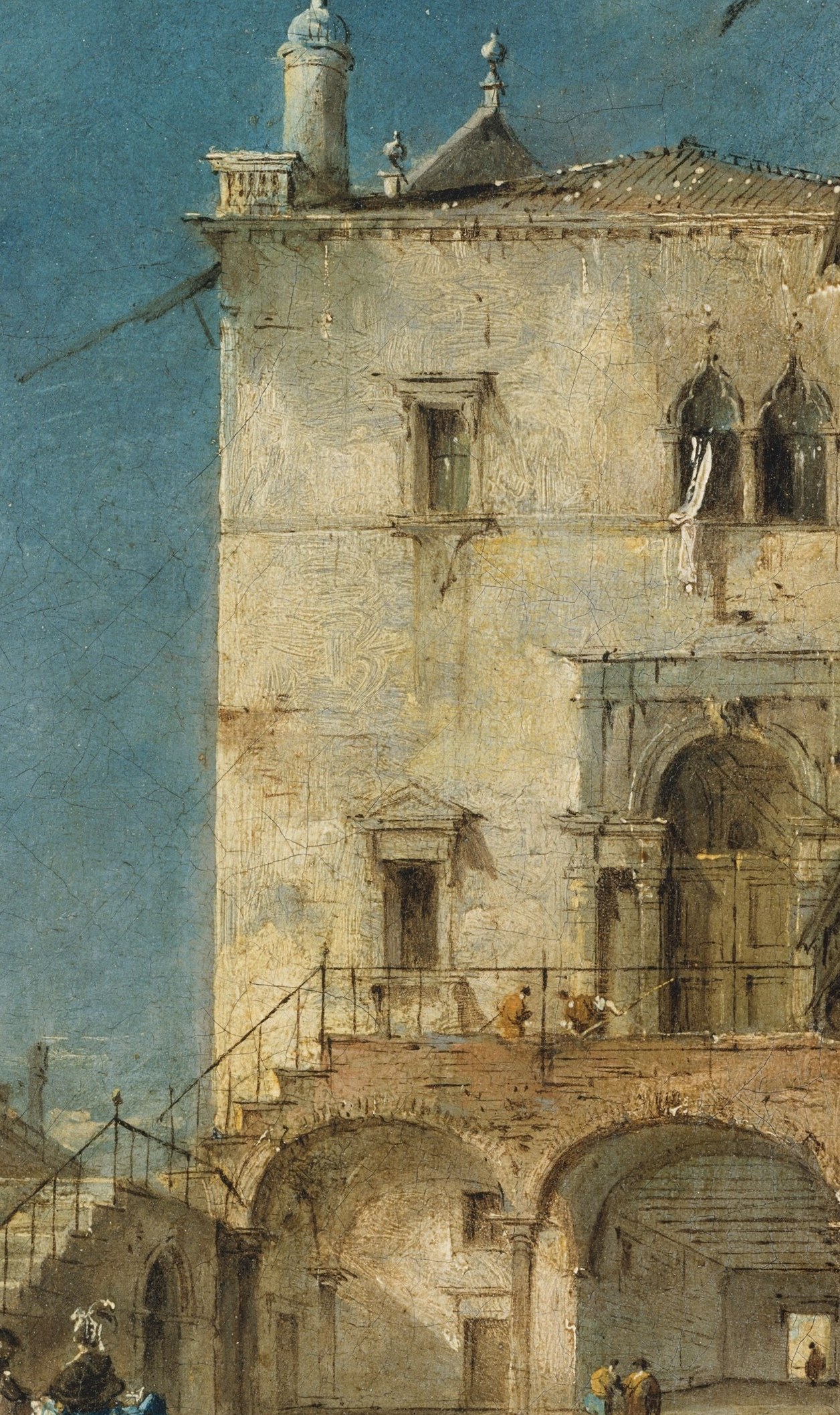
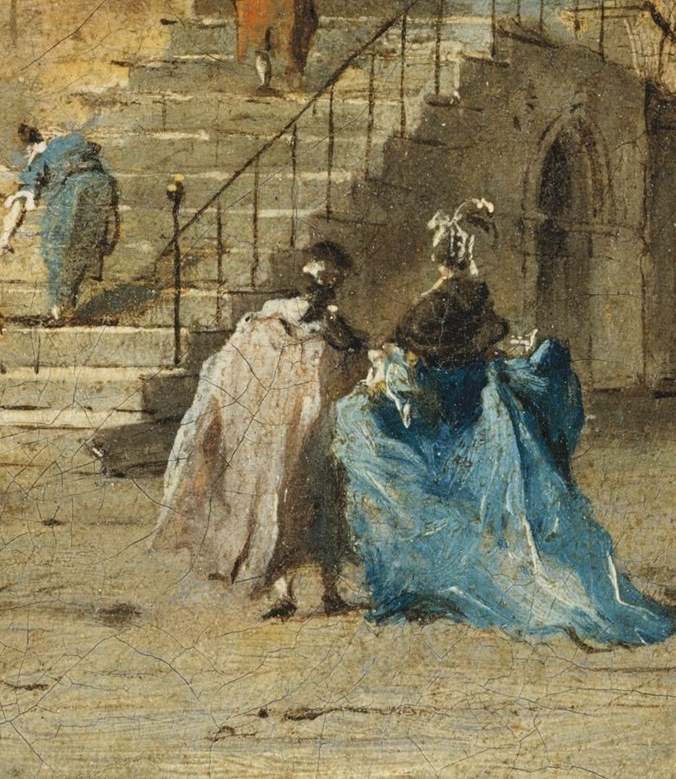
Despite its invented setting, Guardi filled this work with a sense of bustling life and observed detail. From the elegant figures ascending a grand staircase to the casual interactions near the fountain, the painting invites viewers to explore its narrative.
Take a moment to discover the charming small dogs, like the one patiently seated or the other trotting playfully across the piazza. These lively touches add a layer of realism and warmth, making Guardi's fantastical world feel wonderfully alive. It's a testament to his skill in making the unreal feel deeply engaging.
What other small, unexpected details can you spot in this vibrant painting?
Details
Transcript
This city scene is not real, but an imagined one. It's a capriccio, a popular style of fantasy cityscapes. But the painter filled it with lively, observed details. Look closely, and you'll spot some charming characters. Like this small dog, resting patiently by its owner. And another one, trotting along, adding movement to the piazza. These small details bring life to the artist's imagined world.