A Young Italian Woman being Adorned by her Mother by Albert Küchler
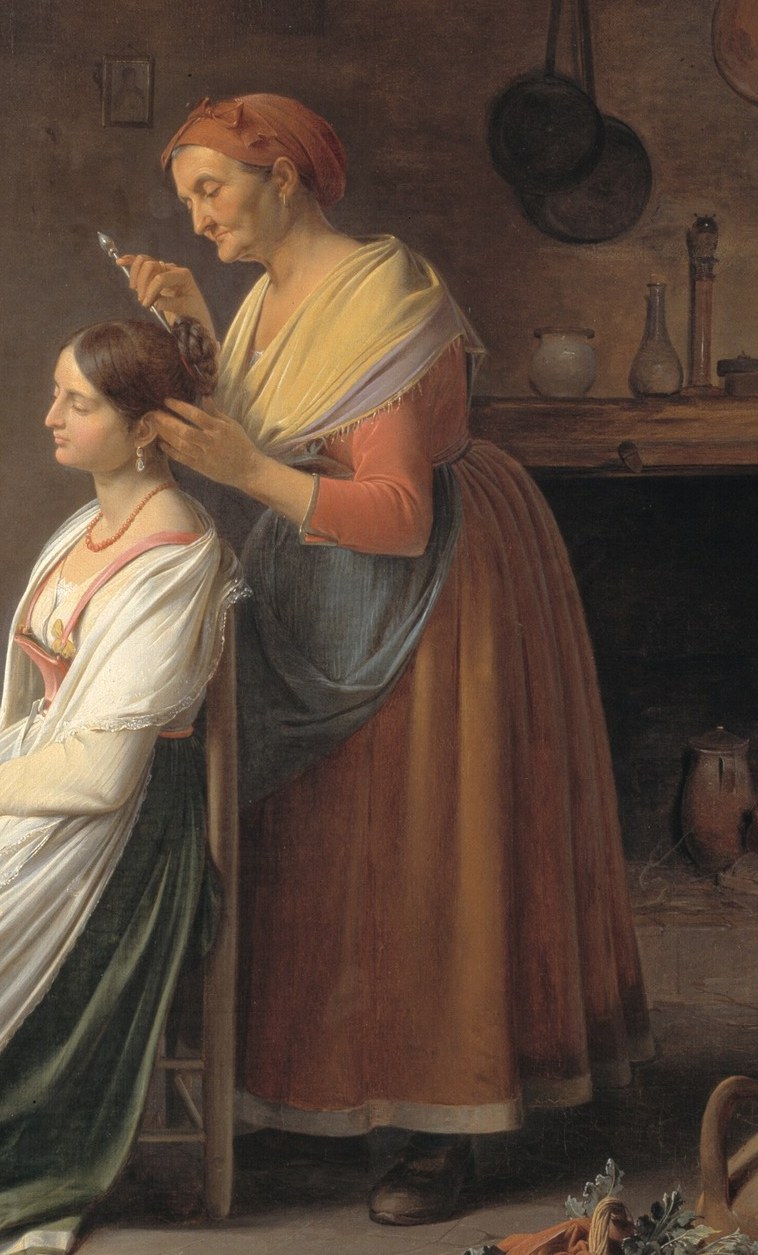
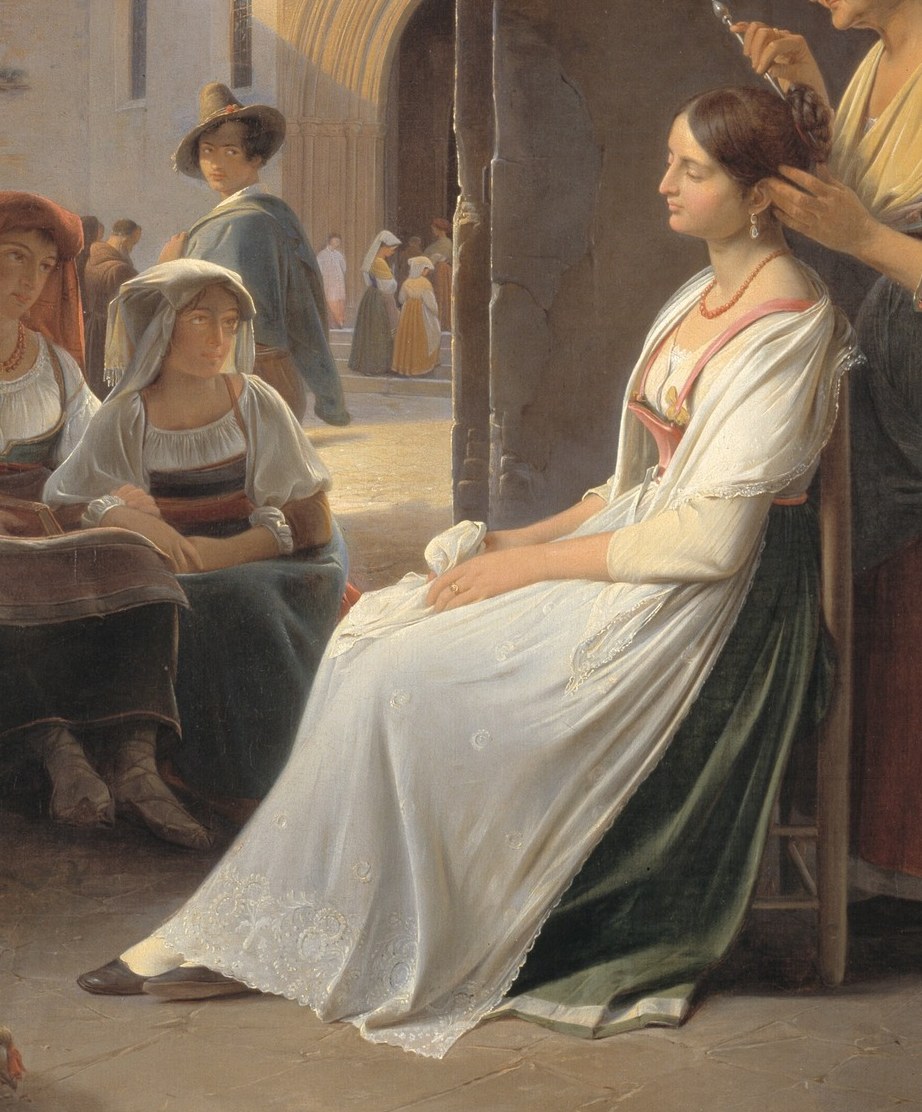
Albert Küchler, a prominent Danish Golden Age painter, created "A Young Italian Woman being Adorned by her Mother" in 1835, a work now held at the Statens Museum for Kunst. This painting captures a tender, everyday scene of a mother preparing her daughter, illustrating Küchler's skill in genre works.
Take a moment to observe the subtle details: the red beaded necklace the young woman wears, and the hairpin in her mother's hand, used to carefully style her hair. These small elements bring the intimate domestic scene to life.
What makes Küchler's story unique is his profound personal change. Despite his artistic success, not long after painting this, he converted to Catholicism and became a Franciscan friar, dedicating his life to a religious order. He spent the rest of his days in a monastery in Rome.
It's fascinating to consider how an artist's personal journey can dramatically alter their path. What do you think prompted such a significant shift?
Details
Transcript
This painter was well-known in his day. He depicted ordinary Italian life with warmth and detail. Notice the red necklace, a small touch of adornment. And the hairpin used to carefully arrange her hair. But soon after this, he left painting behind. He became a Catholic friar and lived in a monastery.