The Crucifixion by Orcagna
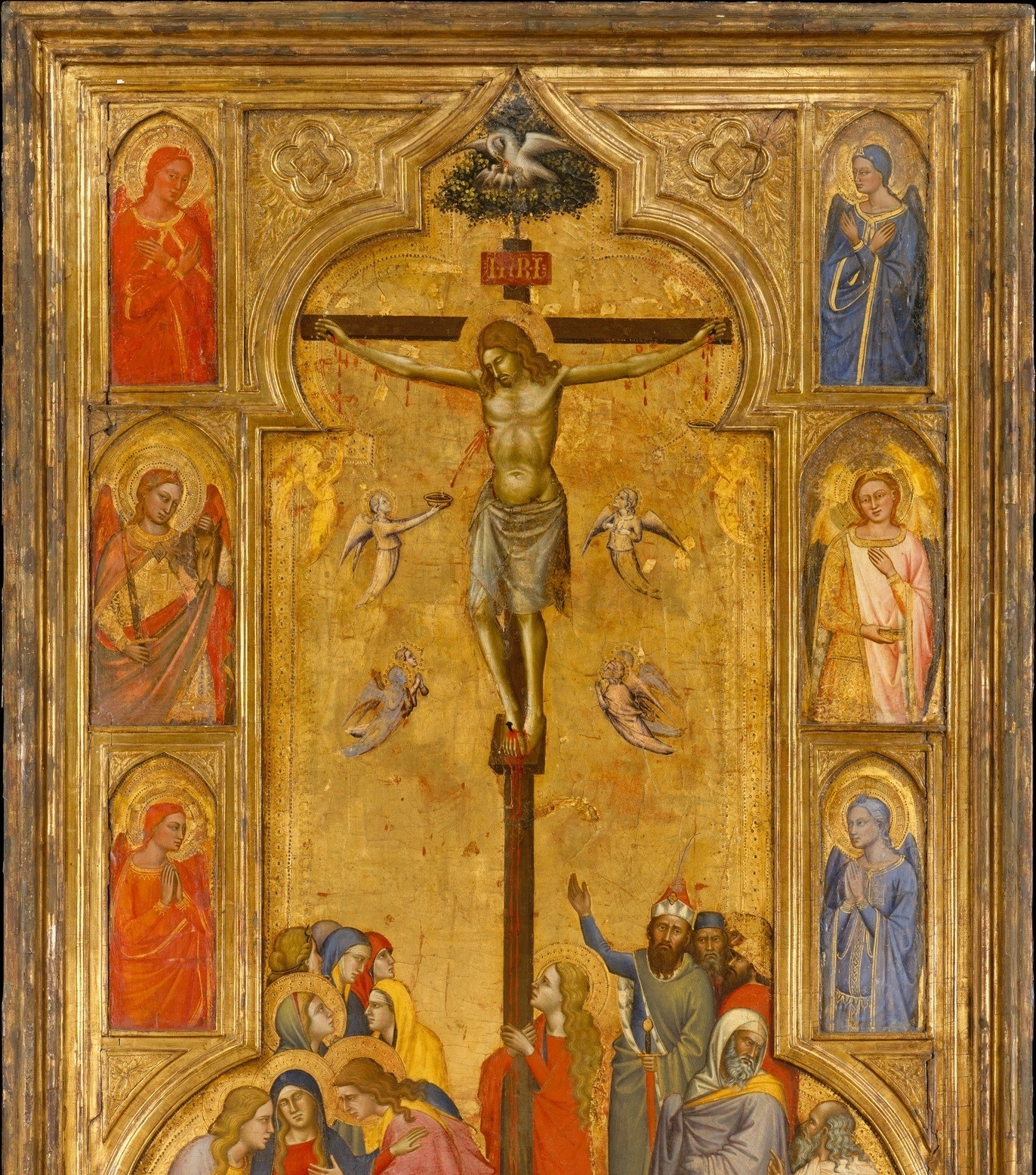
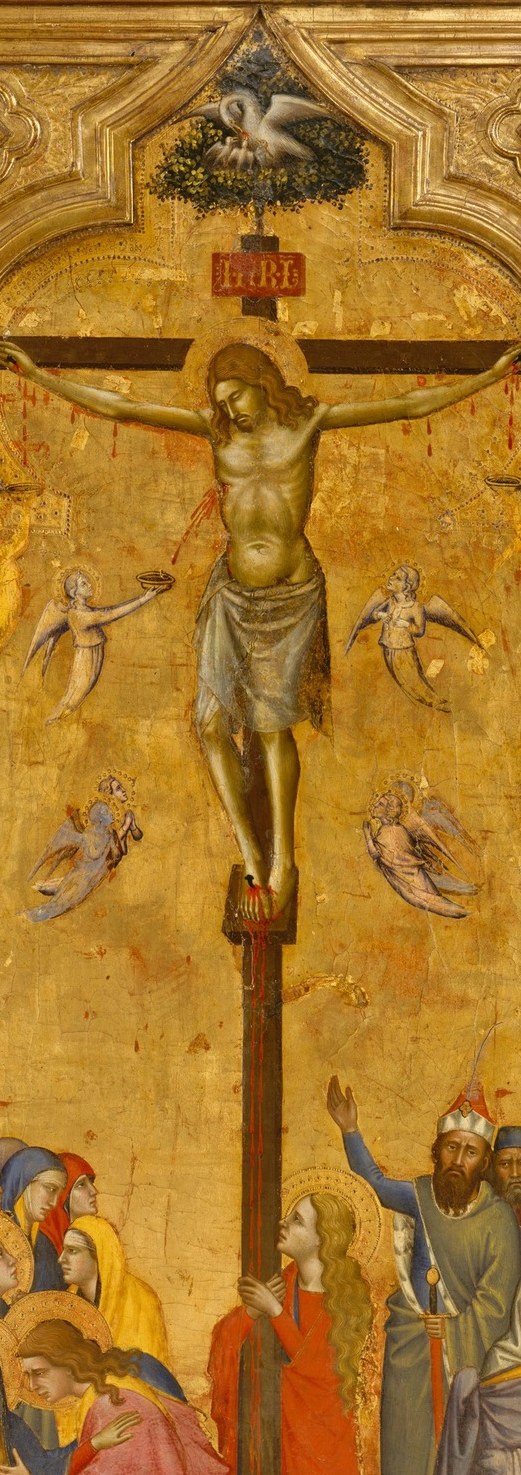
Orcagna's The Crucifixion, painted in tempera around 1365, is an altarpiece designed not to illustrate a historical event, but to serve as a focus for private devotion. The artist, a chief architect and sculptor in mid-14th-century Florence, built a composition that moves the eye downward from a radiant gold heaven into the human cost at the foot of the cross. The painting now hangs in a museum, but its original purpose was to kneel before it.
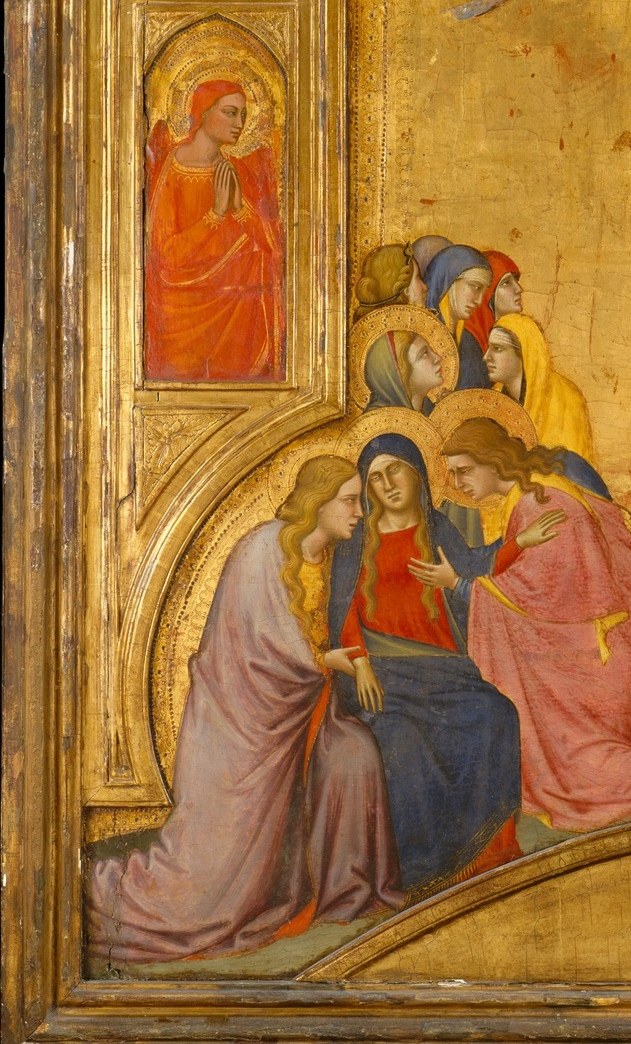
Notice how the gold leaf background functions as a deliberate rejection of landscape or sky. Medieval viewers did not want a realistic Golgotha. They wanted a timeless, transcendent space that placed Christ's sacrifice outside of ordinary time. The angels in the upper arches and the white dove at the apex seal this as a theological vision, not a narrative snapshot. Then your eye drops to the lower left, where a cluster of women in blue and rose robes gathers around the Virgin Mary.
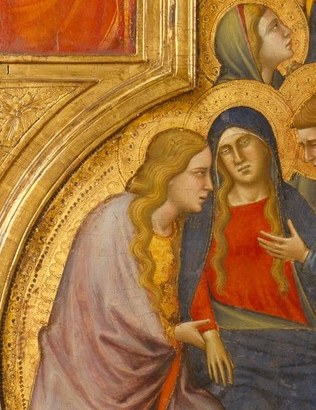
Orcagna was working mere years after the Black Death had torn through Florence, killing more than half the population in 1348. Every person who looked at this painting knew sudden, catastrophic loss. The Virgin's grieving hands, clasped into one tight form, gave that loss a dignified, sacred shape. Her face is serene, but her hands cannot let go. That restraint is the point: the artist trusts the gesture to do all the work.
A detail not to miss: at the far right, a figure in a saturated red robe stands apart from the mourners, anchoring the composition's human edge. And at the base of the cross, a figure reaches out to touch it. The impulse to physical contact with the sacred, rendered in a single quiet reach, closes the distance between worshipper and the worshipped.
Details
Transcript
Florence, 1365. A city rebuilding after the Black Death. Orcagna paints a crucifixion not as a story, but as a prayer. The gold pulls the scene out of our world entirely. Angels and a white dove frame the cosmic scale of the event. But drop your gaze, and the universe contracts to a single cluster of women. One pair of hands holds the whole weight of the painting. A mother at the foot of a cross. Orcagna gives her no face of anguish. He gives her only this: hands clasped so tightly they become a single shape of grief.