Forest Scene by Diaz de la Peña, Narcisse
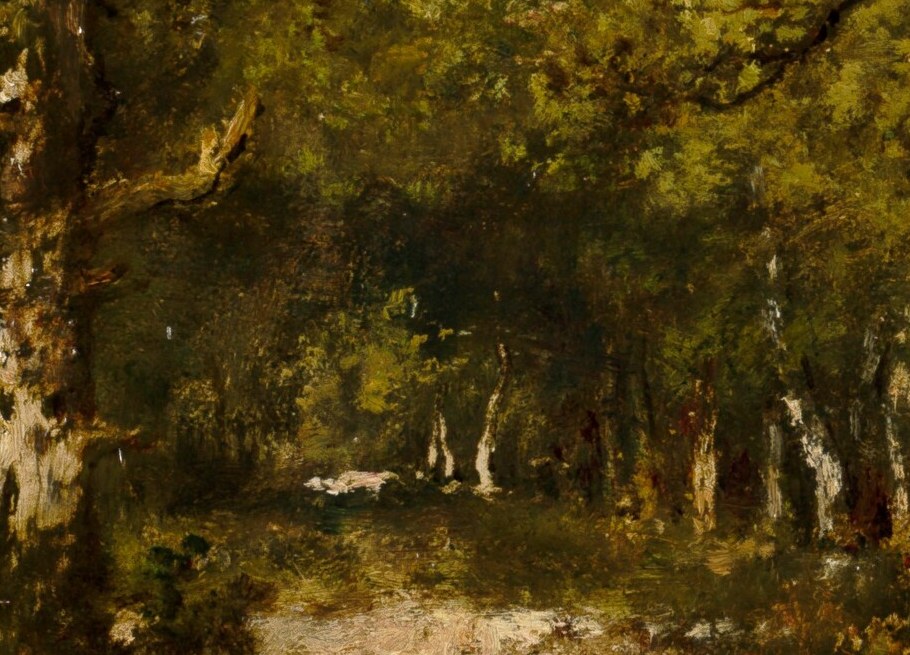
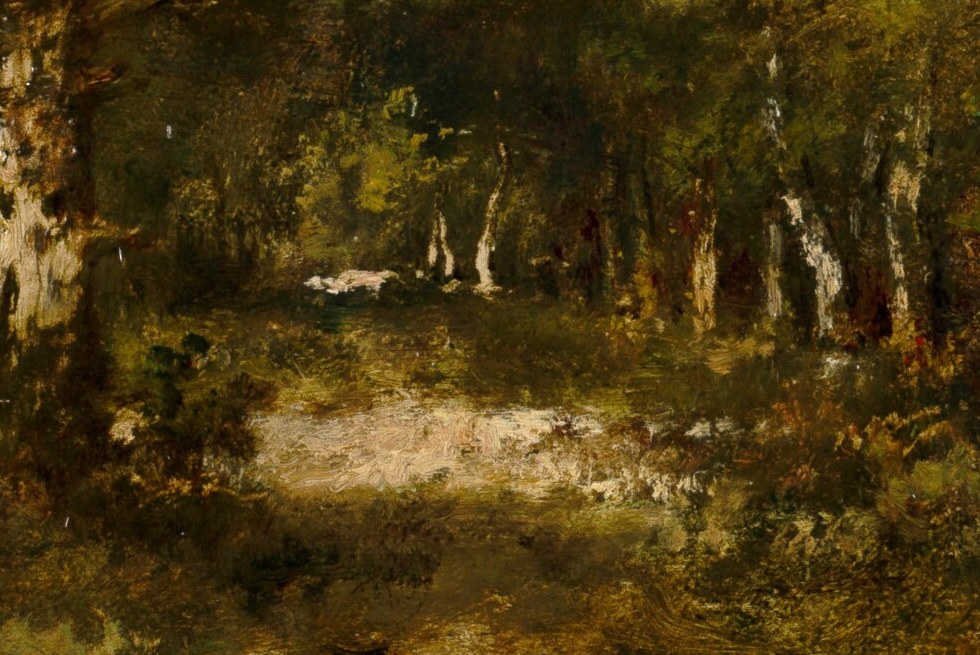
Narcisse Diaz de la Peña completed *Forest Scene* in 1874, the year he died of tuberculosis. He painted it on a wood panel, a small, intimate view into a dense woodland that he returned to obsessively throughout his life. Diaz was a central figure of the Barbizon School, the group of French painters who left Paris for the village of Barbizon to work directly from nature, laying the groundwork for Impressionism. Their real subject was the ancient forest of Fontainebleau, and Diaz was known as its most devoted poet.
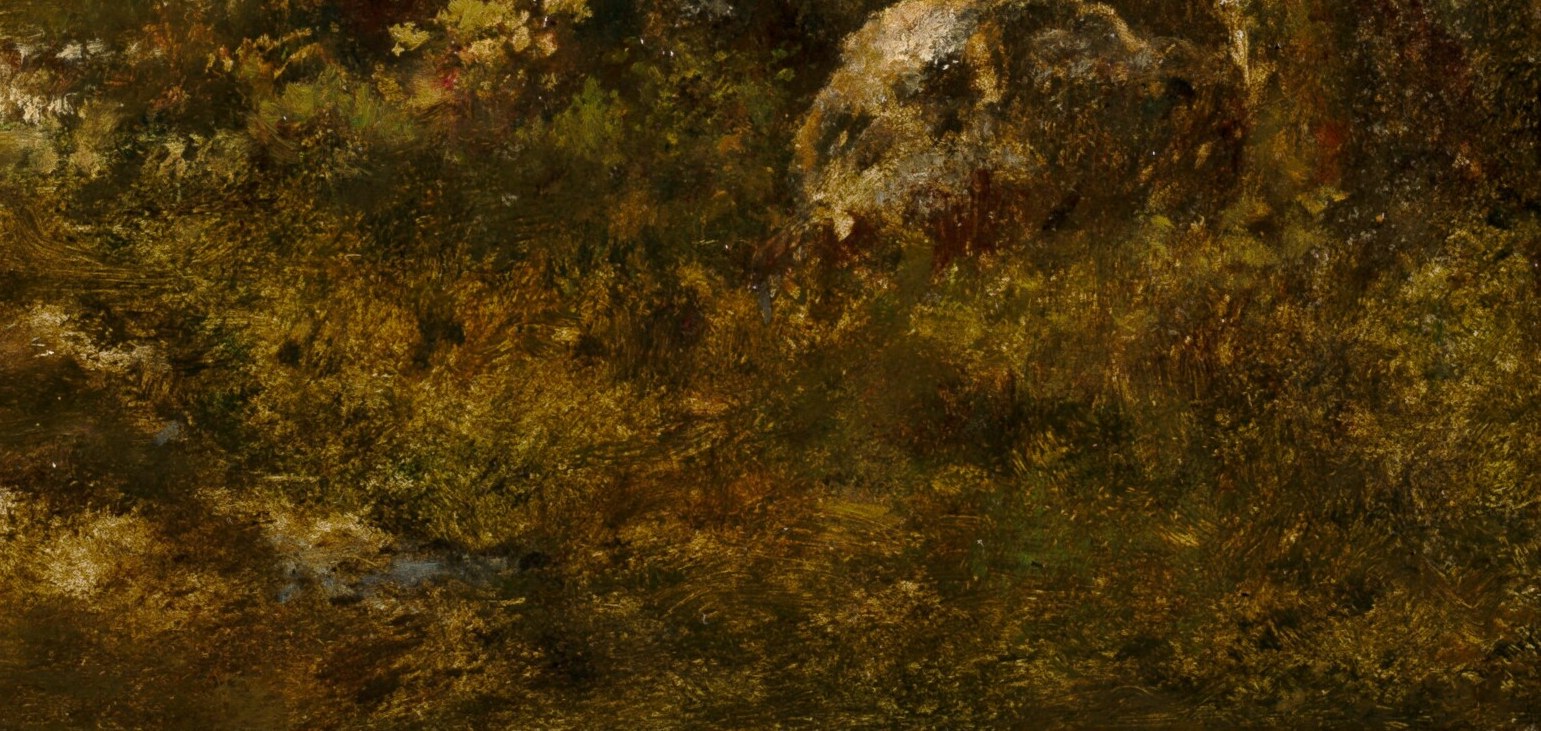
Look into the clearing at the center of the painting. Here, as in so many of his forest scenes, Diaz tucked small, almost abstract shapes into the light. Some viewers today see deer; others see a human figure. He never clarified them. The ghostly forms reward the kind of slow attention that the forest itself demands. The real drama of the painting, though, is in the thick, loaded brushstrokes of the canopy, where greens and yellows are laid on with a physical energy learned from Delacroix.
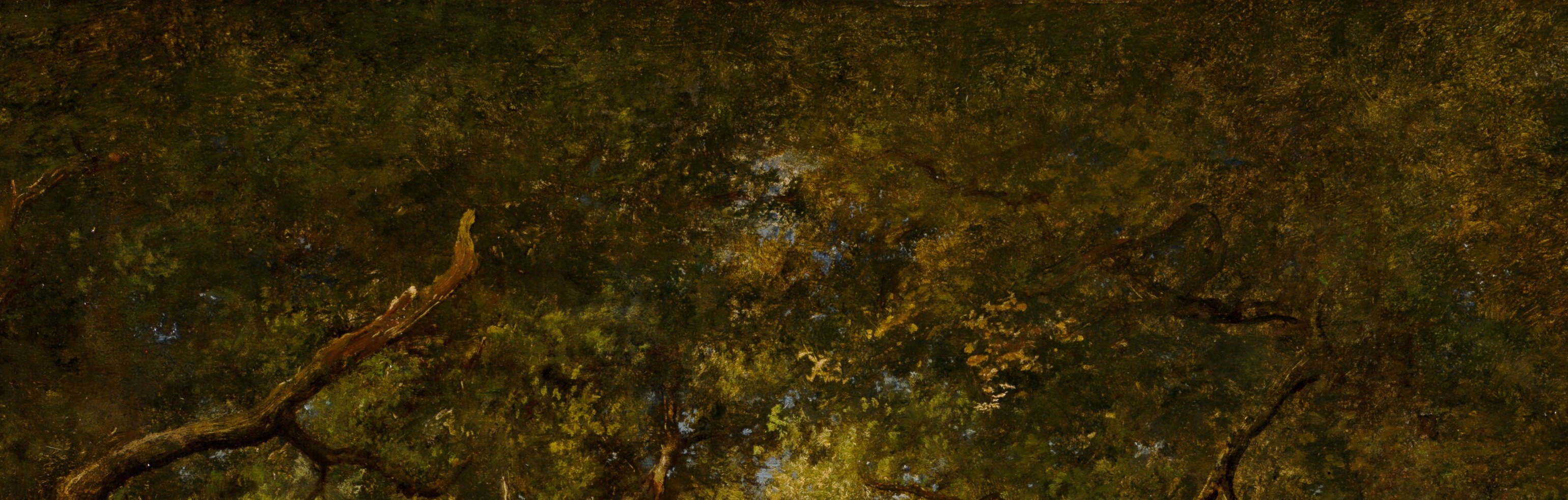
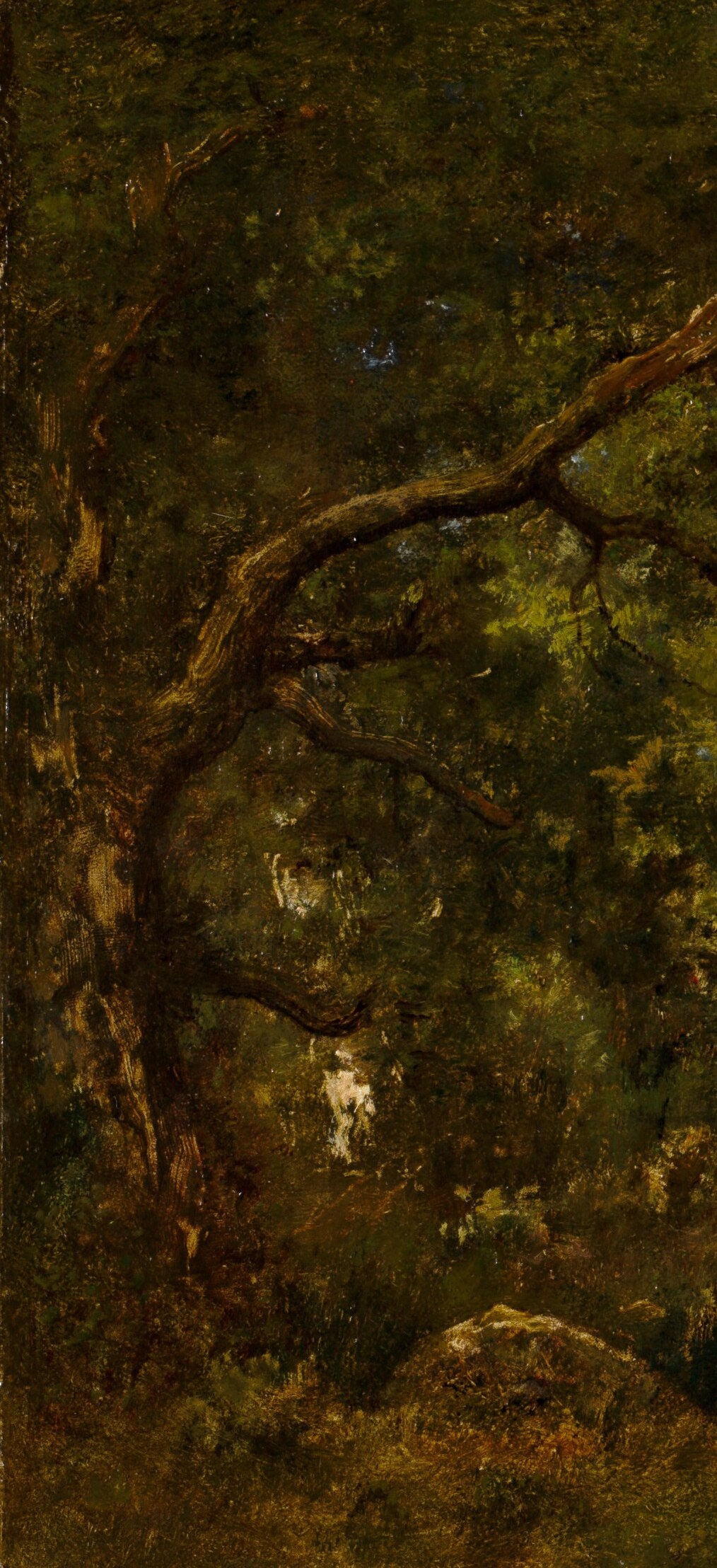
The year this was painted, Diaz was unwell. He had a chronic cough, and his health was failing badly. Yet the painting shows no obvious sign of a weakened hand. The oak trunk on the left is heavily worked with a tactile bark texture, the canopy alive with dappled late-afternoon light. A dead branch hangs from the upper left, a quiet note of decay in an otherwise lush scene, a detail that feels more poignant knowing it was painted in his final months.
Diaz spent his adulthood painting this forest, and he painted it to the end. This small panel, less concerned with a grand view than with a patch of light on the forest floor, feels like an artist's private meditation on a place he loved.
Details
Transcript
This looks like a quiet study of a forest. It was painted by an artist who adored the woods of Fontainebleau. Look closely at the sunlit clearing in the distance. Barely visible shapes. Deer, maybe figures. He hid them in many paintings. He signed and dated this panel in 1874. That same year, tuberculosis took his life. A lush, living wood. Painted at the very end.