The Large Forest by Jacob van Ruisdael
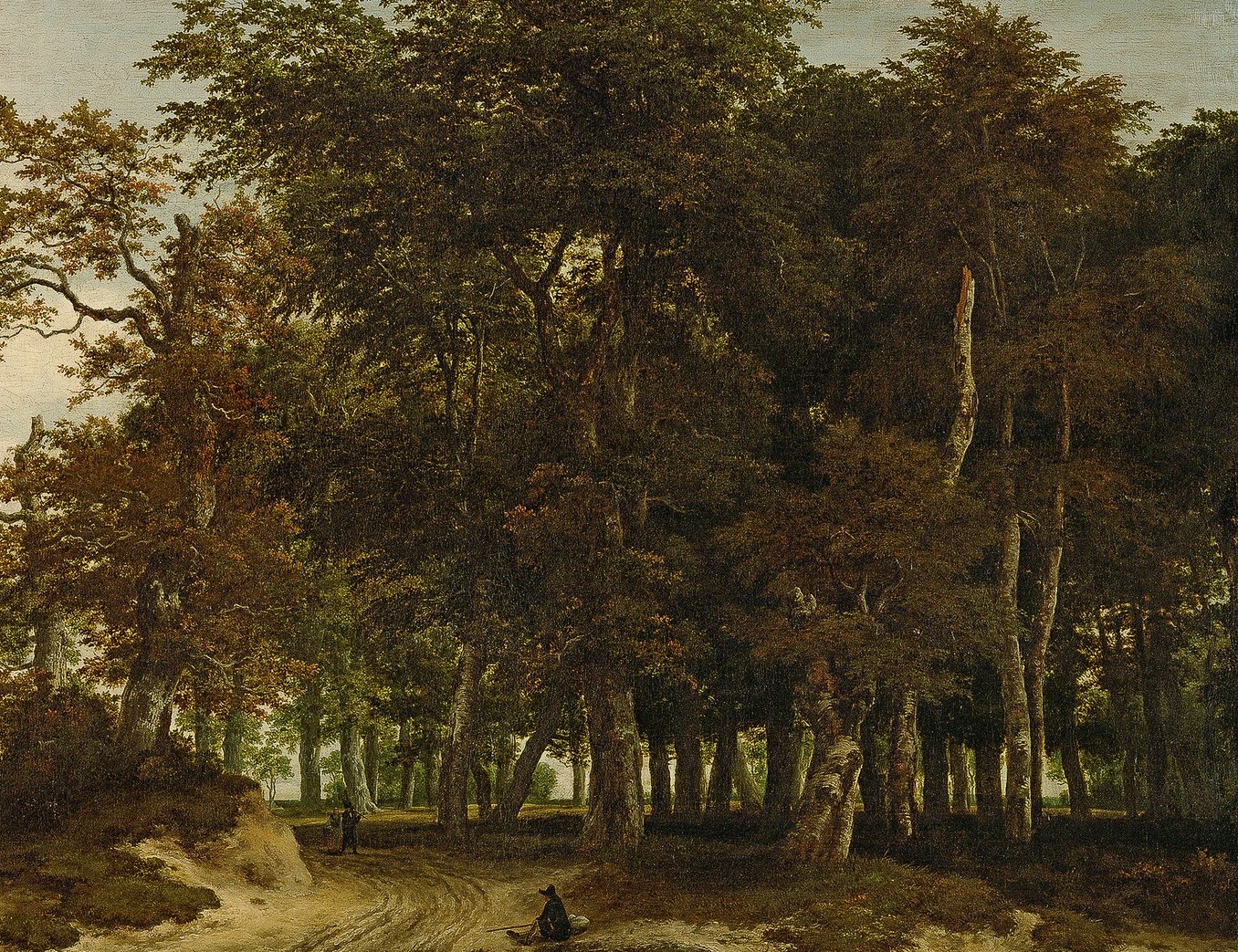
Jacob van Ruisdael's 'The Large Forest', painted around 1650, at the Kunsthistorisches Museum, initially appears as a serene woodland scene. Yet, a closer look reveals subtle details that deepen its narrative and invite contemplation.
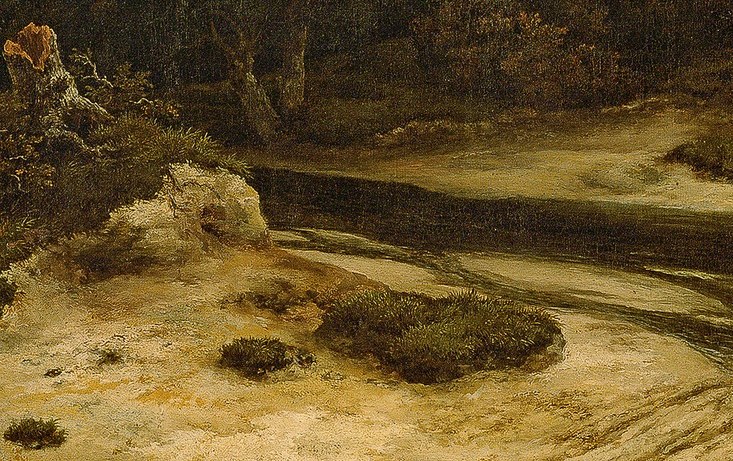
The foreground, especially the dark pool of water, hints at a recent flood, transforming the tranquility into a moment of natural consequence. This detail, easily missed, adds a layer of realism and a touch of the dramatic to the composition.
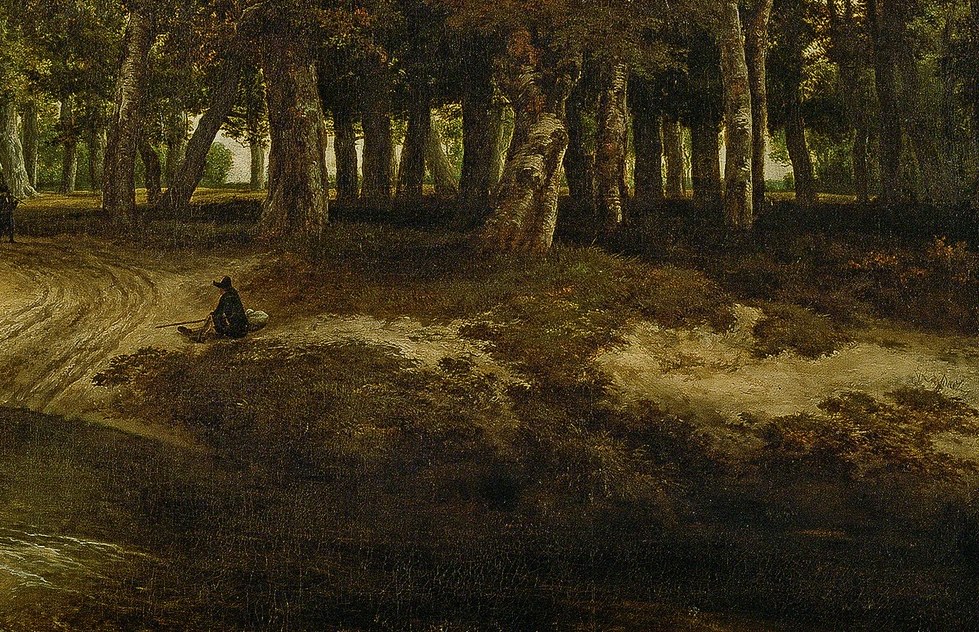
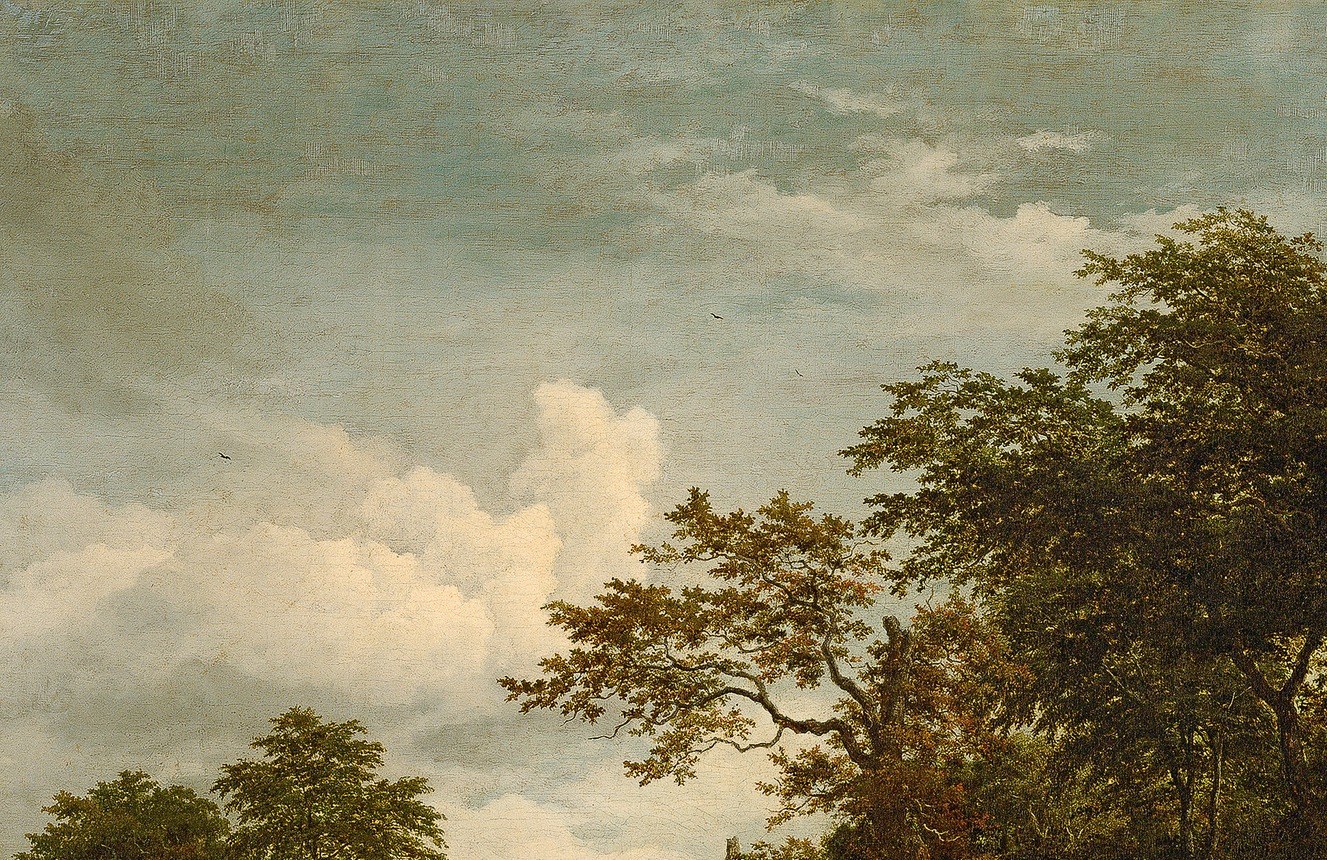
Ruisdael, a pre-eminent landscape painter of the Dutch Golden Age, used meticulous observation and a glazing technique to achieve the luminous quality of light on foliage. The solitary figure seated by the road draws the viewer into the scene, emphasizing humanity's modest place within the grandeur of nature, a common theme in 17th-century Dutch art.
This painting, part of the Kunsthistorisches Museum's collection since the 19th century, continues to offer new discoveries to those who pause and look beyond the obvious. What other hidden stories might Ruisdael have painted into his landscapes?
Details
Transcript
This Dutch Golden Age landscape feels tranquil, almost empty. But the artist painted more than just trees and a winding road. Look closely at the water in the foreground, near the path. A recent flood left this pool, changing the scene completely. And here, a solitary figure sits, contemplating the vast forest. This human element invites us into nature's quiet solitude.