Cambyses Appointing Otanes Judge by Victor Wolfvoet
The Metropolitan Museum of Art officially dates this painting to 1800, which is absolutely wrong. It is by Victor Wolfvoet the Younger, a Flemish painter and art dealer who died in 1652. He worked in Antwerp in the immediate orbit of Peter Paul Rubens, and every inch of this canvas says 1640, not 1800. The misdating is a known catalogue quirk, a clerical error that stuck.
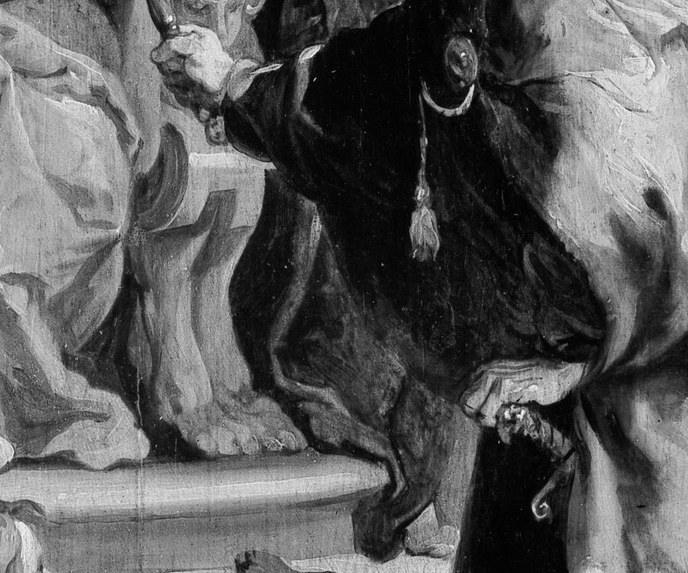
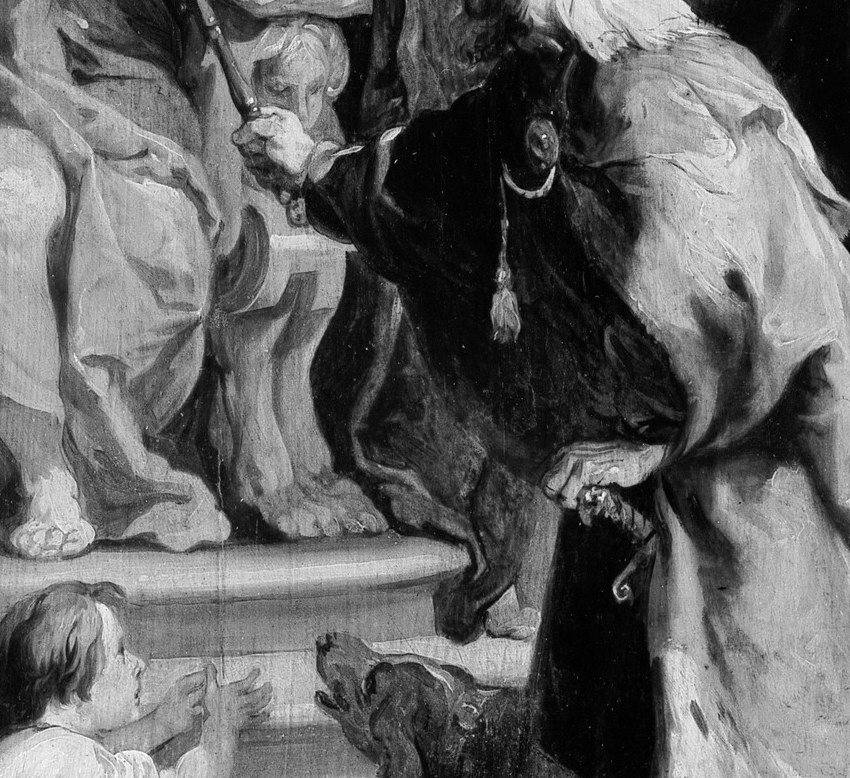
Look first at the kneeling figure in the foreground. His back is painted in grisaille, a monochrome technique using only shades of gray to simulate sculptural stone. It is a virtuoso passage of flesh modeled entirely by light and shadow. Rubens and his circle used grisaille for oil sketches and modello panels, never for finished academic paintings two centuries later. The technique is the painting's signature.
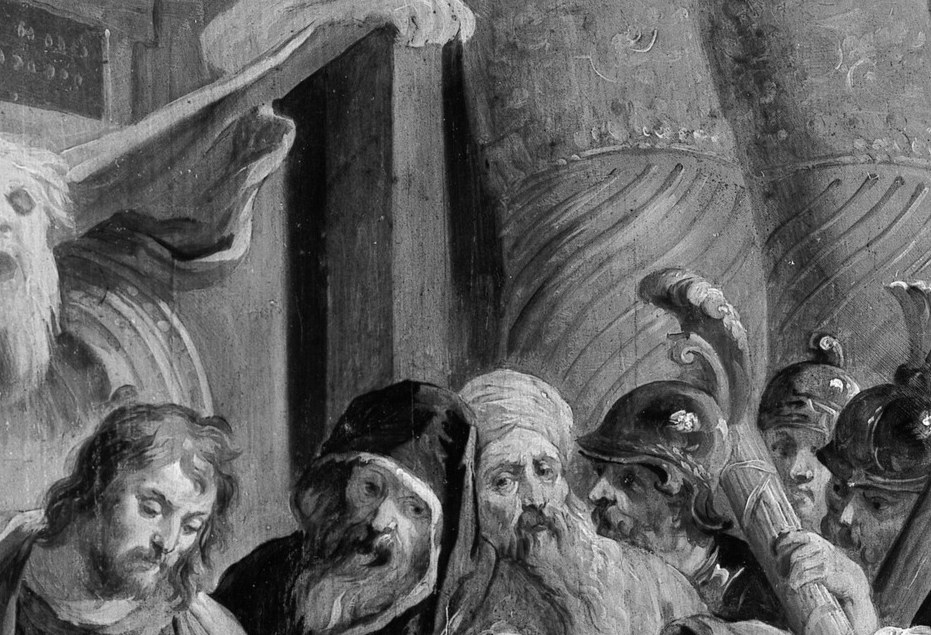
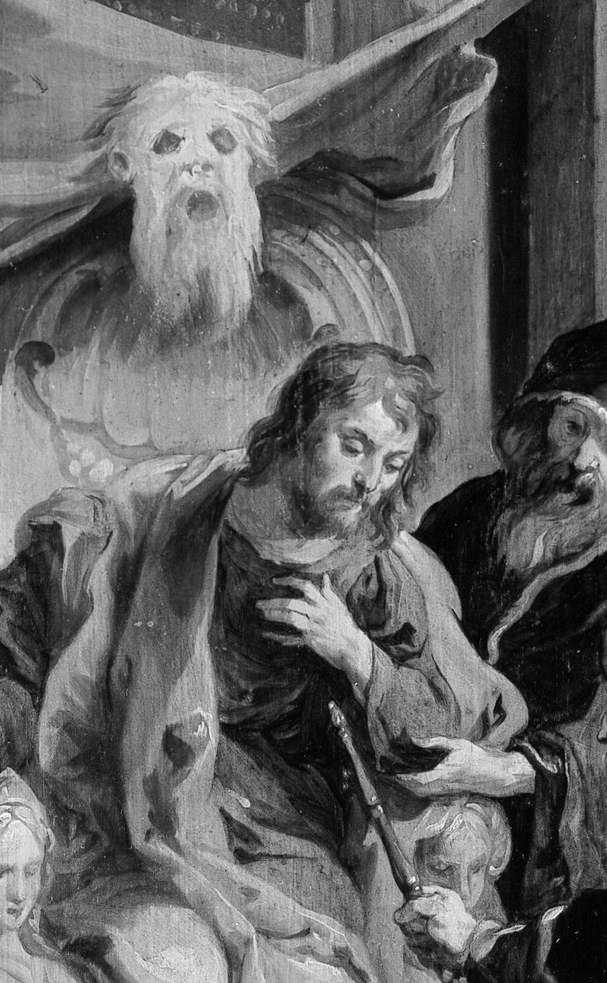
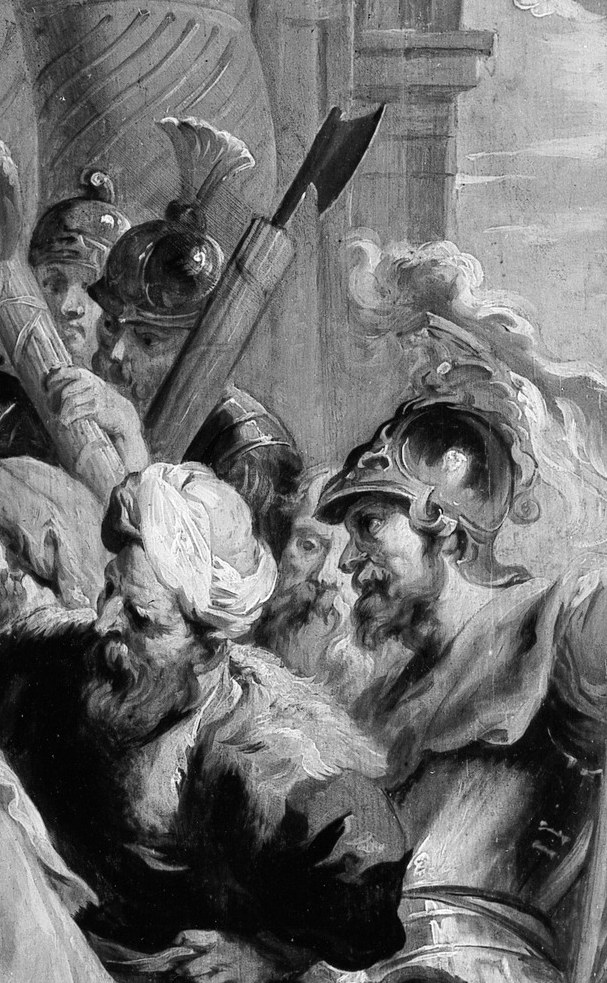
Wolfvoet ran a busy workshop in Antwerp, copying and riffing on Rubens's compositions for collectors who could not afford an original. Cambyses Appointing Otanes Judge is a history painting drawn from Herodotus: the Persian king Cambyses appoints Otanes, a judge he had flayed alive, as a grim reminder of justice. Wolfvoet stages it like a Rubensian courtroom drama, packed with plumed helmets, turbans, and a hidden witness peering through the curtain at upper left.
The Met is aware. The accession record almost certainly means circa 1640, but the database reads 1800. It happens. A Dutch Golden Age painting listed under the Napoleonic era is a quiet museum-world joke, and the painting itself does not care. It just hangs there, unmistakably Baroque.
Details
Transcript
The date stamped on this canvas makes no sense. Victor Wolfvoet died in 1652. He was a Flemish painter in Rubens's workshop. And this is all the stamp of Rubens. Look at the kneeling man's back. That is pure grisaille. Painted light. The Met lists the date: 1800. The 17th-century style is unmistakable. The date is a typo.