Bivouac of a Sioux War Party at Sunrise by Catlin, George
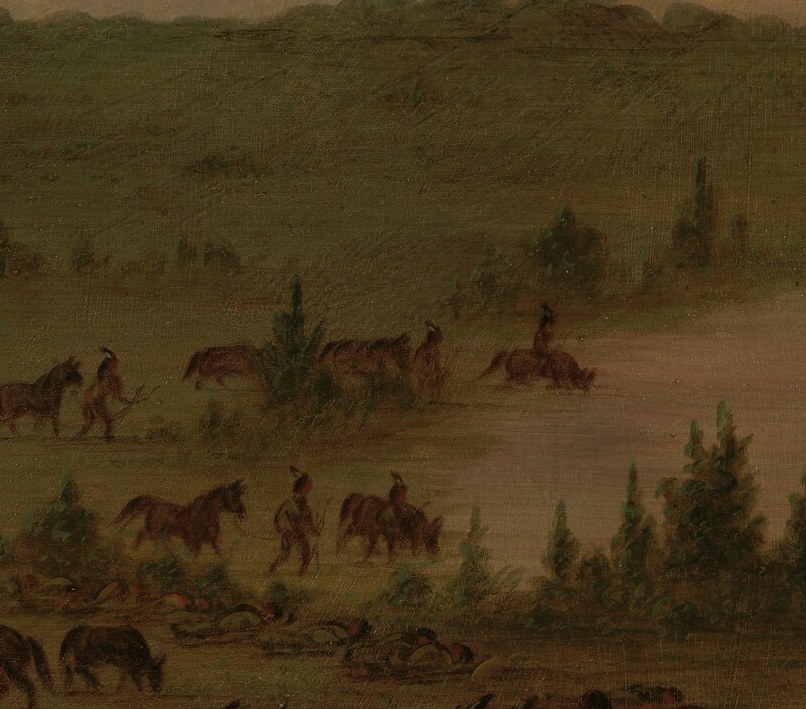
George Catlin's "Bivouac of a Sioux War Party at Sunrise" (1861/1869) at the Smithsonian American Art Museum, offers a rare, tranquil view of a Sioux war party. Instead of battle, it captures a quiet morning, with warriors resting or tending horses under a vast sky.
This oil on card painting, mounted on paperboard, beautifully illustrates Catlin's dedication to documenting Indigenous life in the American West. Look closely in the lower right corner, and you'll find the artist's subtle initials, 'GC', confirming his hand in this compelling work.
Catlin, originally a lawyer, shifted his career to painting after extensive travels through the American frontier in the 1830s. His work became a crucial visual record of the Plains Indians. The small '236' label visible in the painting offers a glimpse into its journey through collections over time.
It's fascinating how these small, often overlooked details can connect us to the artist and the artwork's history.
Details
Transcript
This painting shows a Sioux war party at sunrise. The artist, George Catlin, captured many such scenes. He was a lawyer who became a painter, focused on the West. But look closely, hidden in the lower right. You can spot the artist's initials, 'GC'. And a collection label, '236', marking its provenance.