The Night-Hag Visiting Lapland Witches by Henry Fuseli
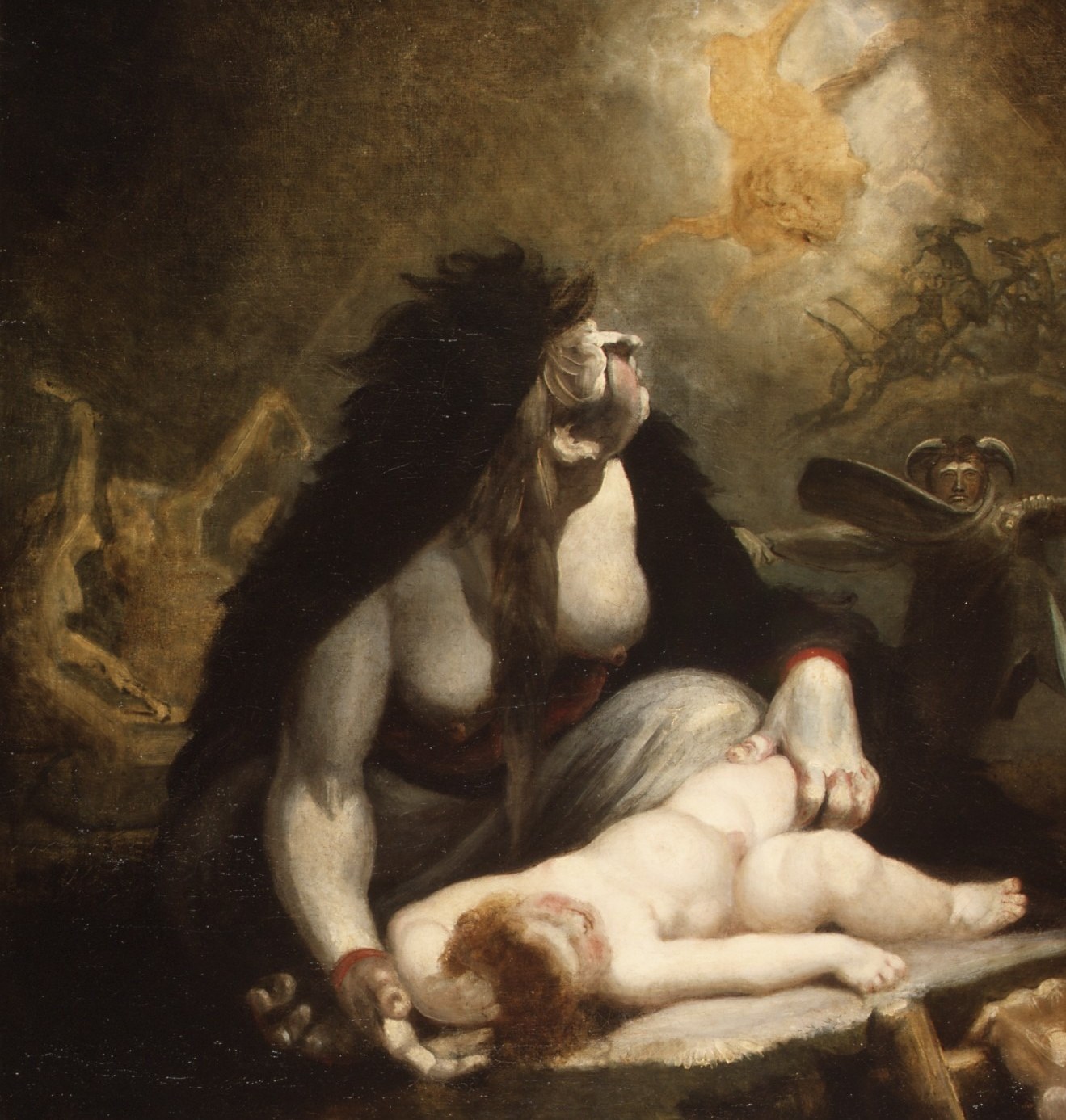
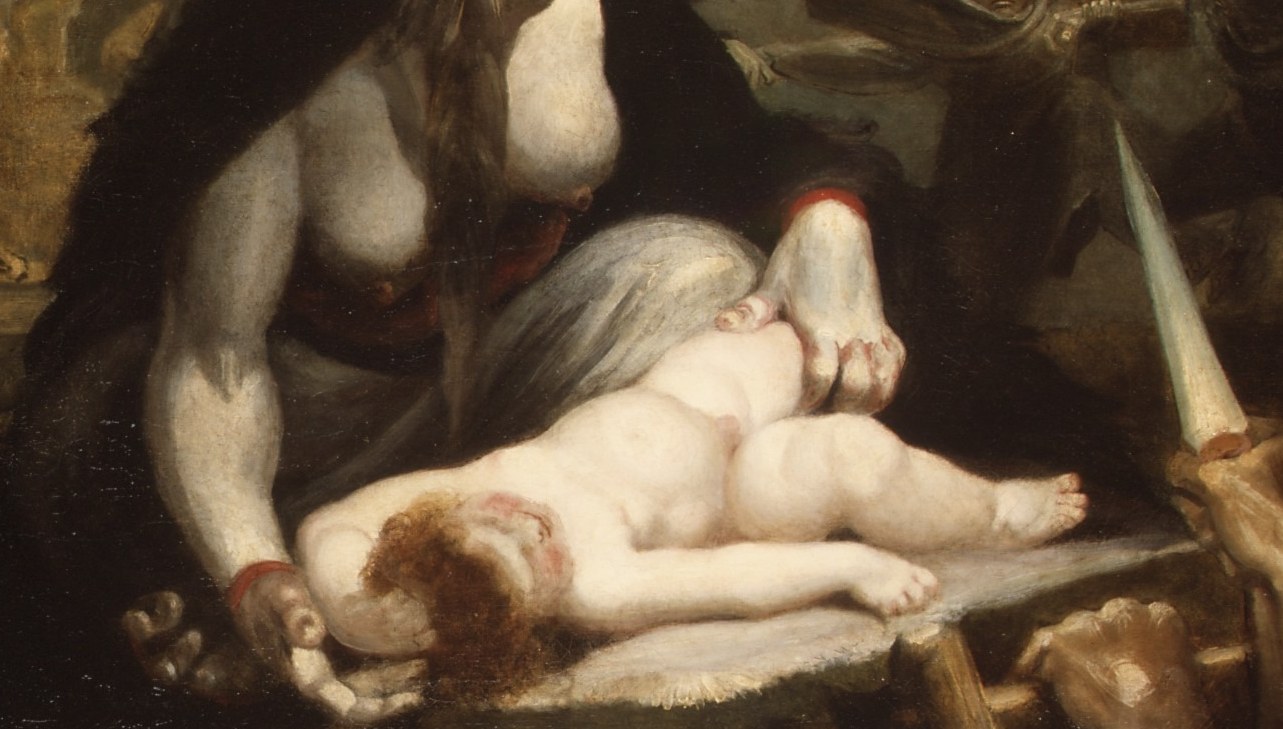
The Night-Hag Visiting Lapland Witches, painted by Henry Fuseli in 1798, is a scene designed to make you feel watched. Housed at the Metropolitan Museum of Art, it shows a menacing hag looming over a sleeping child with a knife in hand. It is a textbook Romantic image of terror and the sublime, rooted in the era's obsession with folklore and the occult, particularly the witch trials of Lapland.
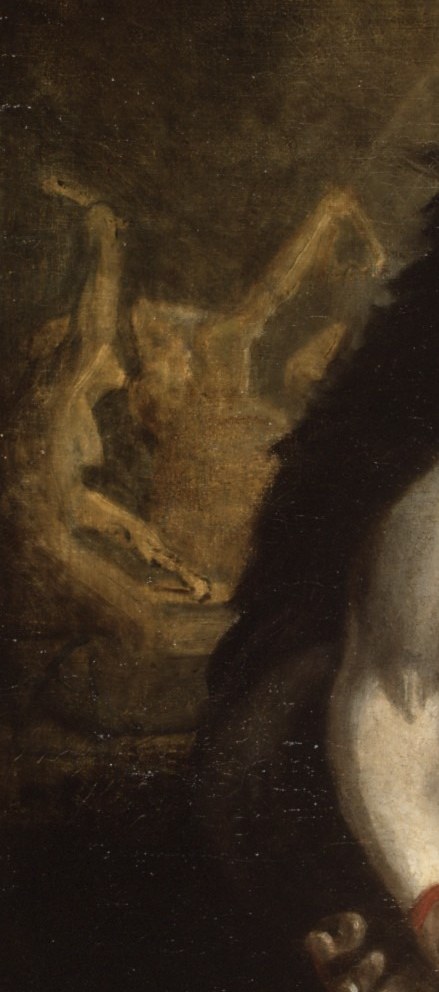
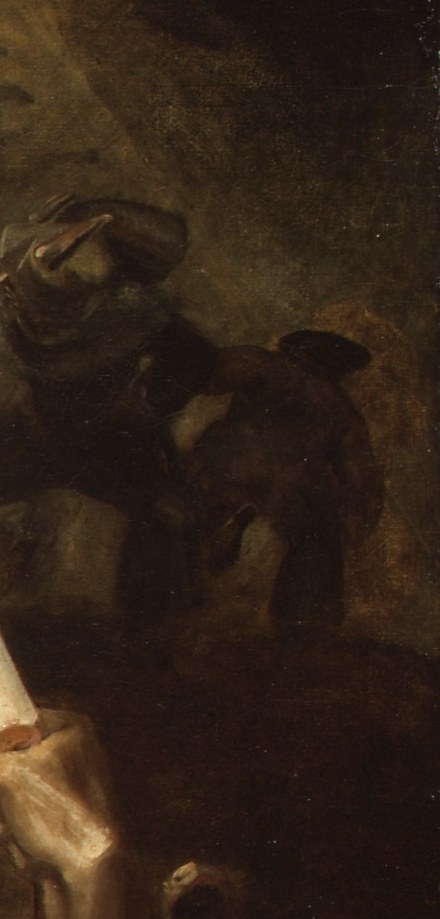
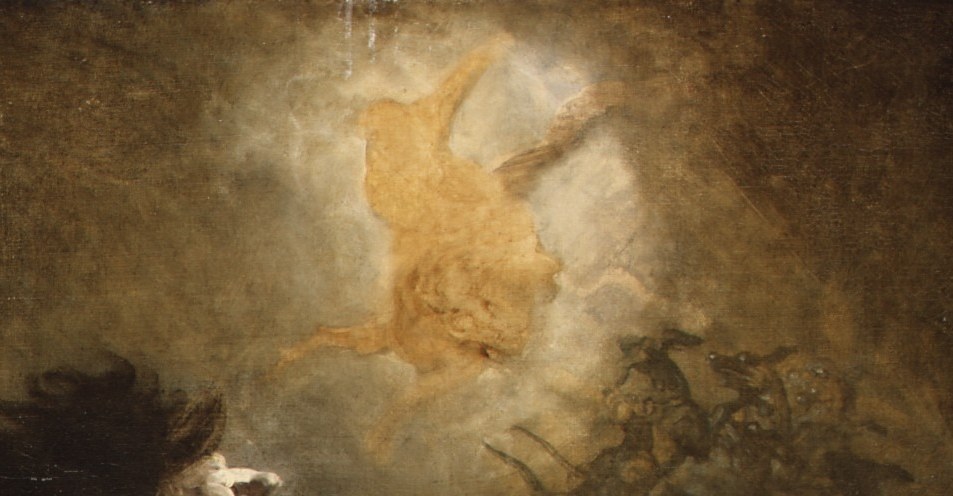
Your eye goes first to the center: the bright, vulnerable infant and the hulking witch above it. That is the immediate shock. But Fuseli built a second, slower scare into the painting. Let your gaze drift to the margins, where the blackness seems almost total. Shapes begin to resolve there. Faces and figures emerge from the murk on both the left and right edges.
Fuseli spent his career in London chasing the psychological edge of horror, and this painting is one of his most effective traps. The chiaroscuro is so extreme that the coven members in the shadows are invisible on a casual scroll. They only appear when you linger. The painting has more witnesses than you can easily count, dissolving back into the void, implying an unseen crowd just outside the frame.
The horror is not just the knife or the hag's grimace. It is the realization that the dark is full of figures who have been staring at you the whole time, waiting for you to notice them.
Details
Transcript
Henry Fuseli painted this nightmare in 1798. A witch hovers over a sleeping child. Look at the edges of the painting. You are not alone with the witch. Now let your eyes adjust to the dark. A coven is watching. This is not a private nightmare. You are surrounded.