The Capture of Carthage by Giovanni Battista Tiepolo
Giovanni Battista Tiepolo's 'The Capture of Carthage' (1725) is a young man's painting. He was 29 years old and determined to pack the entire fury of a Roman siege into one enormous canvas. It worked: the Metropolitan Museum of Art calls it a masterclass in theatrical battle painting.
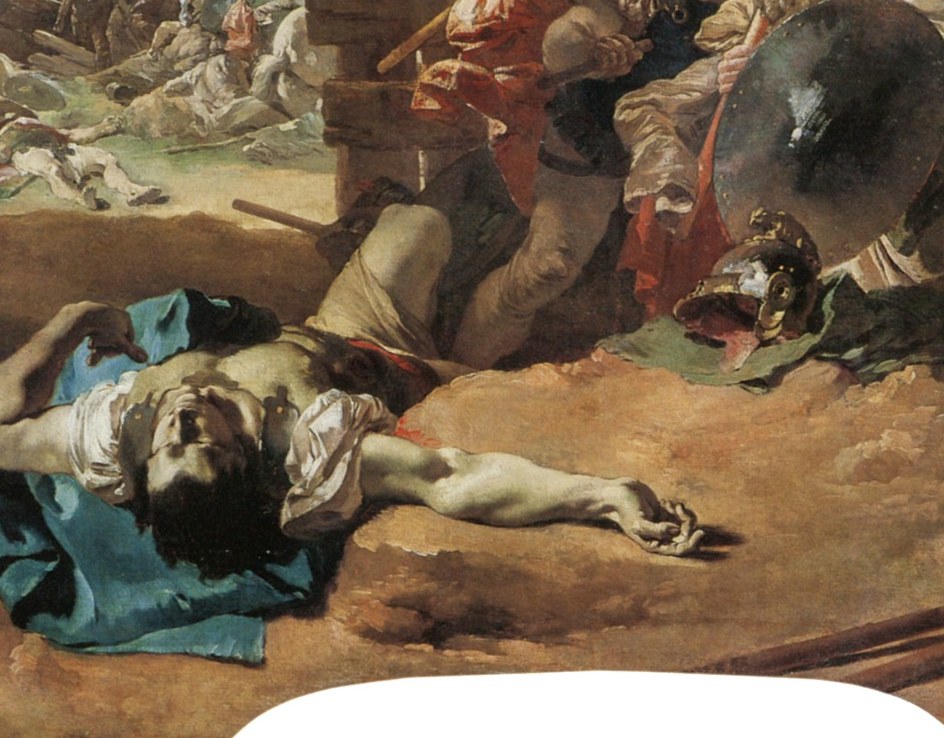
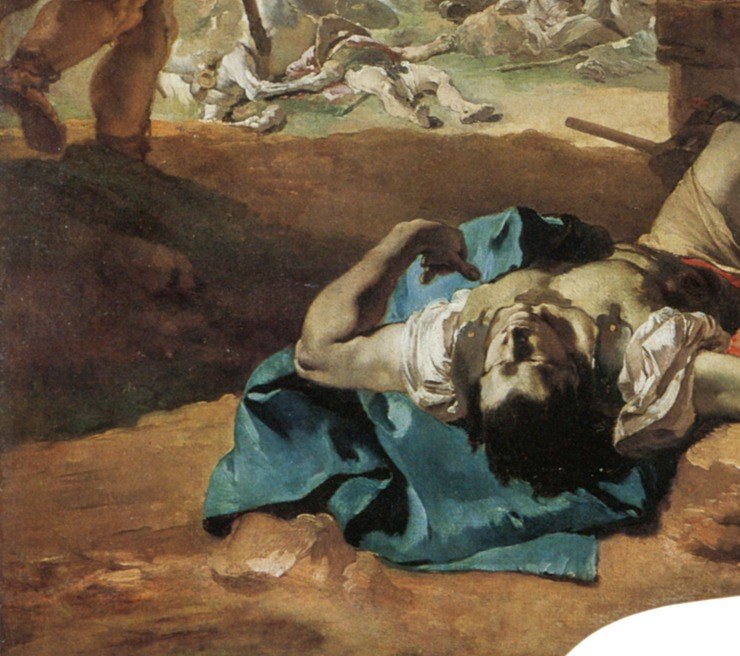
Start with the fallen soldier in the foreground, directly beneath the white horse. His body is foreshortened, his armor already cast aside. That pool of ultramarine blue in the lower left belongs to him or someone just like him, a deliberate, quiet note of grief in the middle of a victory parade.
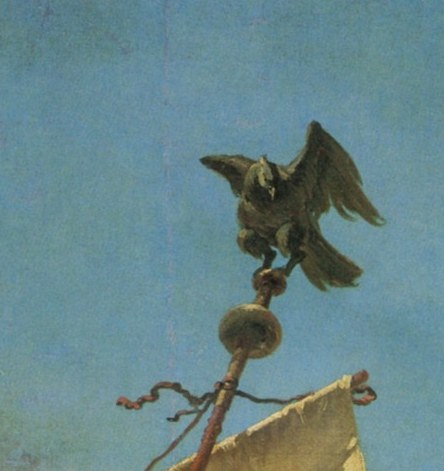
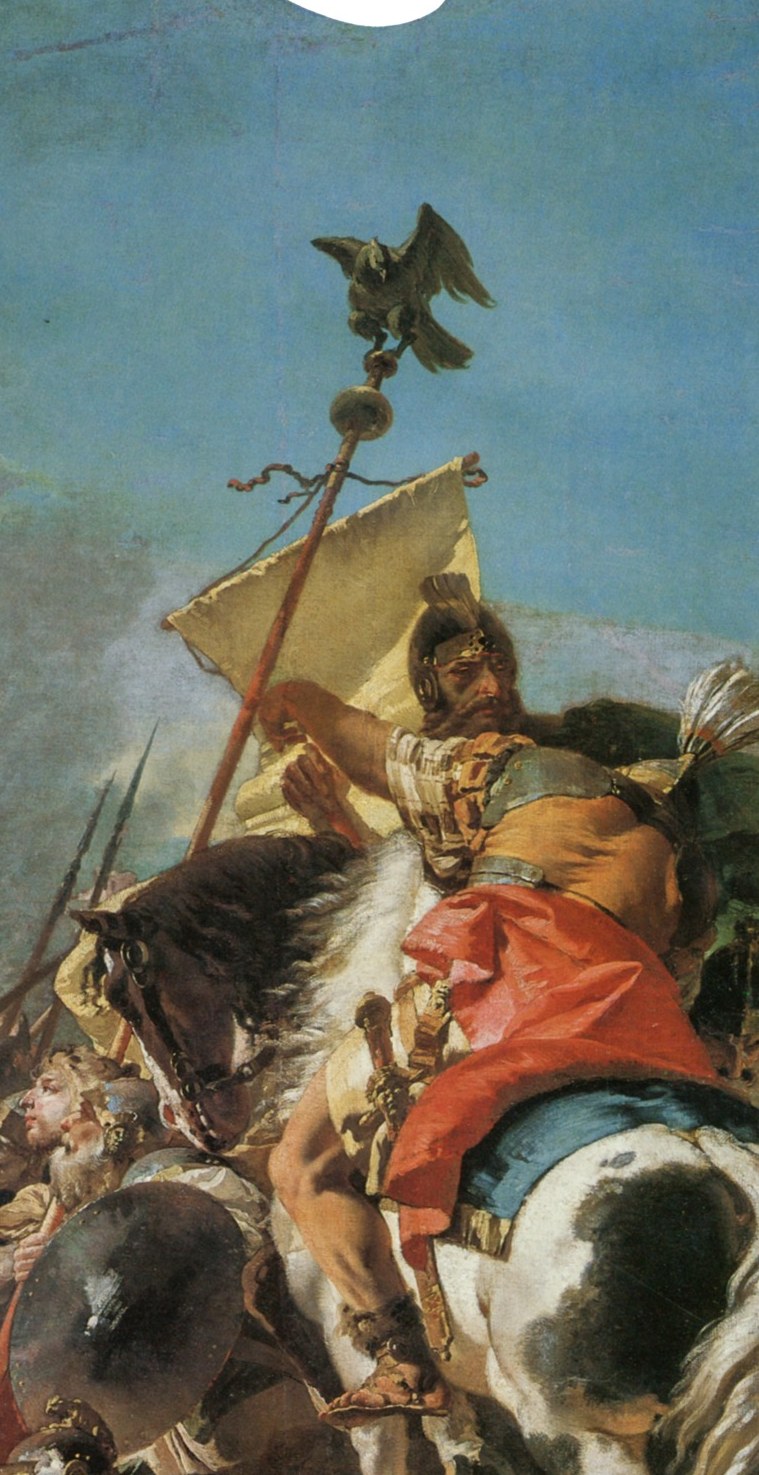
Then look up. The commander on the rearing horse is pure Rococo theater. His cuirass catches the brightest light, his flag fills the upper right quadrant like a sail, and his face is lifted toward something we cannot see. Tiepolo was already famous for his frescoed ceilings in Venice; this easel painting shows him testing how much drama oil paint can hold.
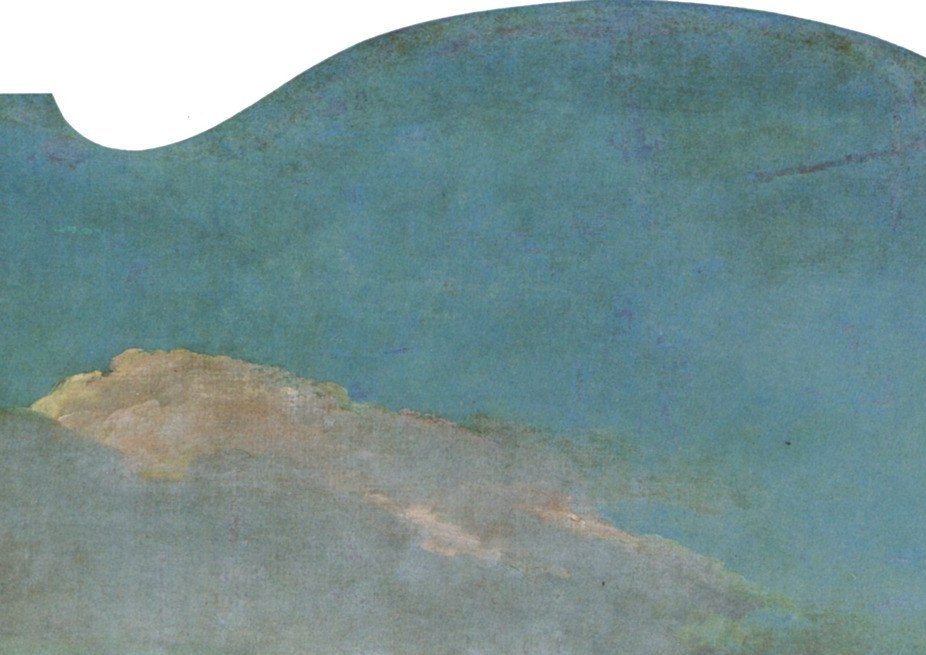
The city burns in the background, a narrow strip of smoke and towers that is easy to miss on a phone screen. Rome really did burn Carthage for 17 days in 146 BC. The painting commemorates a triumph, but the body in the foreground tells the other half of the story.
A young painter, a dead empire, and one subdued splash of blue to remind you who paid for the view.
Details
Transcript
A general, lifted into the sun, signals triumph. His face is a snapshot of resolve, eyes fixed on a horizon we cannot see. The 24-year-old Tiepolo painted this to prove he could command a canvas like a general commands a field. But look at what lies directly below the rearing horse. A single soldier, crumpled, his armor already a relic on the ground. Rome conquered Carthage in 146 BC. They burned it for 17 days. A wave of blue in the corner mourns in the language of color.