Three Musicians by Diego Velázquez
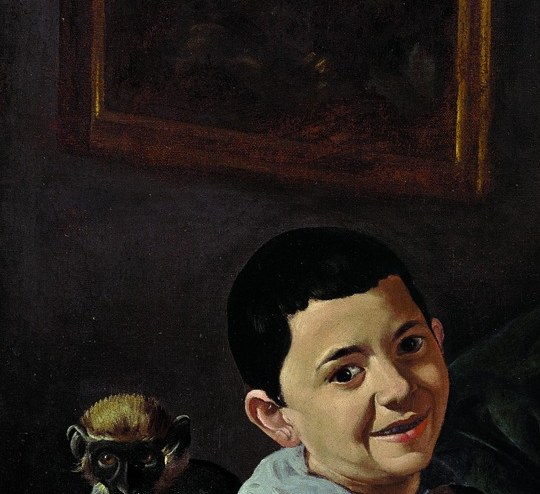
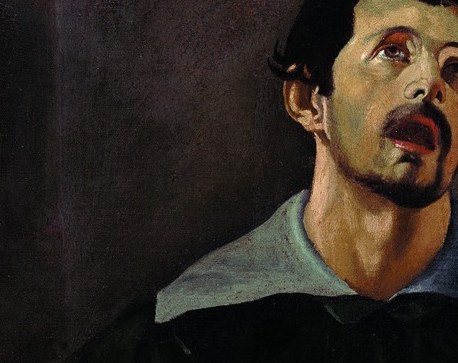
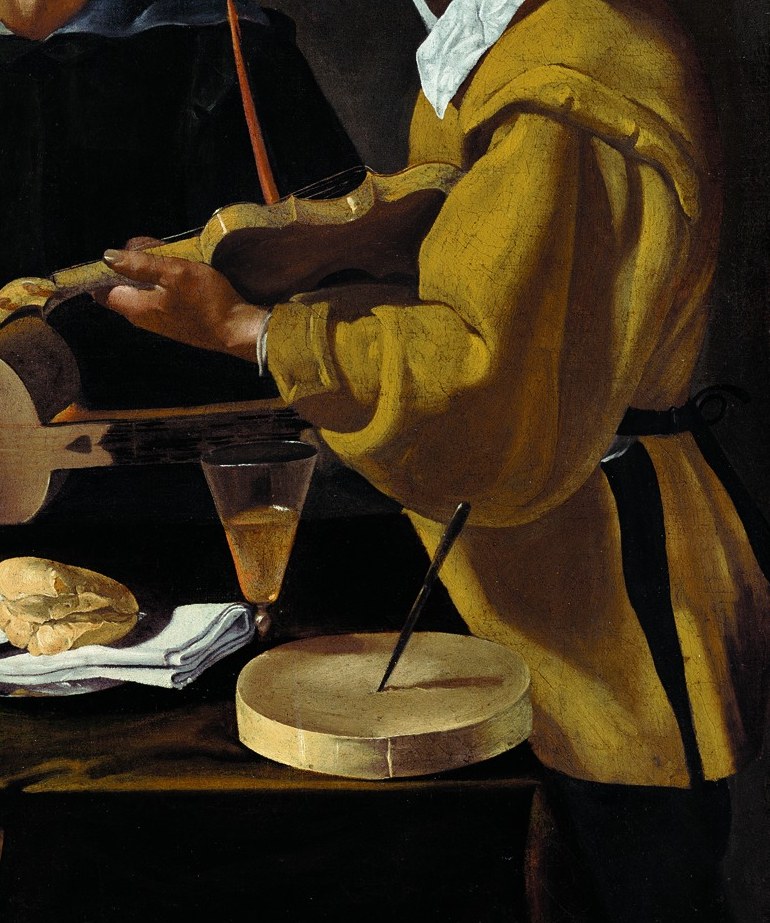
Diego Velázquez wasn't yet twenty when he painted Three Musicians in 1618. The painting hangs now in the Gemäldegalerie in Berlin, but it began in the taverns of Seville. It shows three young men gathered around a table with bread, a dark drinking vessel, and a lute. The middle singer's mouth is open mid-song, his hands caught on the strings. That open mouth was almost unprecedented, the effort to paint a living voice rather than a posed musician was a gamble for a teenage artist who was already chasing truth over flattery.
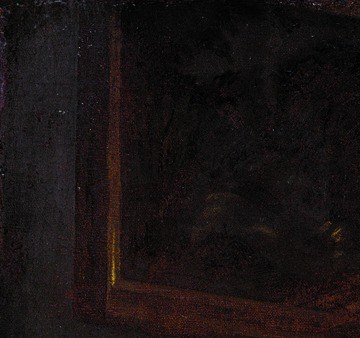
Spend time with the upper-left edge of the painting. What looks like a heavy shadow holds a ghost: X-rays have shown that a fourth figure once stood there, part of the original composition Velázquez later painted out. You can make out the faint curve of a jaw and the roundness of a shoulder if you look long enough. Removing him shifted the whole emotional weight of the scene, from a quartet into the tighter, more intimate triad we see now.
Velázquez would go on to become the greatest painter of the Spanish court, but he never stopped editing. He reworked paintings for years, sometimes decades. Here, at nineteen, he was already doing it: watching, revising, deciding who gets to stay in the frame, and who has to leave the song.
Details

Transcript
Music pulls the eye across three faces. Velázquez was barely nineteen when he painted this. He shows the middle singer frozen mid-note. Almost no one painted a human voice before this. Now look into the dark above the table. X-rays revealed a fourth figure standing in the shadow. Velázquez painted over him. Only the edge remains.