Pope Pius VII in the Sistine Chapel by Ingres, Jean-Auguste-Dominique
View the artwork: Pope Pius VII in the Sistine Chapel →
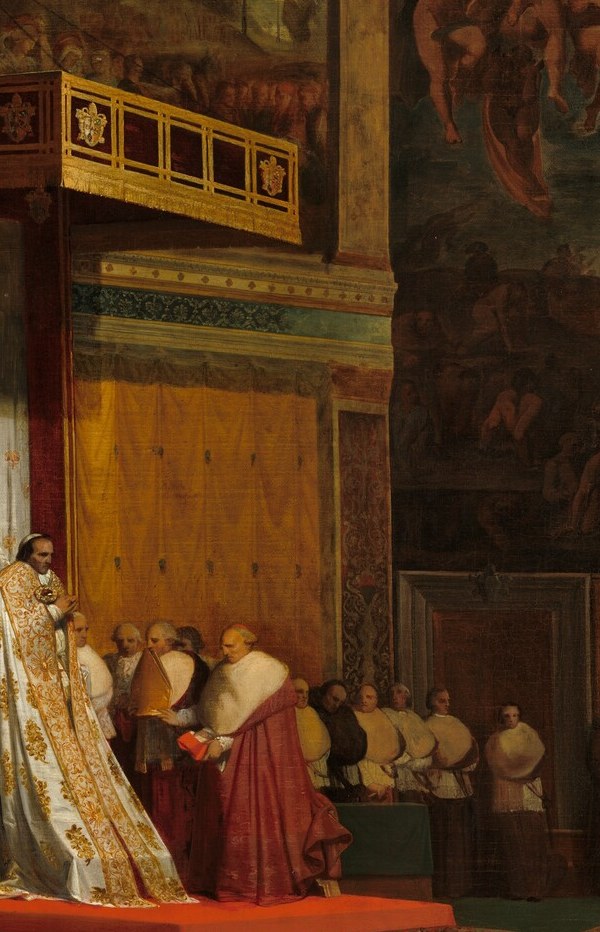
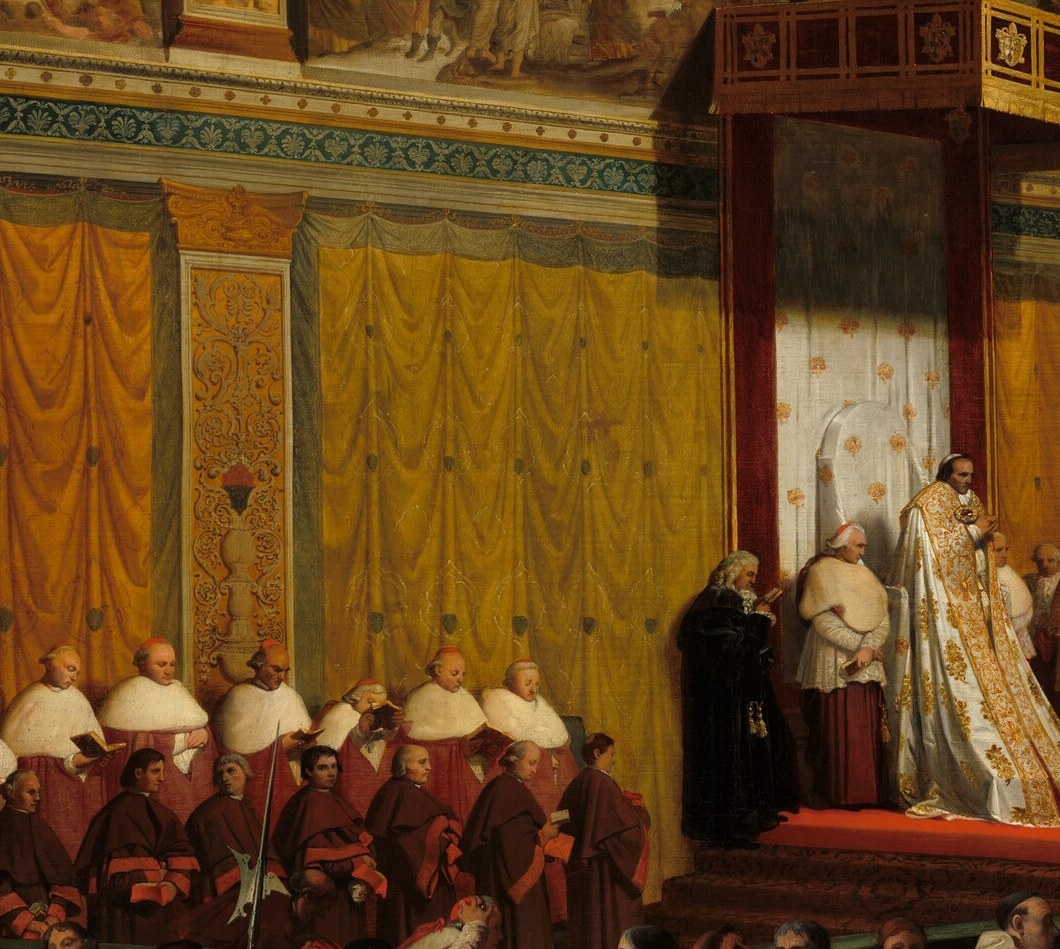
This is 'Pope Pius VII in the Sistine Chapel,' painted by Jean-Auguste-Dominique Ingres in 1814. It hangs in the Louvre today. The painting was commissioned by Charles Marie Jean Baptiste Marcotte, a friend and patron of Ingres, shortly after the Pope returned to Rome from years of captivity under Napoleon.
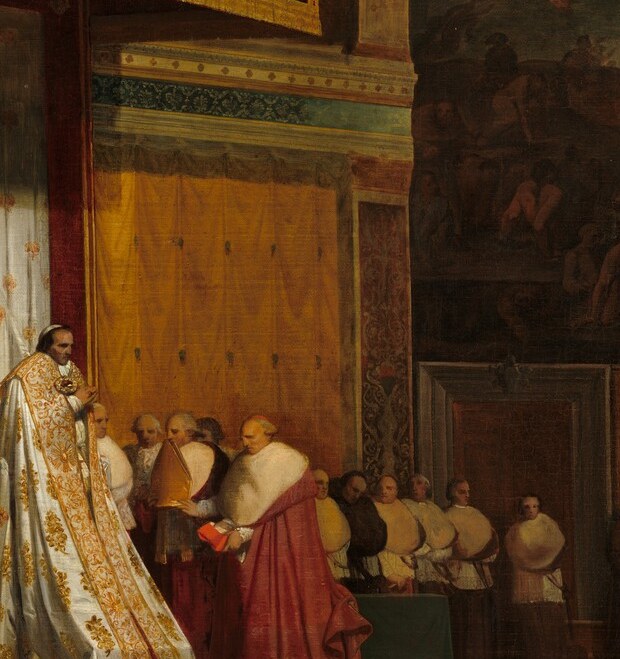
Look at the white vestments first. Ingres isolates the Pope against a wall of red cardinals, his luminous silk robes are a technical exercise in tonal painting, and they also announce the restoration of papal authority. Then look into the deep background. Michelangelo's original 'Last Judgment' fresco hovers on the altar wall directly behind the Pope, a painting inside the painting that most viewers scroll past.
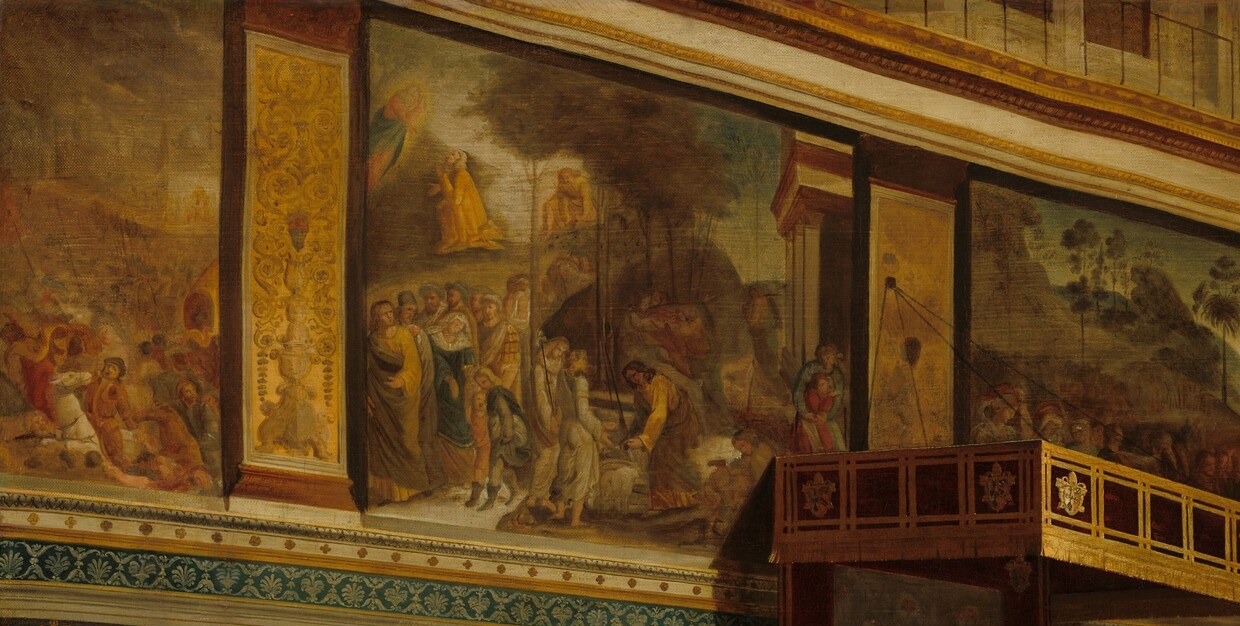
Pius VII had been imprisoned by Napoleon for five years. By 1814 he was free again, and Ingres stages his return to power inside the Sistine Chapel itself. The ceremony is not a private ritual, spectators watch from the upper-left loggia, and every cardinal and attendant is arranged according to actual liturgical protocol. It is a portrait of an institution as much as a man.
The painting rewards patience. The longer you look past the Pope, the more the room fills up with witnesses, with history, with Michelangelo's watchful frescoed figures. How many paintings hide two other paintings in plain sight?
#arthistory #ingres #michelangelo
Details
Transcript
He was Napoleon's prisoner. Now he's back. Ingres centers the Pope in isolated white. But look past the canopy, to the altar wall. Michelangelo's Last Judgment is happening behind him. Divine judgment, presided over by the restored pontiff. Now find the upper-left gallery. Civilian eyes watching from above. A ceremony witnessed.