Artwork
Pope Pius VII in the Sistine Chapel
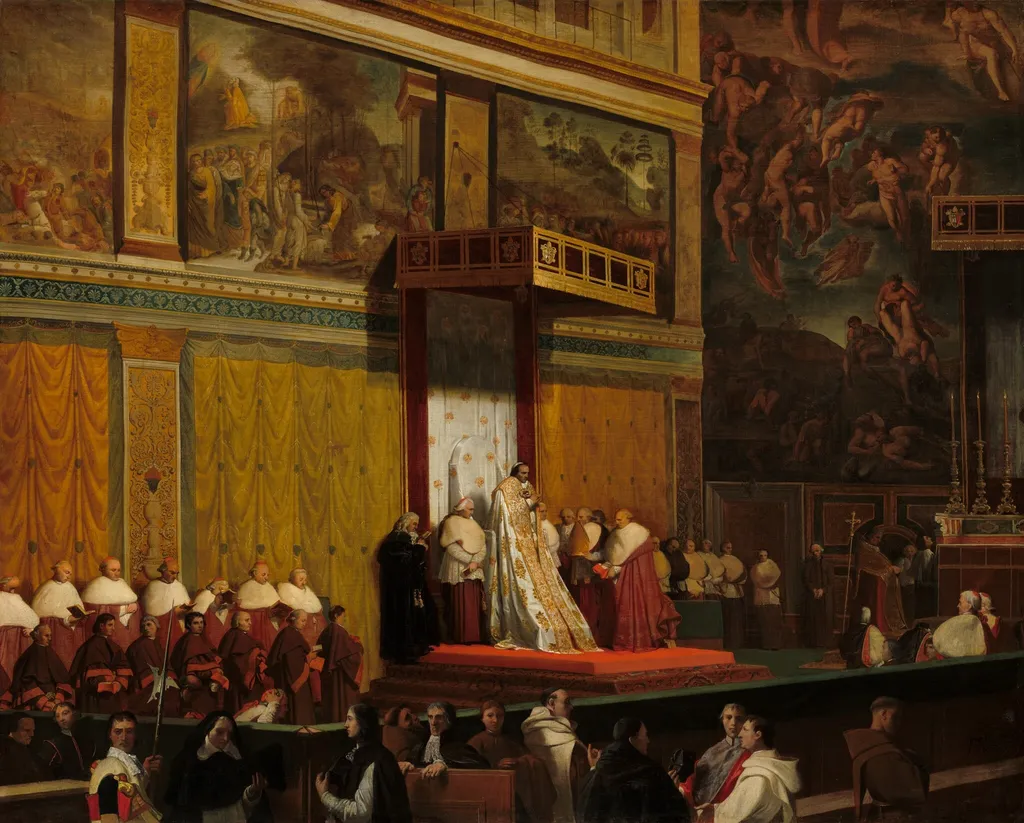
Pope Pius VII in the Sistine Chapel is an oil painting by the Neoclassicist artist Jean Auguste Dominique Ingres. It dates from 1814 and is held in the collection of the National Gallery of Art.
- Inscription
- Inscribed:lower right: Ingres 1810 / ROM. [the last digit of the date, which originally read 1814, was erased and falsely restored sometime before 1921 as 1810]
About this work
Subject & Meaning
Jean-Auguste-Dominique Ingres's 1814 painting depicts Pope Pius VII conducting Mass inside the Sistine Chapel in Rome.
Jean-Auguste-Dominique Ingres's 1814 painting depicts Pope Pius VII conducting Mass inside the Sistine Chapel in Rome. The work carries significant political and symbolic meaning related to the Pope's recent history; Pius VII had previously been kidnapped and detained in France by Napoleon. Consequently, Ingres deliberately emphasizes the Pope's restored authority following his captivity.
Exhibited at the Salon of 1814 in Paris, which was the first salon held after the Bourbon restoration, the painting serves as a visual representation of the Pope's regained power and the broader political restoration of the era.
Technique & Style
Jean-Auguste-Dominique Ingres's Pope Pius VII in the Sistine Chapel (1814) is executed in oil on canvas, a medium consistent with the artist's neoclassical practice. Measuring 74.5 by 92.7 centimetres, the painting demonstrates Ingres's precise, linear technique, characterized by smooth handling and meticulous detailing. The composition emphasizes clarity and order, hallmarks of his style, with a restrained palette that enhances the solemnity of the religious scene.
The handling of light and shadow is controlled, creating a sense of spatial depth while maintaining crisp contours.
History & Provenance
The painting was commissioned in 1814 by Charles-Marie-Jean-Baptiste Marcotte d'Argenteuil, a close friend and patron of Ingres, and exhibited at the Salon of 1814 in Paris, the first salon held after the Bourbon restoration. It was created during the period of Pius VII's restored authority after his detention by Napoleon, a context reflected in the work's emphasis on papal sovereignty. Following Marcotte's death, the painting passed to his daughter, Mme Alexandre Legentil, by 1867, then to her niece, Mme Marcel Pougin de la Maisonneuve, by 1921.
It was subsequently handled by Wildenstein & Co. in New York from 1940 to 1949 before being acquired by the Samuel H. Kress Foundation in June 1949 and gifted to the National Gallery of Art, Washington, in 1952. The work was also shown at the Salon of 1855.
Context
Ingres's Pope Pius VII in the Sistine Chapel was first shown at the 1814 Salon, the inaugural exhibition after the Bourbon restoration, and later re-exhibited at the 1855 Salon, indicating sustained contemporary interest. The painting's portrayal of the pope reclaiming his spiritual authority after his captivity by Napoleon has been linked in scholarship to post-Napoleonic restoration narratives. Situated within Ingres's broader oeuvre, the canvas exemplifies his neoclassical approach to religious subjects and his engagement with contemporary political events.
Today the work resides in the National Gallery of Art, Washington, as part of the Samuel H. Kress Collection.
Legacy
The painting was first presented at the 1814 Salon, the inaugural exhibition after the Bourbon restoration, where it signaled a visual affirmation of Pope Pius VII's reclaimed authority following his release from French detention. Its subsequent display at the 1855 Salon further reinforced Jean-Auguste-Dominique Ingres's reputation as a portraitist of political and religious figures. After being sold by Wildenstein to the Samuel H. Kress Foundation in 1949 and gifted to the National Gallery of Art in 1952, the work entered a major public collection, ensuring continued scholarly attention; it is frequently cited in studies of Ingres's neoclassical religious imagery and the broader cultural legacy of Napoleonic-era papal portraiture.
Overview
Jean-Auguste-Dominique Ingres's 1814 oil on canvas painting, "Pope Pius VII in the Sistine Chapel," captures the pontiff presiding over Mass within the renowned Roman chapel. This work by the French artist presents a detailed portrayal of the Pope, emphasizing his solemn presence and the grandeur of his surroundings, rendered with a focus on realism and dignity.
Own this work as a print
Artist & collection

Artist
Jean-Auguste-Dominique Ingres was a French Neoclassical painter. Ingres was profoundly influenced by past artistic traditions and aspired to become the guardian of academic orthodoxy against the ascendant Romantic…

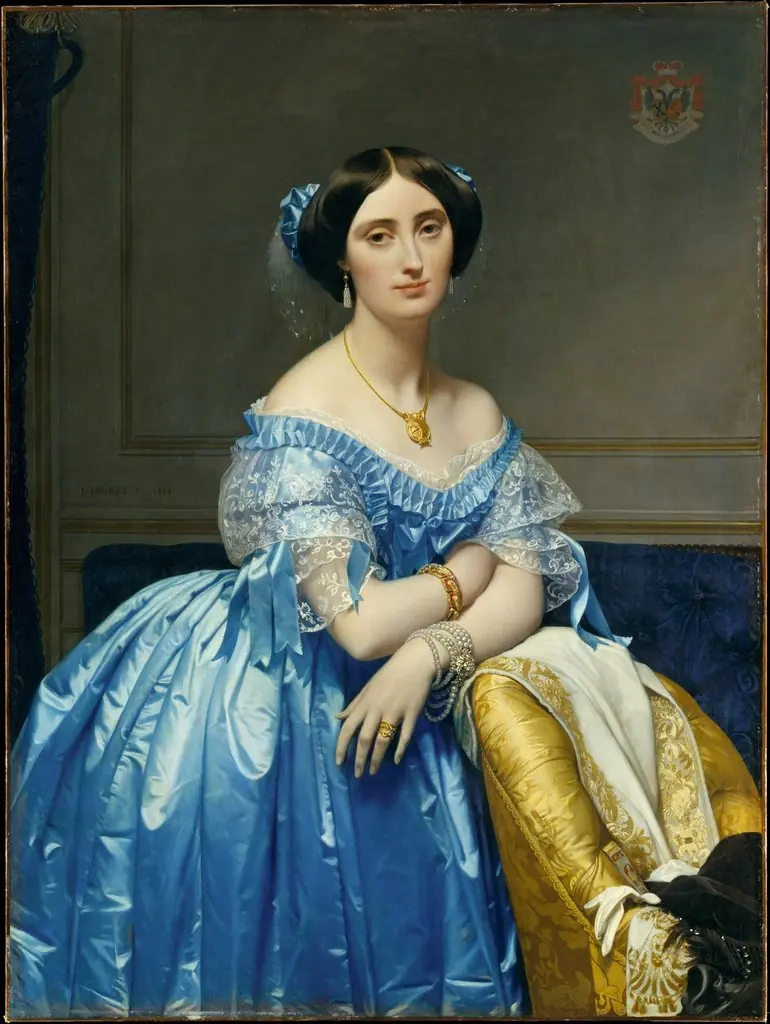 Joséphine-Éléonore-Marie-Pauline de Galard de Brassac de Béarn (1825–1860), Princesse de Broglie
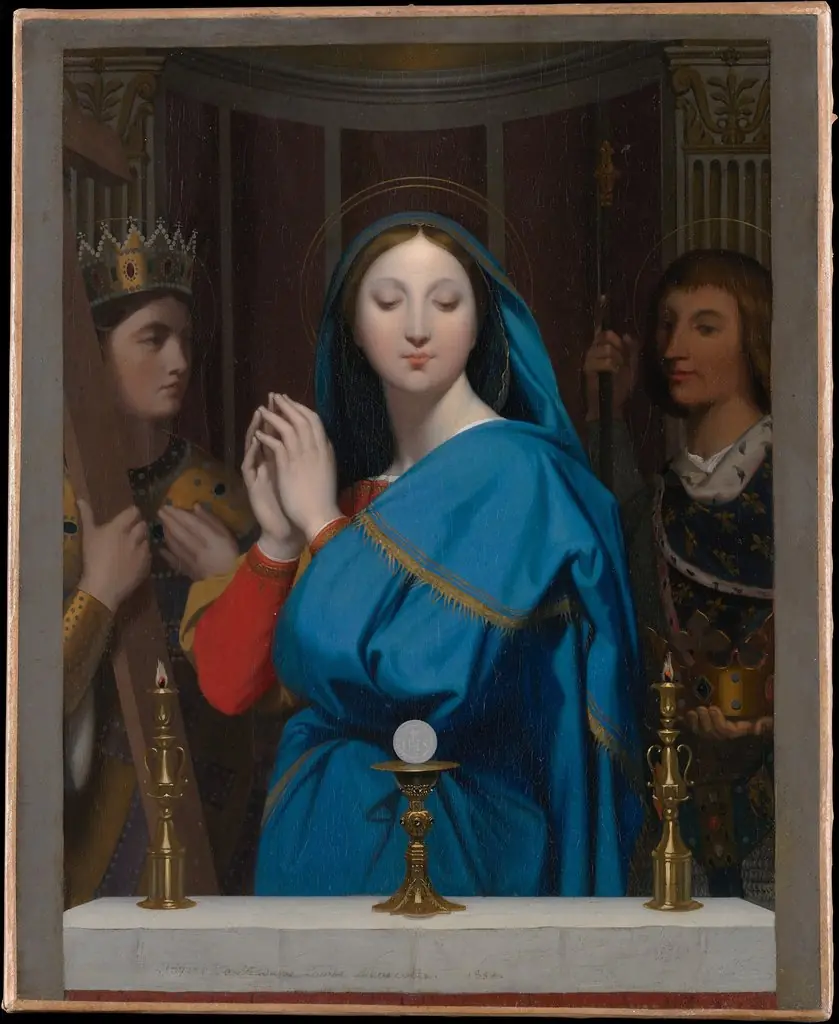 The Virgin Adoring the Host
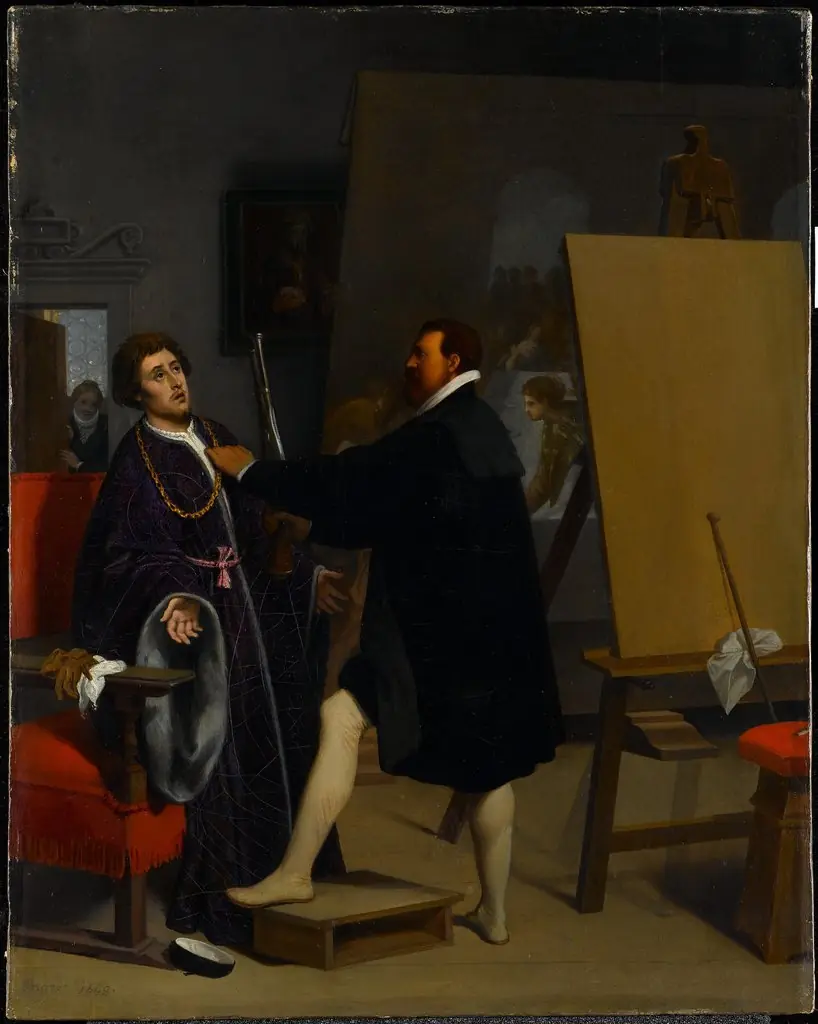 Aretino in the Studio of Tintoretto
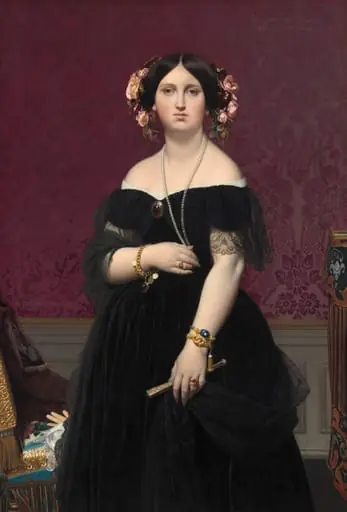 Madame Moitessier
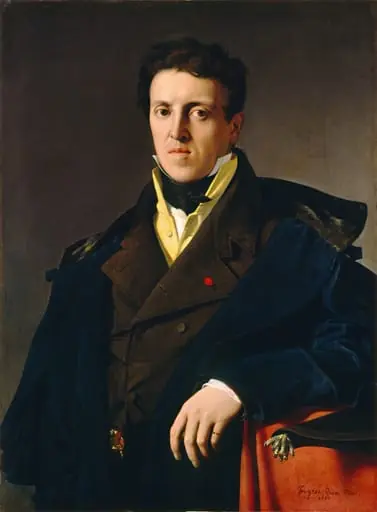 Marcotte d'Argenteuil
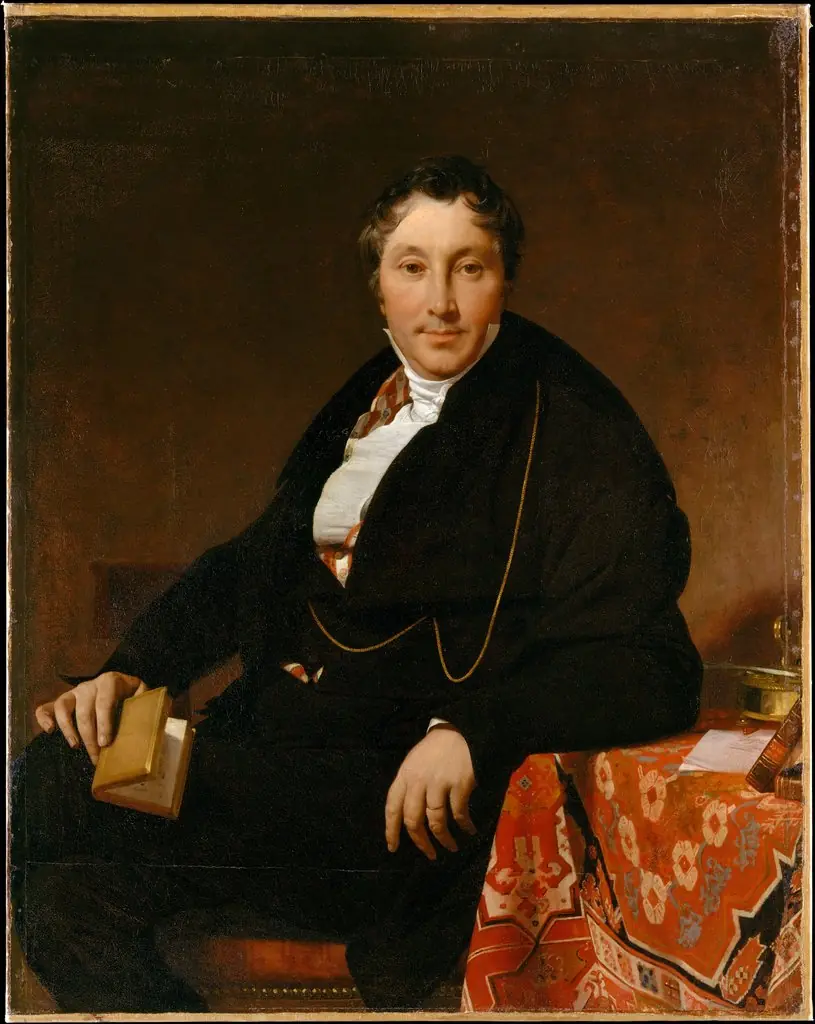 Jacques-Louis Leblanc (1774–1846)
 Odalisque in Grisaille
 Madame Edmond Cavé (Marie-Élisabeth Blavot, born 1810)
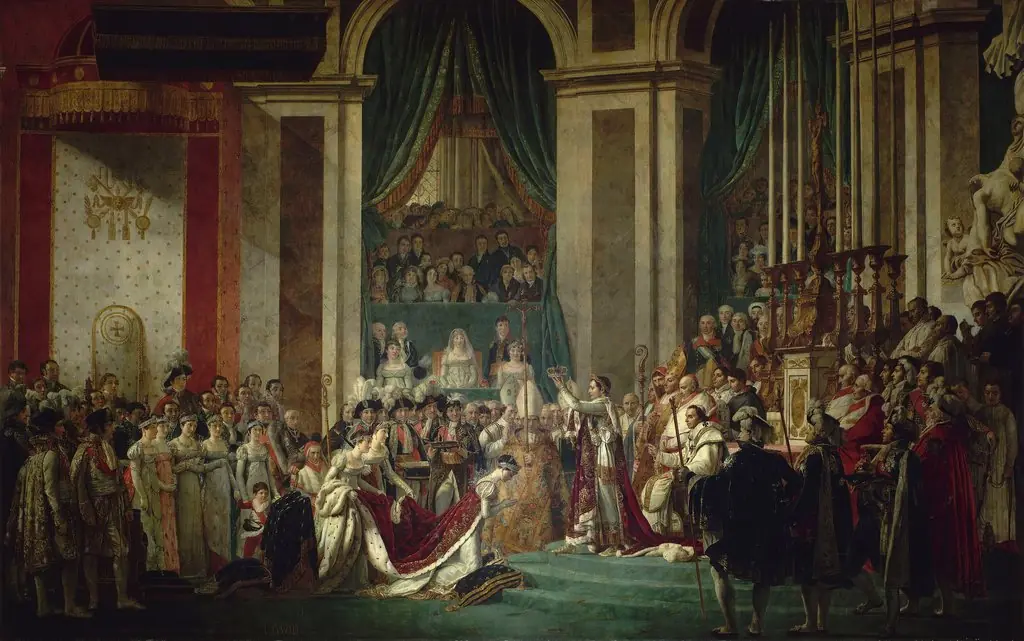
- Coronation of Emperor Napoleon I and Coronation of the Empress Josephine
 Anointing of a bishop
 Tu felix Austria nube
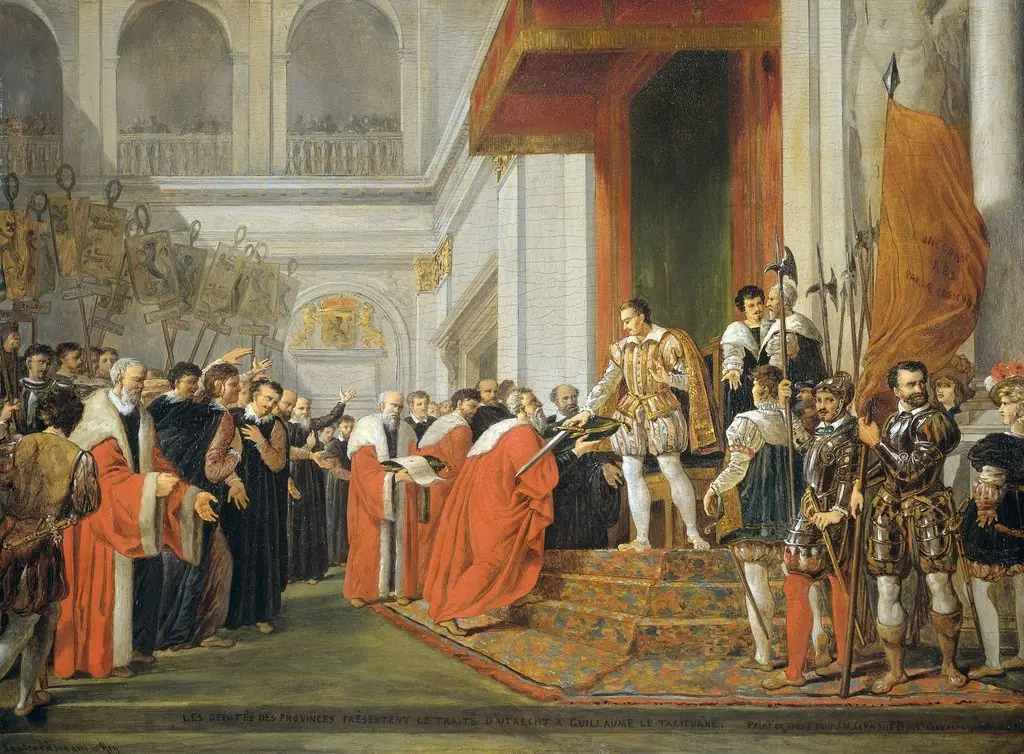 The Union of Utrecht
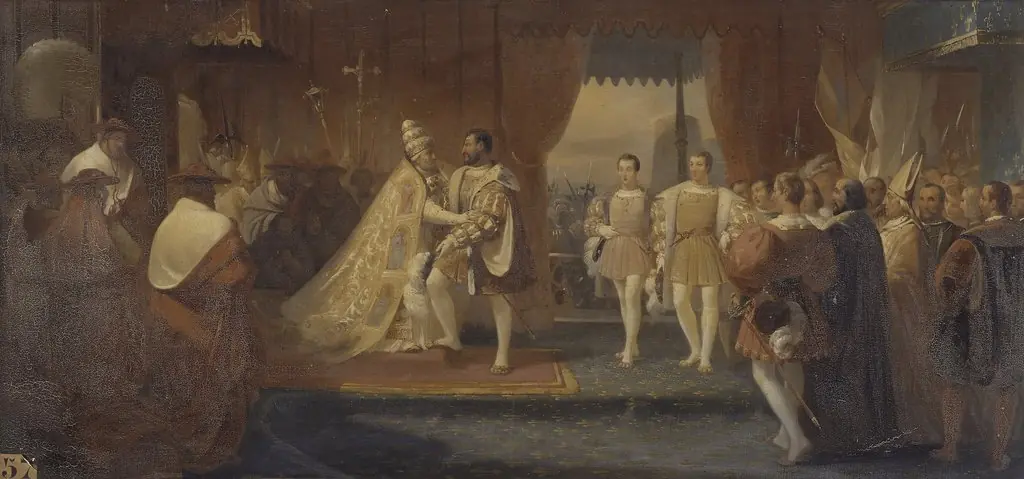 Meeting of Francis I and Pope Clement VII in Marseilles on 13 October 1533
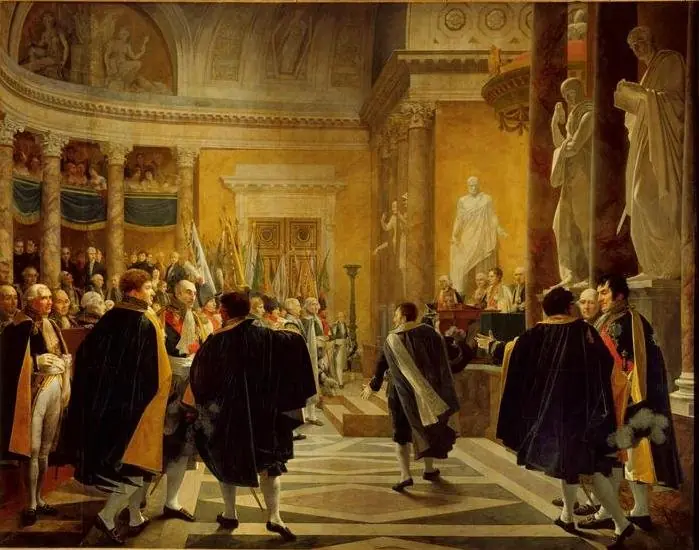 The Senate-Conservative receives the flags taken during the Austrian campaign, January 1, 1806
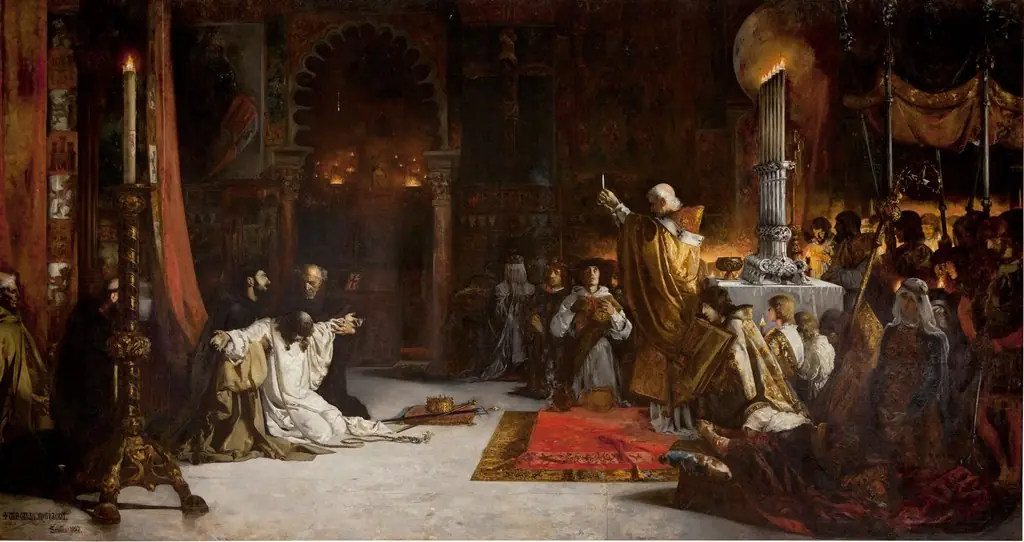 Las postrimerías de Fernando III el Santo
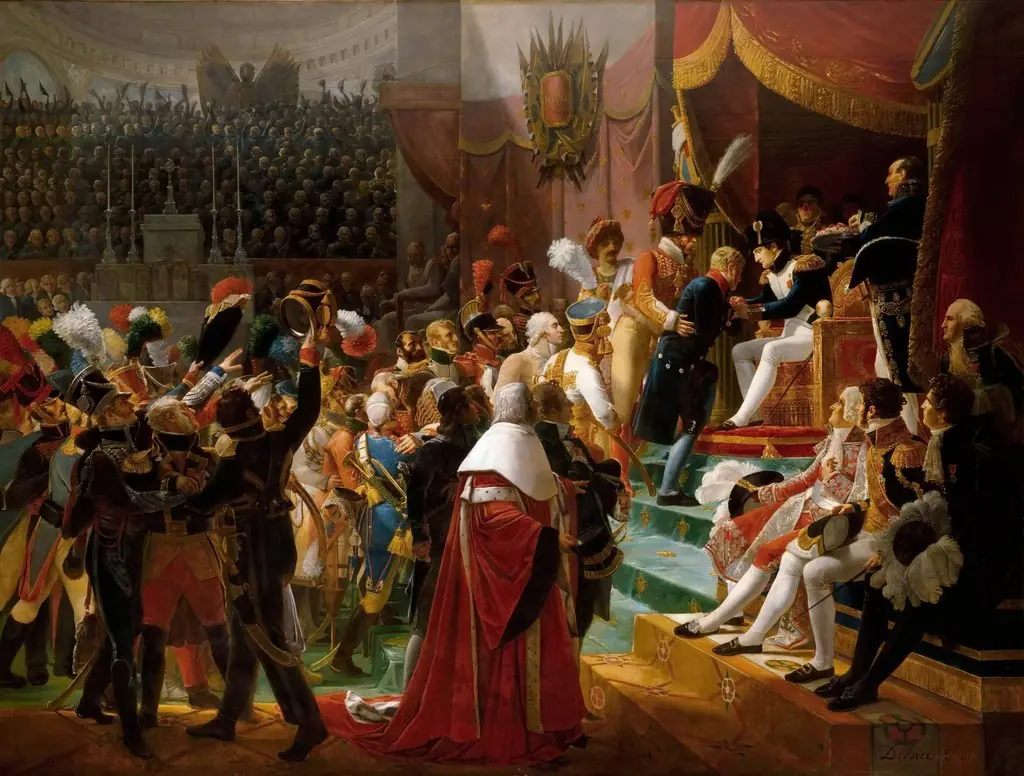 First distribution of the decorations of the Legion of Honor, made by Bonaparte, in the church of the imperial hotel of Invalides, July 14, 1804
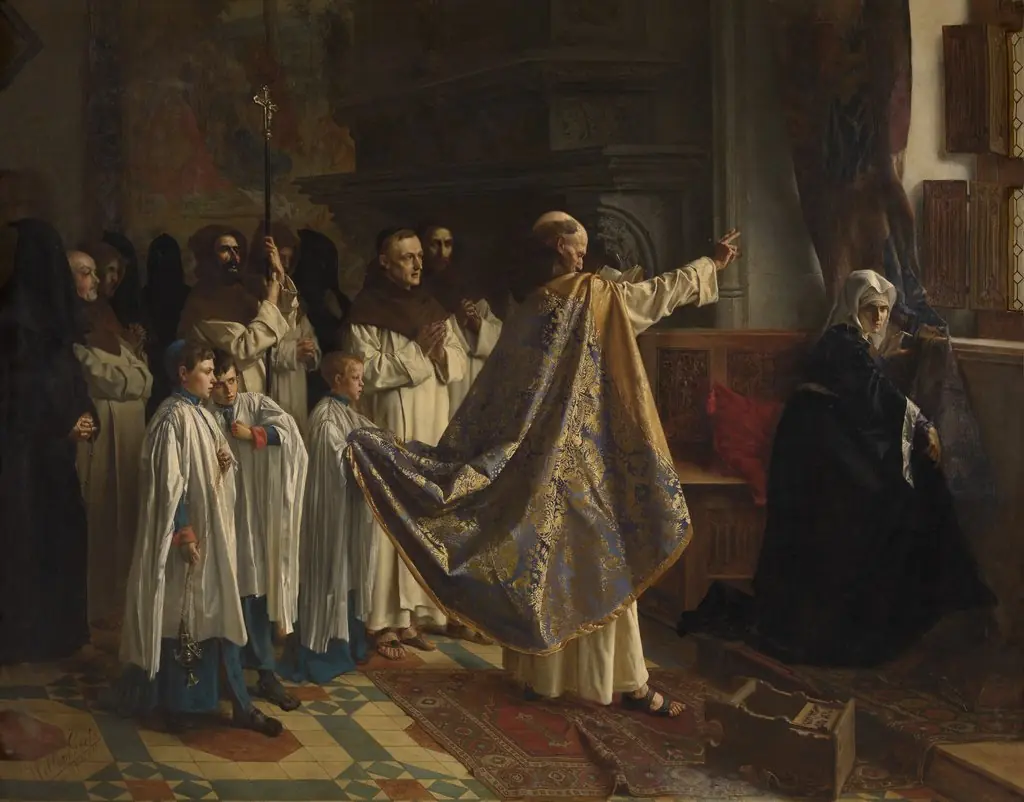 Exorcism of Joanna of Castile
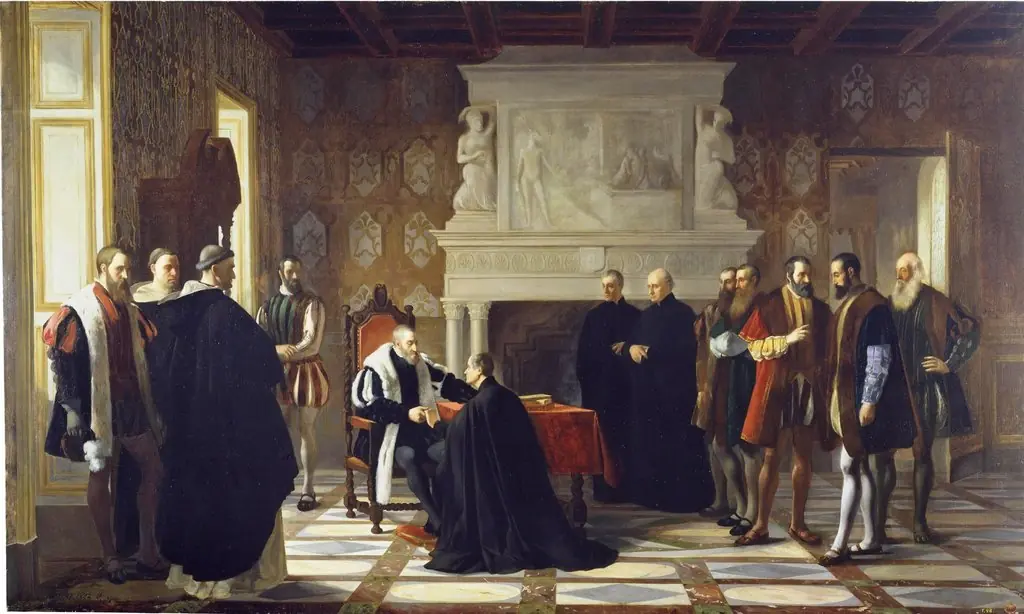 Carlos V recibe en Yuste la visita de San Francisco de Borja
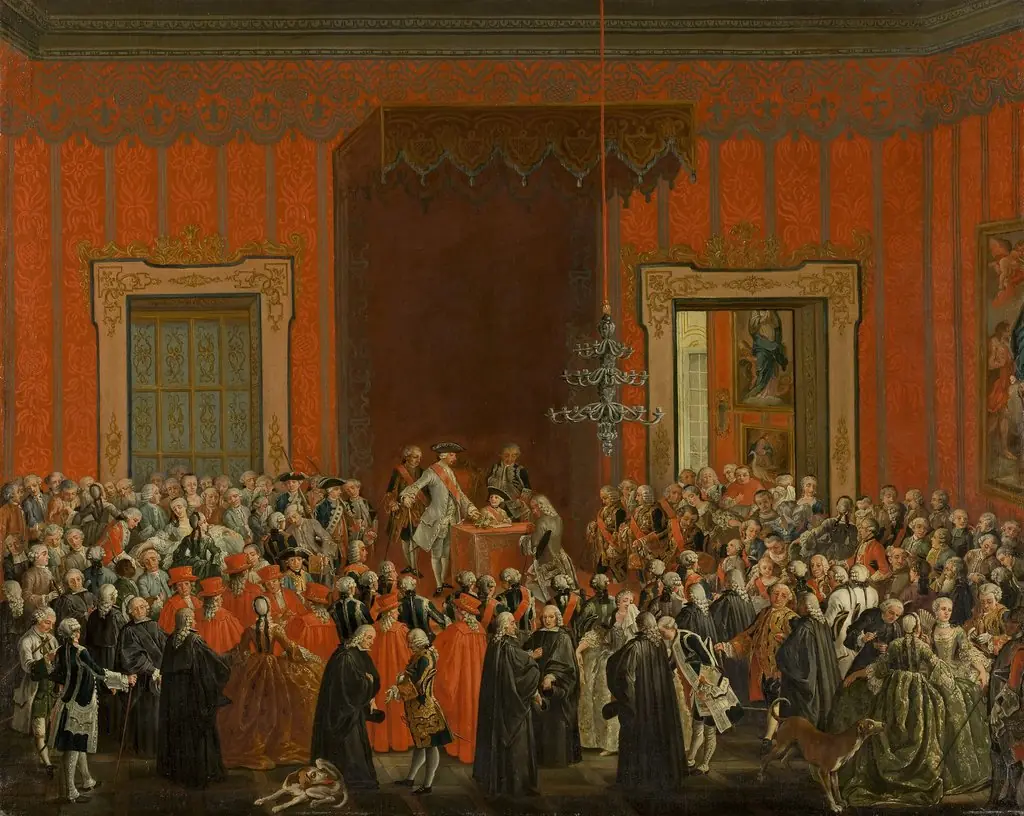 Carlos III renuncia a la corona de Nápoles
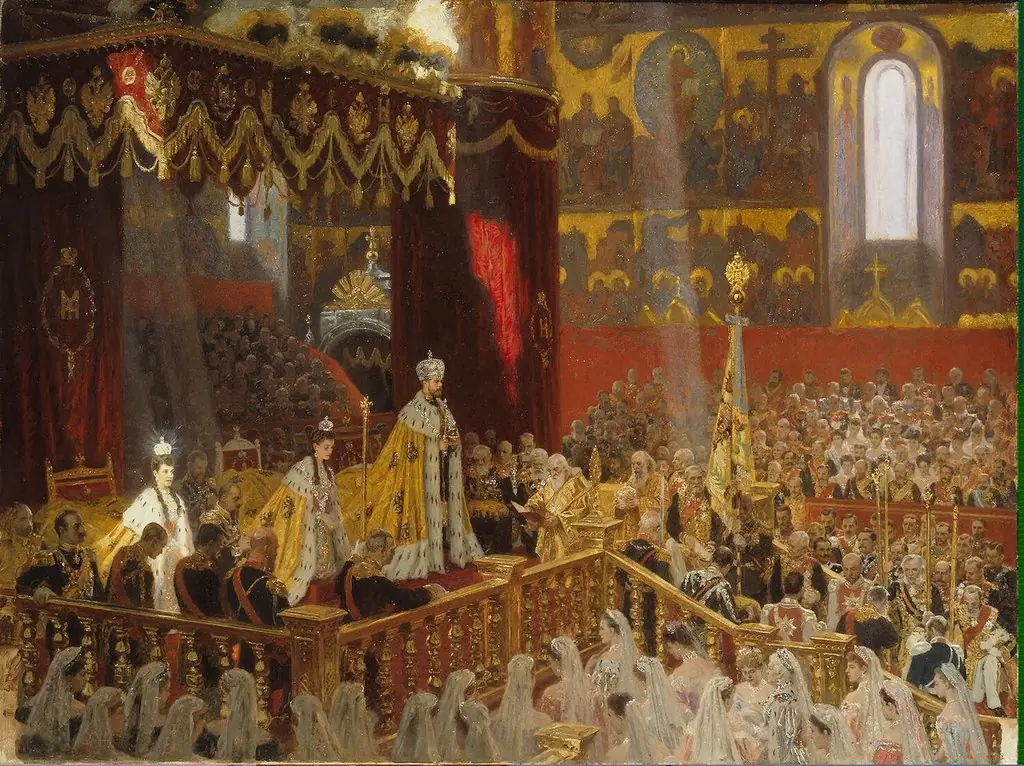 The Coronation of Emperor Nicholas II and Empress Alexandra Feodorovna