Poppy Fields near Argenteuil by Claude Monet
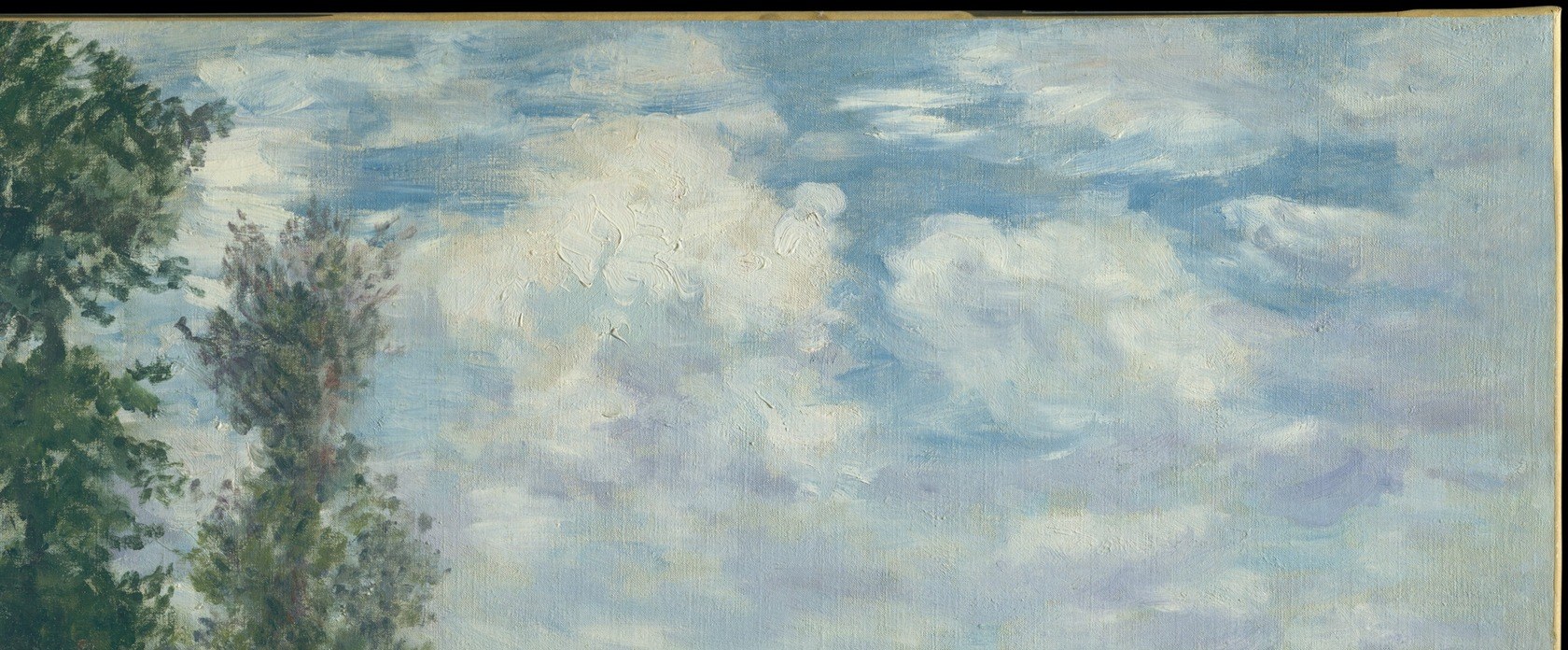
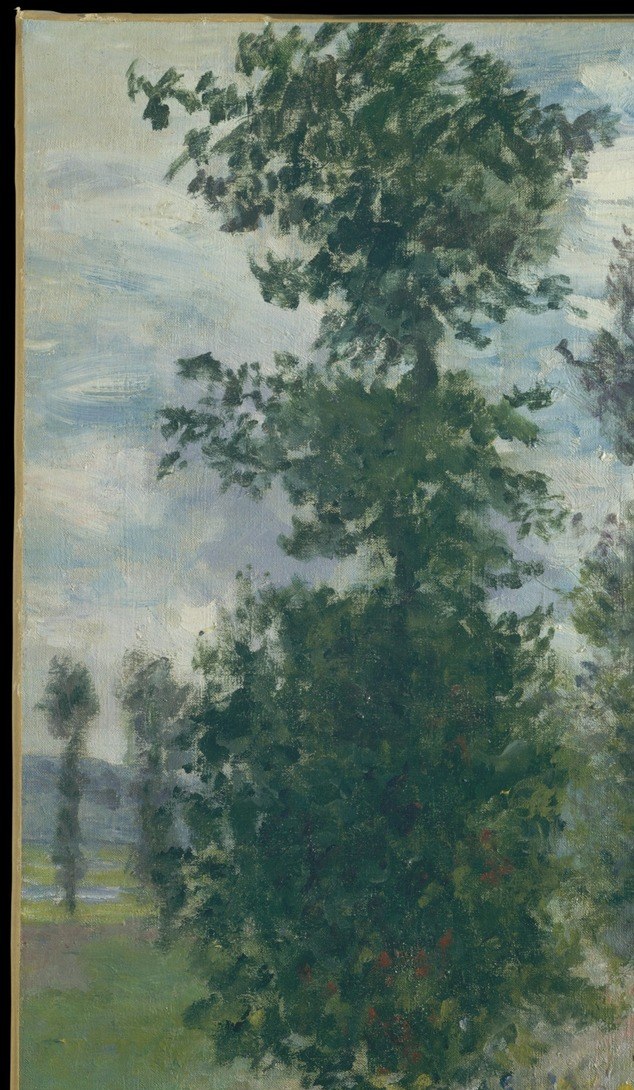
Camille Doncieux was Monet's muse, his model, and the mother of his two sons. In 1875, a time when he painted her often in the countryside around Argenteuil, she was already ill. 'Poppy Fields near Argenteuil,' held at The Metropolitan Museum of Art, places her inside a blaze of wild red flowers under a vast sky.
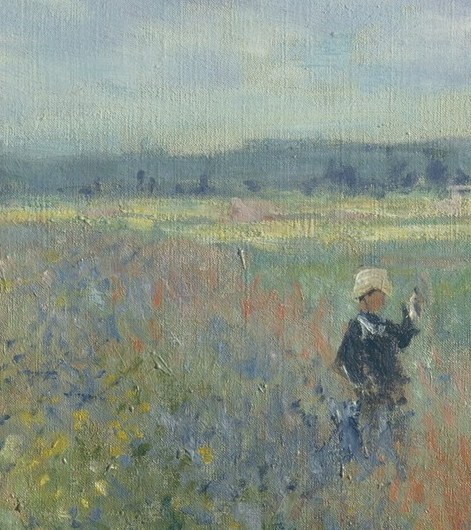
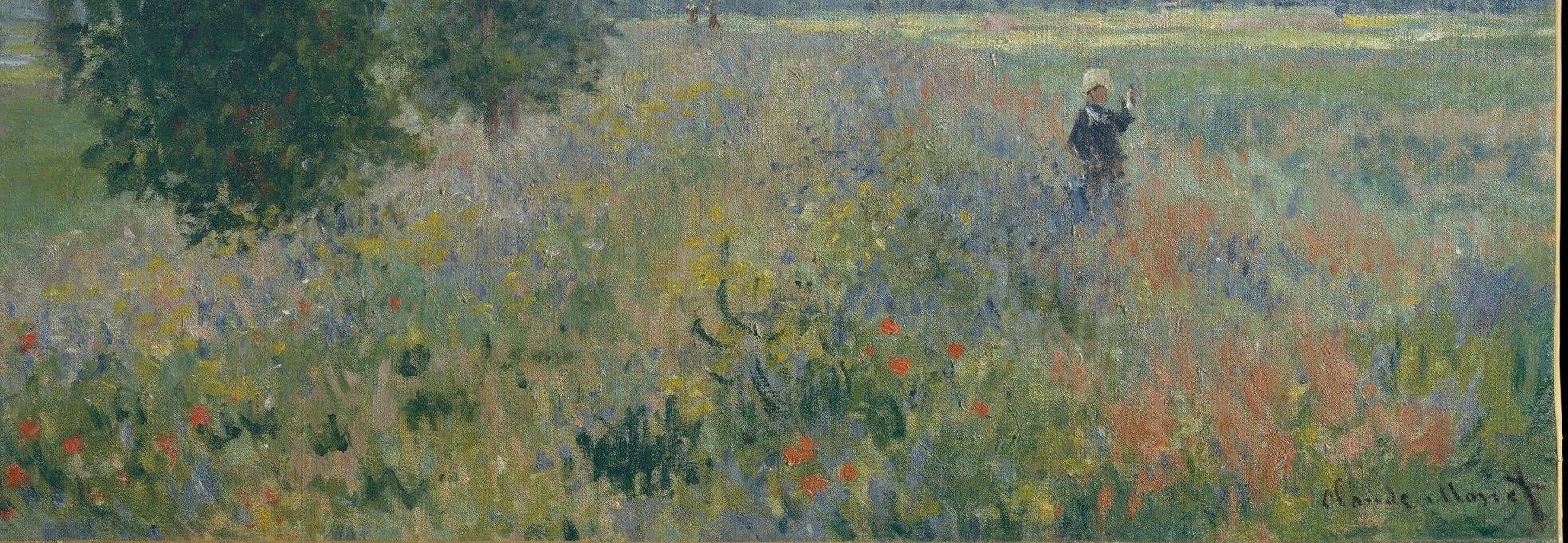
Look closely just behind her. The small hat of their son Jean, barely visible above the poppy tops, is the painting's hidden heartbeat. Monet does not paint their faces. They are dabs of colour, moving through the field like the clouds above them, as transient as the light itself.
Monet was a founding father of Impressionism, but this work is not an experiment. It is a record of a private, sunlit walk. Camille holds a bouquet of freshly picked poppies. The flowers that surround her were the same ones that bloomed on the banks of the Seine, the same ones Monet fought to capture before the afternoon ended.
Camille died in 1879 after a long illness. Monet painted her one last time on her deathbed, covering her face in veils of blue and grey. This painting is the other side of that grief: a summer day before the end, where for a moment, she is simply a woman walking with her son through an endless field of red.
Details
Transcript
A sea of red beneath a pale blue sky. A woman walks alone in the tall grass. In 1875, Monet lived at Argenteuil with his family. She is Camille, his wife and his greatest model. But she is not alone in the field. Beside her, almost swallowed by poppies, their young son Jean. Here, a family is rendered as fleeting as a summer cloud. Four years after this walk, Camille would be dead at thirty-two.