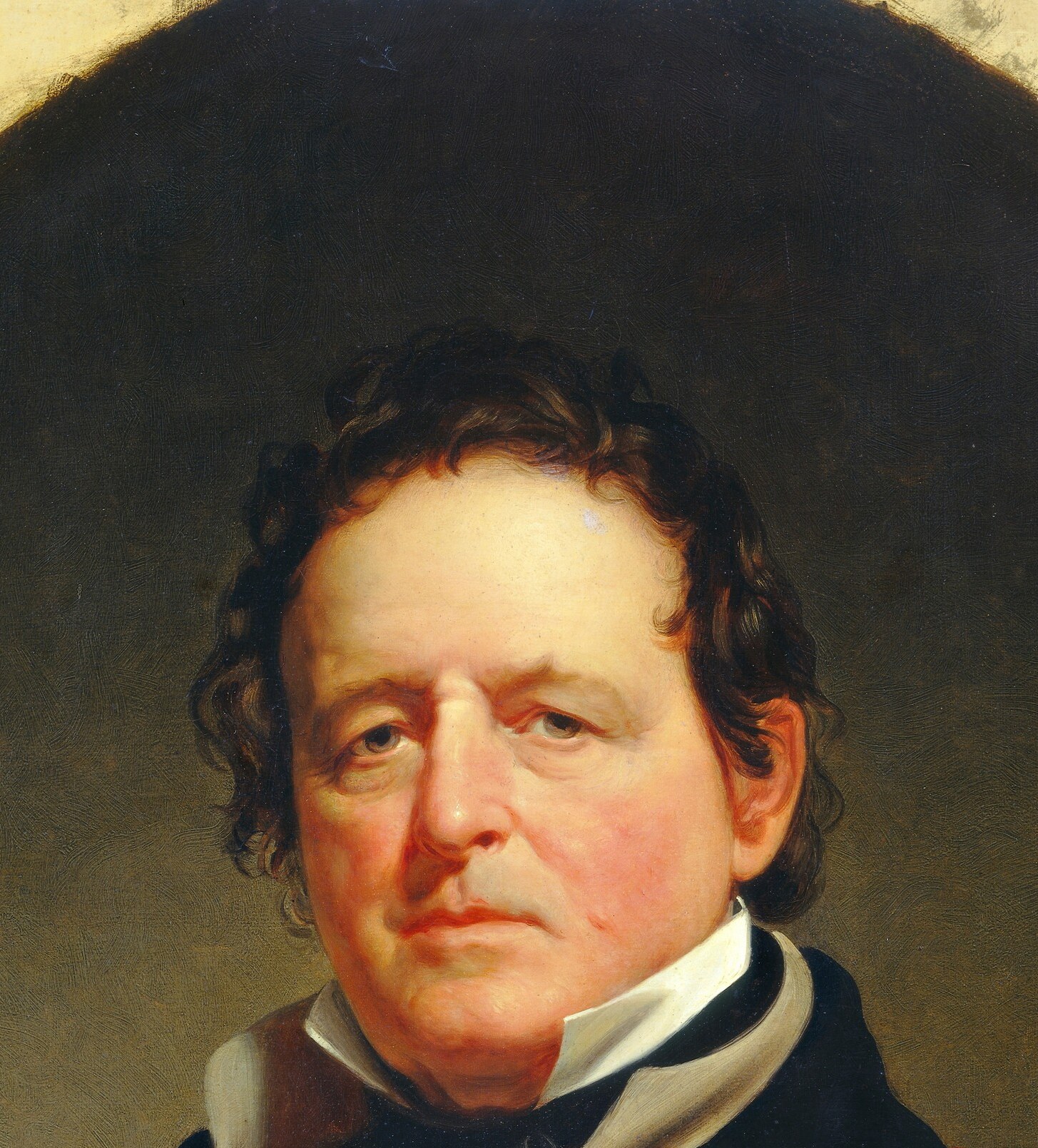
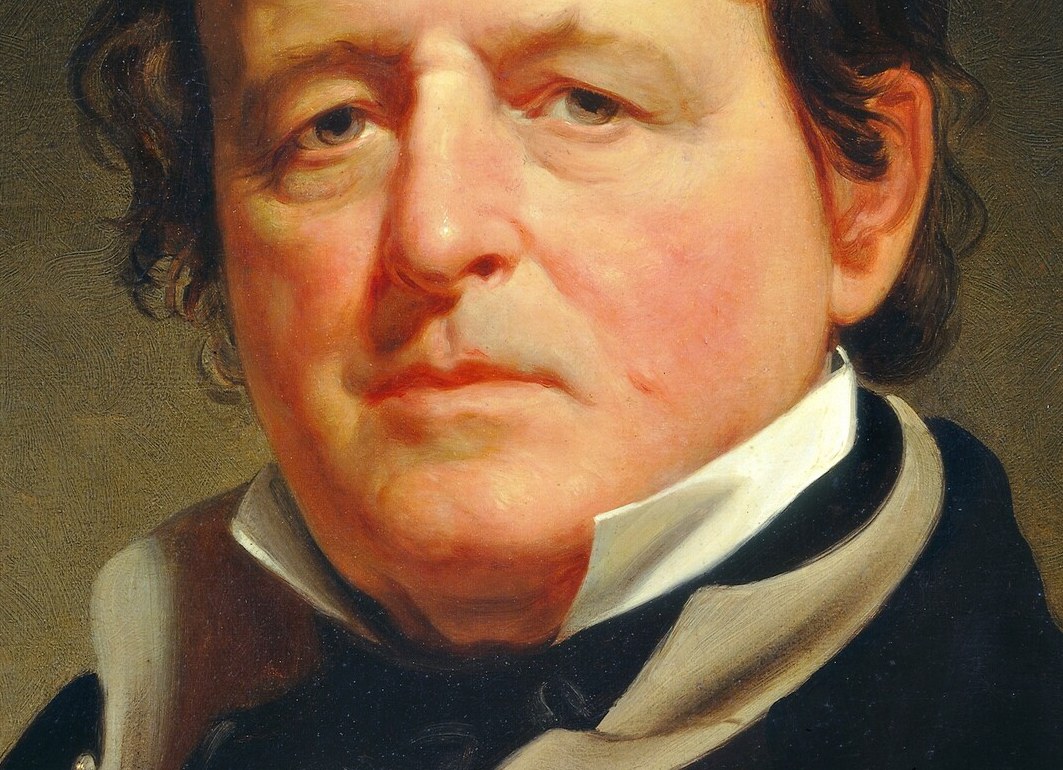
Captain Warren Delano by Elliott, Charles Loring
This is Captain Warren Delano, painted by Charles Loring Elliott around 1852. He was a prosperous sea captain in the China trade, but his real story is one of resilience. The direct gaze Elliott captures is not just authority; it is a man looking back at you after having lost and rebuilt everything.
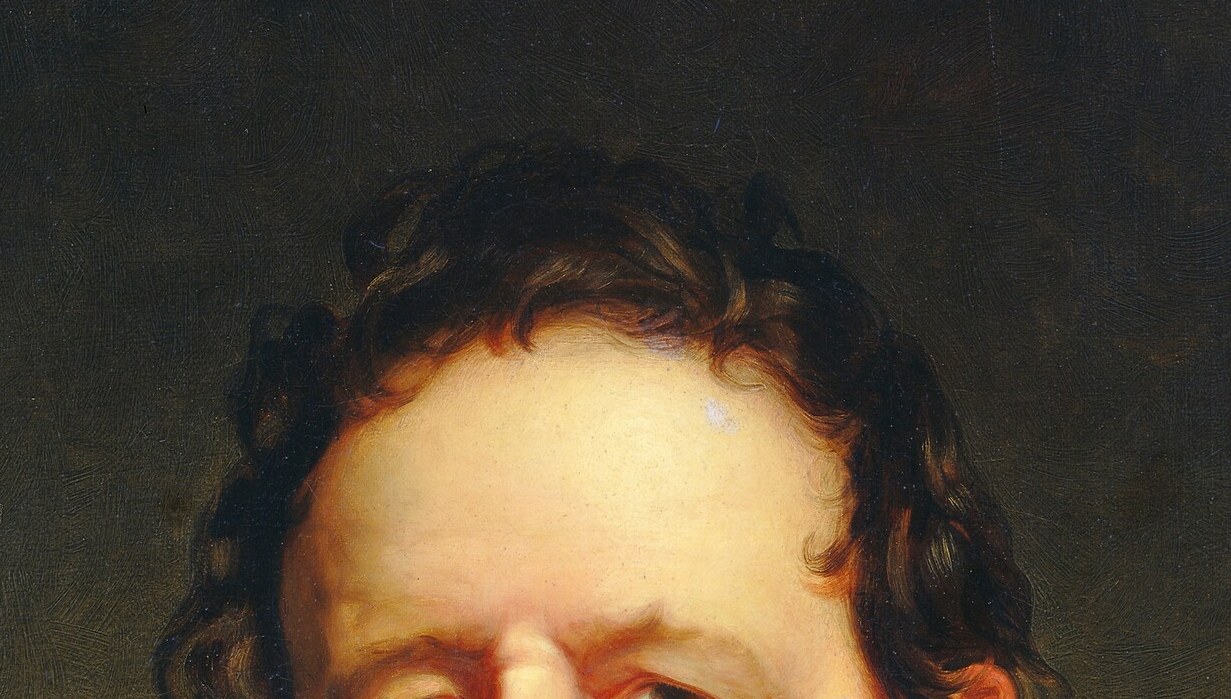
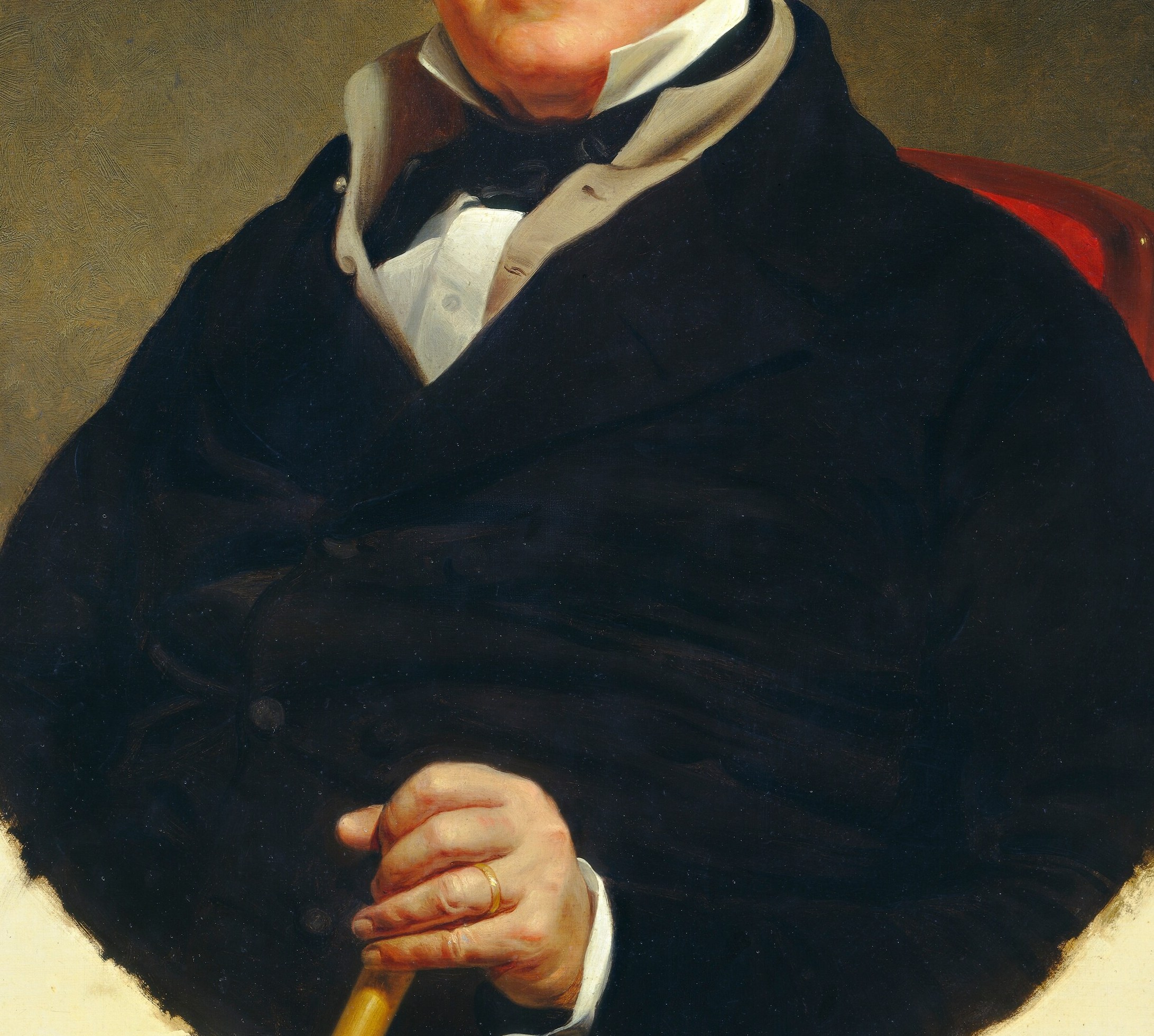
The painting is a study in psychological weight. Elliott pushes the dark coat into a velvety recession so the white cravat and the captain's face become the whole story. The eyes are the center of gravity: steady, heavy-lidded, and unblinking. The gold-tipped cane is one of the few status symbols allowed in an otherwise austere portrait. Every choice pushes you toward the man, not the possessions.
In 1857, a financial panic erased Delano's fortune completely. He had to return to China as a middle-aged man to start over, a grueling journey at a time when clipper ship races were your internet connection to the world's markets. He succeeded, restoring his family's wealth. That security gave his daughter, Sara, the stability to marry a man named James Roosevelt.
Their son was Franklin Delano Roosevelt, the longest-serving American president. When you look at this portrait, you are looking at the grandfather who taught resilience by example. What do you think he is thinking behind those eyes?
Details
Transcript
He commands the room, even in paint. Captain Warren Delano made a fortune in the China trade. Look at his eyes. They have seen storms and survived them. His gaze is steady, but his story is one of total ruin. In 1857, a market crash wiped him out. He lost everything. He returned to China, rebuilt his fortune from nothing. And recovered in time to secure his family's future. His grandson would take this resilience to the White House.