Blacksmith Shop by Beckett, Francis A.
Francis A. Beckett’s Blacksmith Shop, painted around 1880, offers a detailed glimpse into the vital trade of a blacksmith during the late 19th century. This oil on canvas, housed in a public collection, vividly captures the interior of a bustling forge.
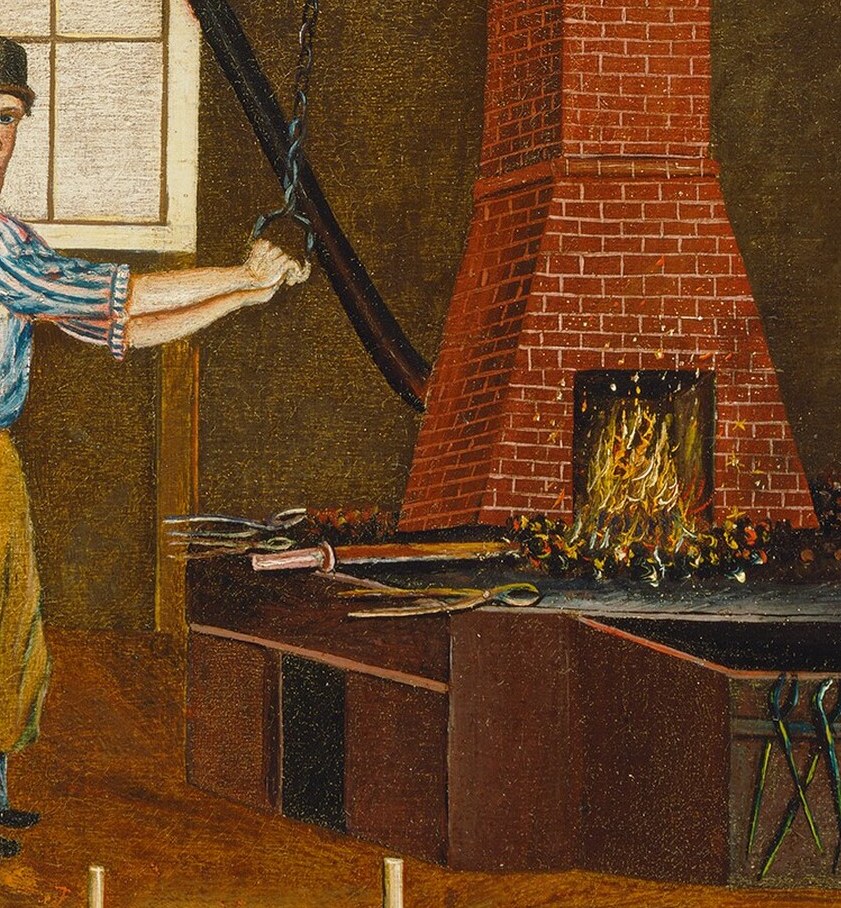
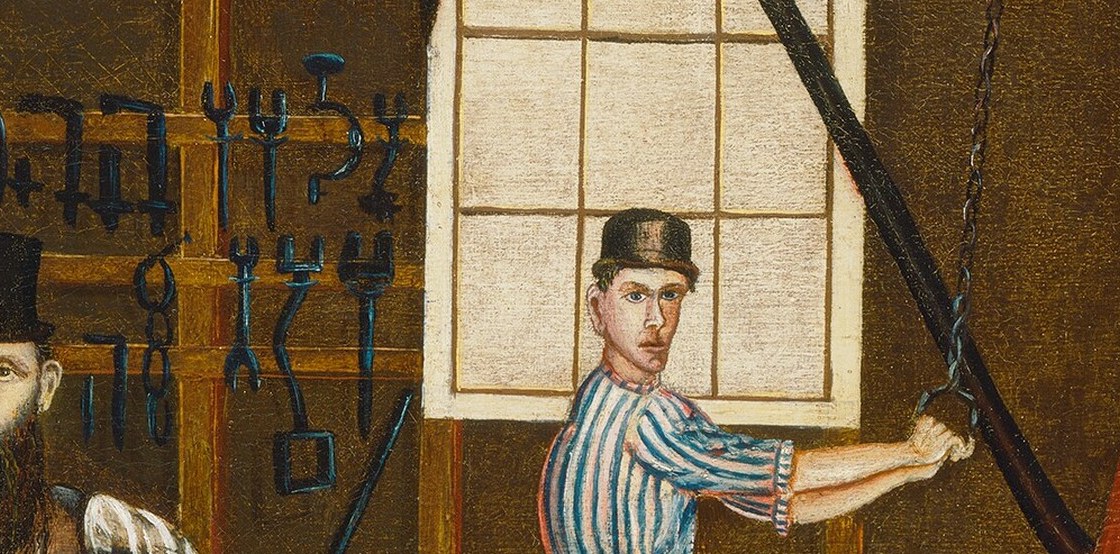
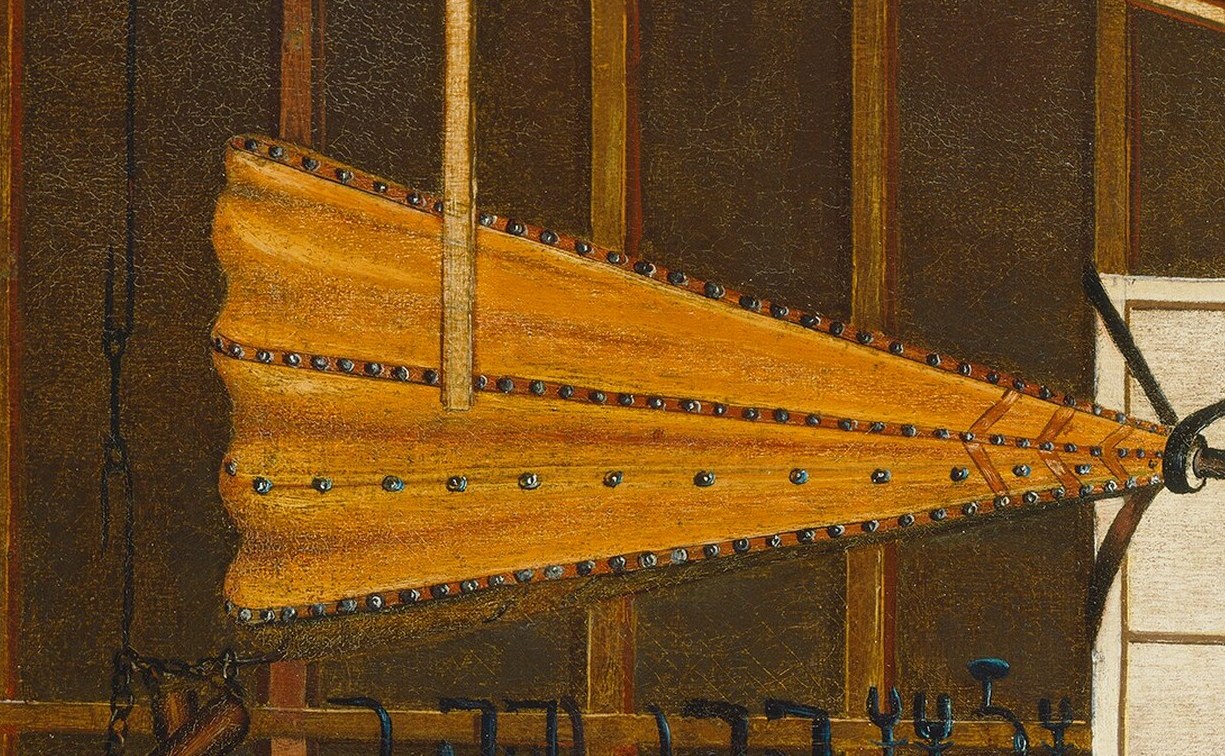
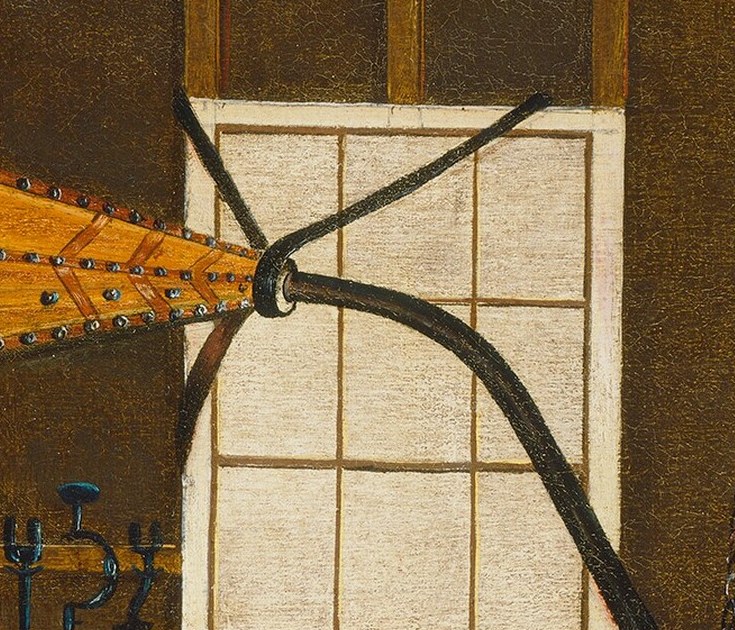
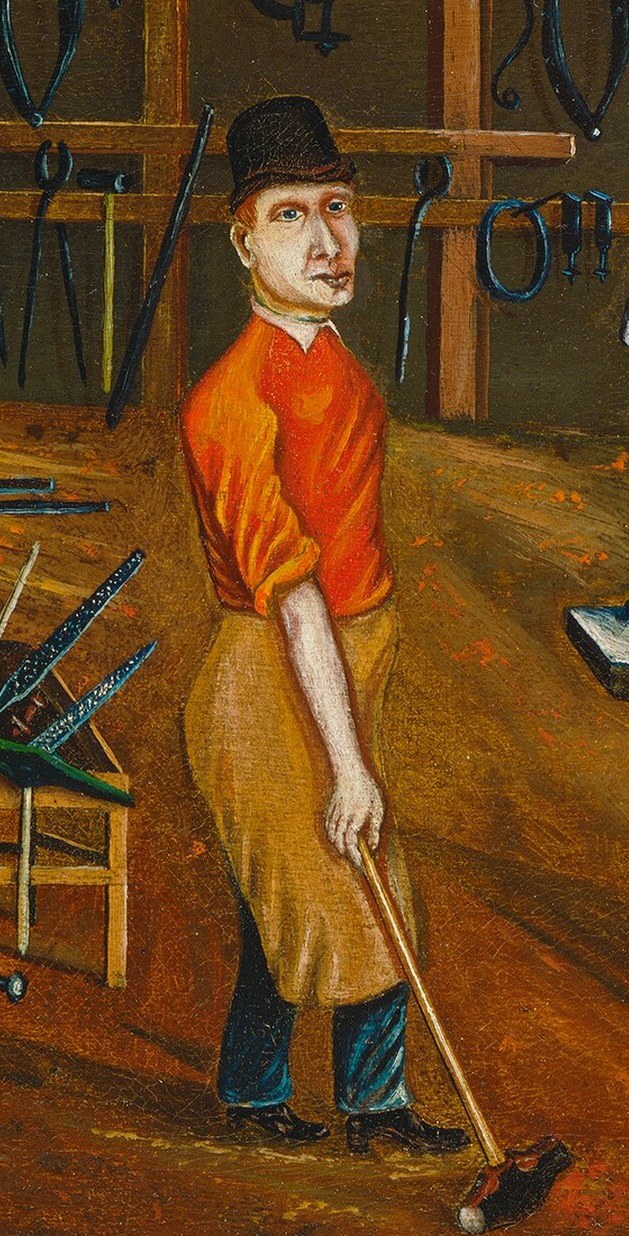
Observe the blacksmith intently working at his forge, surrounded by his assistants. The painting highlights essential tools like the large bellows, crucial for generating the heat needed to shape metal. Look closely at the array of tools on the wall, showing the specialized nature of their craft, and the wagon wheel in the background, suggesting their role in supporting transport and agriculture.
Beckett uses dramatic contrasts of light and shadow, a technique known as chiaroscuro, to emphasize the intense heat and the physical demands of the work. This painting reflects a growing fascination in the 19th century with industrial labor and the dignity of manual work, capturing the rhythm of production in a pre-modern setting.
What other details can you spot that bring this workshop to life?
Details
Transcript
Around 1880, most towns needed a blacksmith. This painter shows us how essential their work was. They forged tools, wagon parts, and everyday metal items. Notice the massive bellows, fueling the intense heat. The light and shadows emphasize this demanding labor. It’s a vivid snapshot of industrial work in its time.