Temple Gardens by Paul Klee
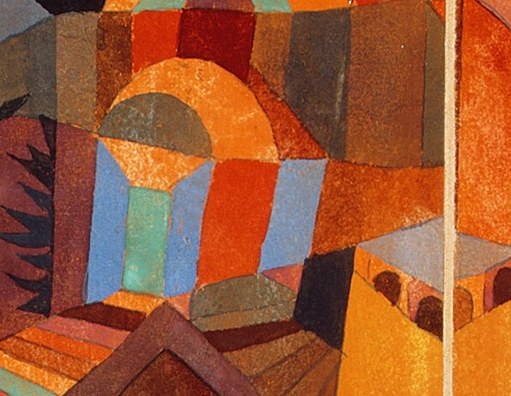
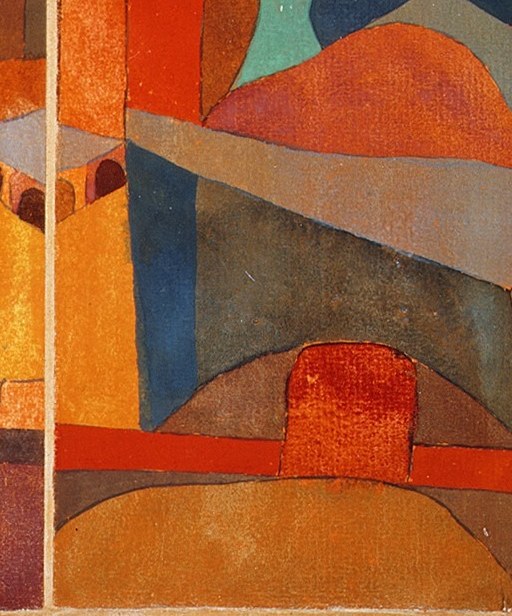
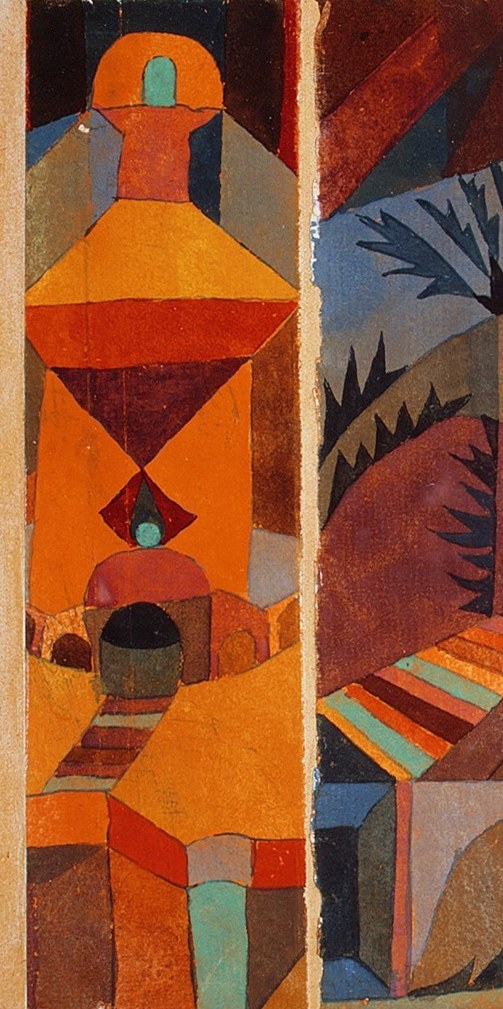
Paul Klee, a prominent figure at the Bauhaus school, created "Temple Gardens" in 1920, an abstract masterpiece now held at The Metropolitan Museum of Art. This painting is a fascinating exploration of color and form, characteristic of Klee's unique style.
Observe the harmonious arrangement of geometric shapes and muted tones, which evoke a sense of tranquility and order, suggesting an inner landscape rather than a literal garden. The work invites contemplation through its balanced composition.
Klee, a Swiss-born German artist, was deeply engaged with color theory and experimentation. His influential writings, compiled as the Paul Klee Notebooks, are considered foundational for modern art. This piece exemplifies his experimental spirit during his time teaching at the Bauhaus.
Look closely for the artist's subtle signature, 'Klee', integrated into the composition. It's a quiet testament to his presence within the work.
Details
Transcript
This painting, made in 1920, is called 'Temple Gardens'. Its abstract shapes create a serene, imagined space. The painter was known for his color theory and experiments. He taught at the Bauhaus school, a center for modern art. Hidden in plain sight, you can see his signature. It simply reads, 'Klee'.