An English Cod by Chase, William Merritt
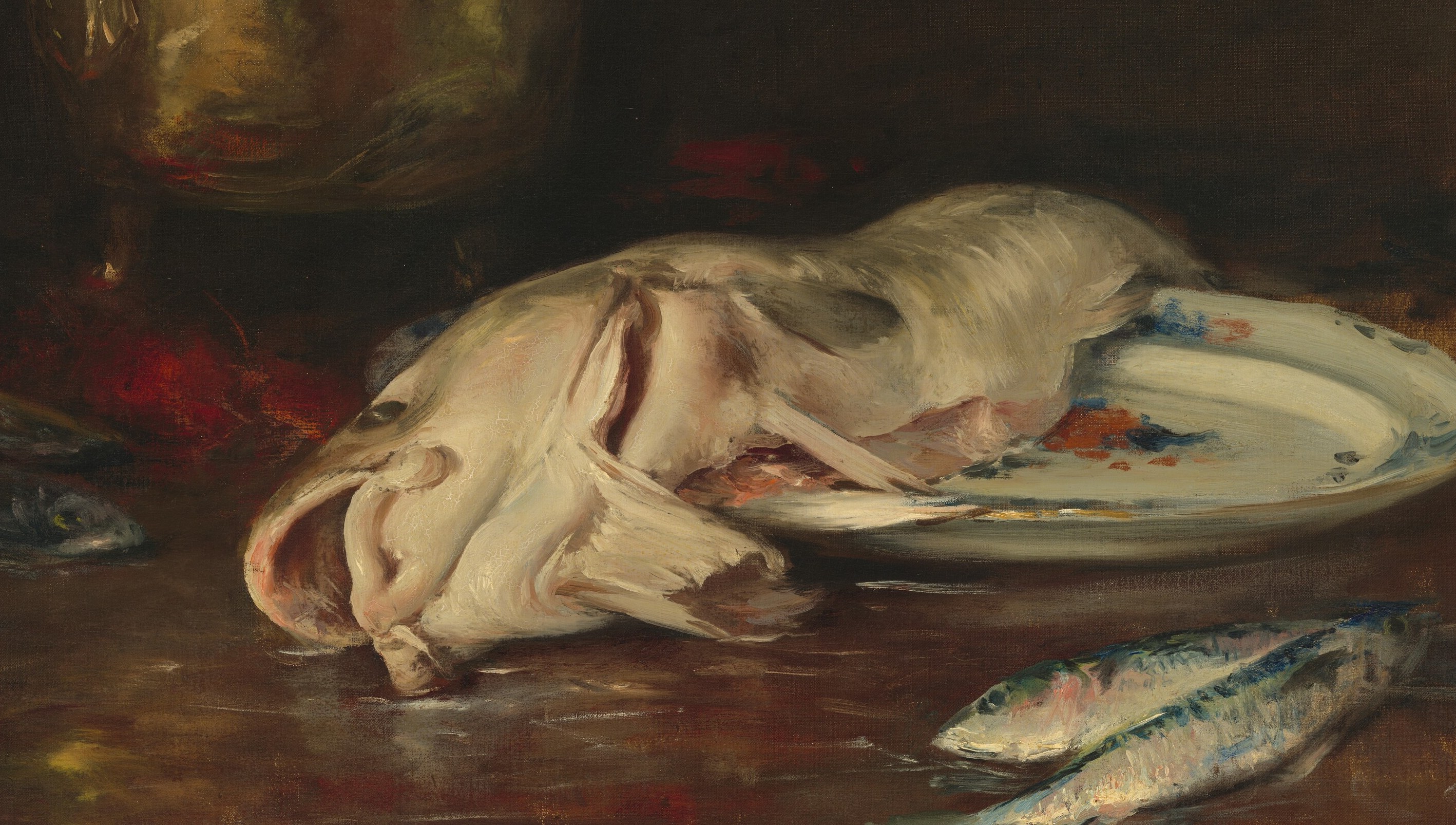
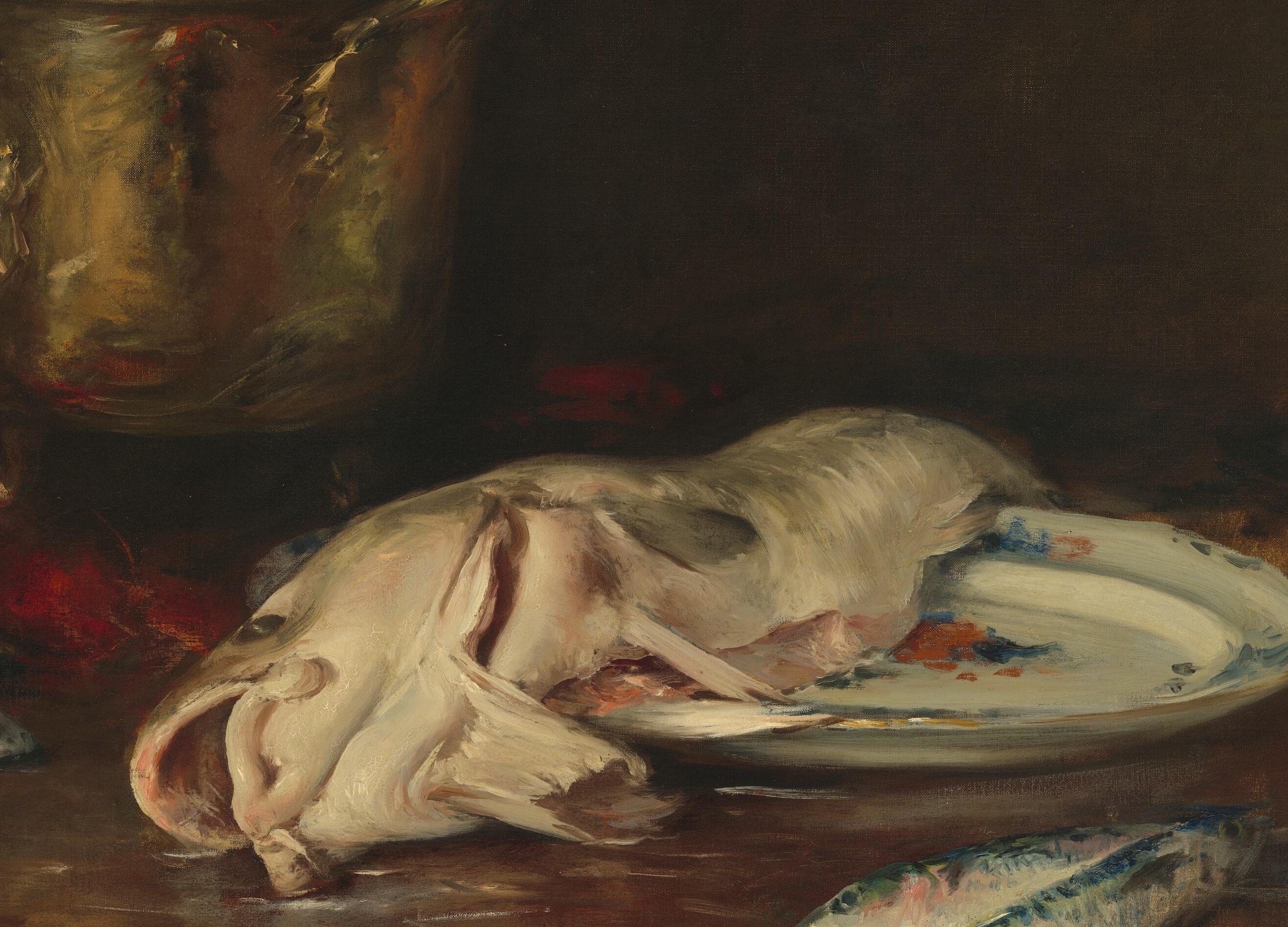
William Merritt Chase's "An English Cod" (1904) is not the painting you expect to be at the center of an art heist. It is a modest, direct study of a single fish, painted by the man who taught a generation of American artists that a fish could be as worthy of attention as a portrait.
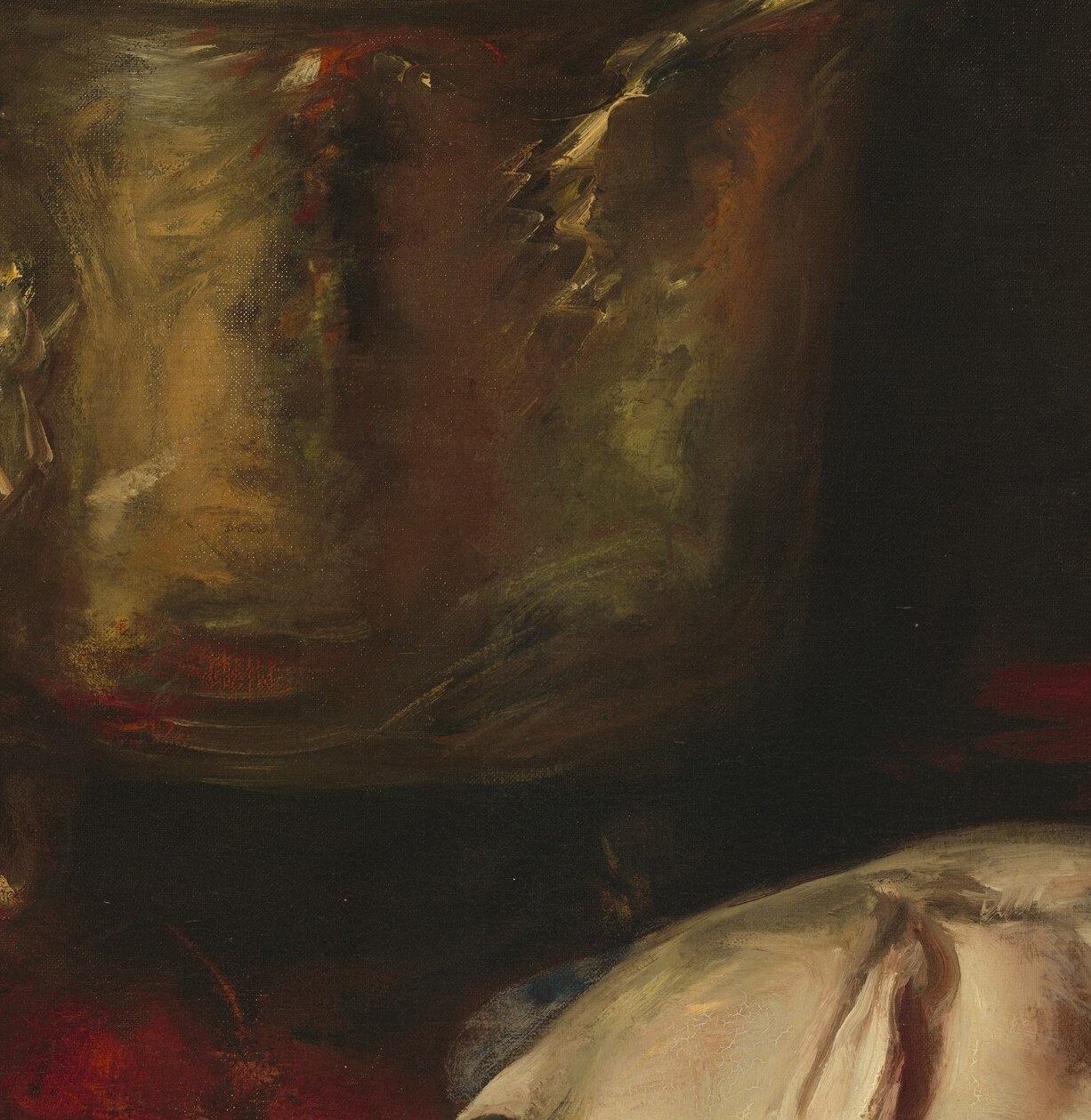
Chase lavishes attention on the cod's limp weight, its mottled skin, and the single clouded eye, a detail that quietly signals the still life tradition's meditation on death and time. The painting is a study in restraint: the white plate, the flash of red cloth beneath it, and the brilliant, loose reflections on the brass pot in the background are the only relief from the fish's gray mass.
Then the painting vanished. In the mid-1970s, a thief entered a locked gallery, removed the canvas from its stretcher, and walked out with it. The crime went unsolved for two years, until the FBI traced the rolled-up painting to a basement in New Jersey. It was returned, restored, and quietly put back on view.
Chase himself was a giant, leader of the American Impressionists, a teacher whose students included Edward Hopper and Georgia O'Keeffe. He painted this in 1904, years before his death in 1916. The little cod has outlived him, and survived a kidnapping.
Details
Transcript
A single fish from 1904. Not grand. Not gold-framed. But this fish once disappeared from an American museum. The glazed eye. The slack jaw. Painted with obsessive care. William Merritt Chase was teaching a generation how to paint from life. Those loose, confident strokes on the brass are a masterclass. Then the painting vanished. Cut from its frame in a locked gallery. For two years, it sat rolled up in a basement in New Jersey. The FBI found it. The museum repaired it.