源琦筆  華洛四季遊楽図巻|Scenes of the Four Seasons in Kyoto by Genki (Komai Ki)

This is Scenes of the Four Seasons in Kyoto, a handscroll painted by the artist Genki in 1778. It is ink and color on silk, and it captures an entire year of life in the ancient capital. The format is a continuous panorama: you unroll it from right to left, physically moving through time and space.

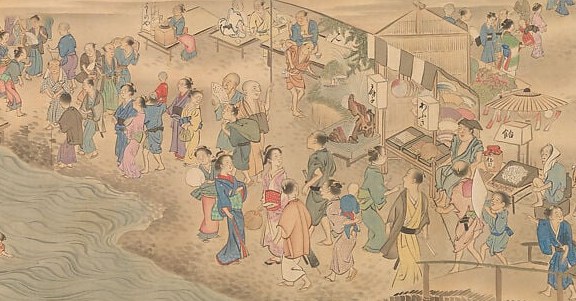
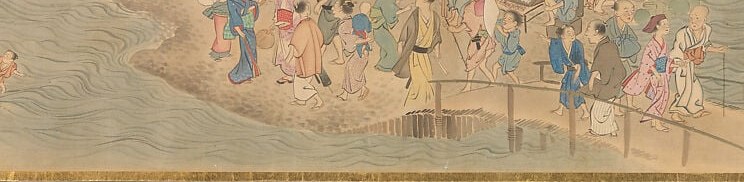
The dominant image is the crowd surging across a great wooden bridge over the Kamo River. It is a rare leveling moment: commoners and aristocrats share the same crossing. Genki renders the lattice of the bridge joinery in fine lines that sit on the silk in near-abstraction. At the center, a blast of color signals a festival procession, richly patterned robes, fans, and hats that a historian can date to late-eighteenth-century Kyoto.

Genki, born in Kyoto in 1747, worked in a tradition that measured time through landscape: cherry blossoms for spring, maples for autumn, empty snow for winter. The season you reach depends entirely on how far you unroll. The famous bridge scene is spring, and most viewers stop there. The scroll keeps going.

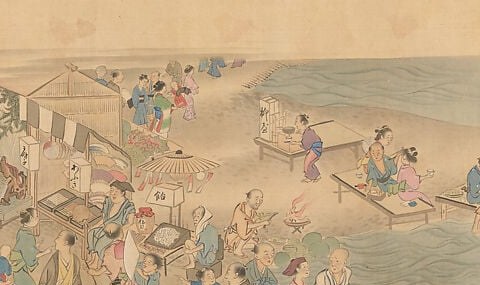
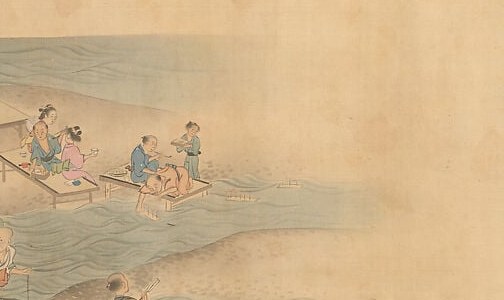
If you follow the narrative past the shops and the socializing, you reach the far right margin. The figures thin out and the ground opens up. It is the quietest corner of the entire work, likely winter or early spring. The boisterous festival is only half the story. Genki lets silence have the last word.

#arthistory #japaneseart #kyoto

Details
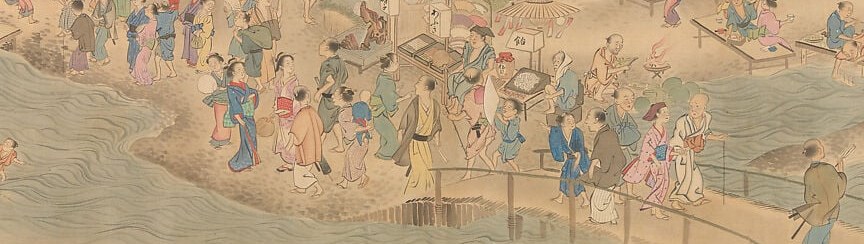
The dominant architectural spine of the composition , a raised wooden causeway (likely the Gojo or Sanjo Bridge over the Kamo River) that anchors all human activity and gives the scroll its physical and social framework.
Dozens of tiny kimono-clad figures compressed onto the bridge surface reveal Edo-period Kyoto's social mixing , commoners, merchants, and possibly samurai sharing the same crossing in a rare leveling moment.
The Kamo River as painted surface , its pale washes create the visual breathing room that makes the crowded bridge above feel more dramatic by contrast.
The most chromatic passage: richly colored garments signal a seasonal festival or aristocratic outing; the variety of hues maps social rank and occasion across a single panoramic moment.
A visually quieter section , likely a different season or location within Kyoto, offering a tonal contrast to the packed central bridge scene and hinting at the scroll's narrative continuity across time.
Transcript

A sea of people floods a bridge in old Kyoto. In 1778, this bridge was the city's living artery. Look at the procession at the center. Brilliant robes mark a seasonal festival. But the scroll does not end with the crowd. Keep scrolling, past the shops and the chatter. Spring collapses into winter, and the world goes quiet.