Artwork
源琦筆 華洛四季遊楽図巻|Scenes of the Four Seasons in Kyoto
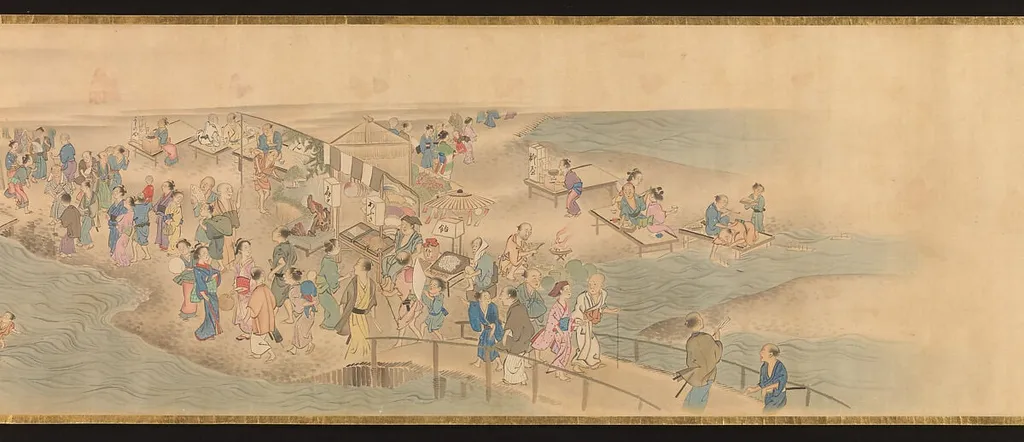
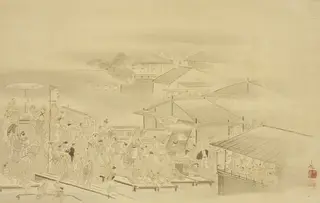
源琦筆 華洛四季遊楽図巻|Scenes of the Four Seasons in Kyoto is an ink painting by the Nanga artist Genki. It dates from 1778 and is held in the collection of the Metropolitan Museum of Art. This handscroll, titled Scenes of the Four Seasons in Kyoto, presents a continuous visual journey through the ancient capital.
- Accession no.
- 2015.300.201
- Credit line
- Mary Griggs Burke Collection, Gift of the Mary and Jackson Burke Foundation, 2015
About this work
Subject & Meaning
The work depicts scenes of everyday life in Kyoto across the four seasons, characterized by a landscape setting that includes bridges and human figures.
The work depicts scenes of everyday life in Kyoto across the four seasons, characterized by a landscape setting that includes bridges and human figures. As a landscape painting, the scroll illustrates men and women engaging in seasonal activities within the capital, capturing the rhythm of daily existence rather than focusing on specific historical narratives or mythological events. The iconography centers on the interaction between people and their environment, presenting a view of Kyoto that emphasizes ordinary social interactions and the changing natural backdrop.
The composition suggests a celebration of the city's seasonal cycles and the leisure or labor of its inhabitants, portraying a blend of urban life and natural scenery typical of the genre.
Technique & Style
The work is executed as a handscroll on silk, employing ink outlines filled with subtle polychrome washes typical of Edo-period painting. The medium combines fine brushwork with layered color to render each seasonal vignette, while the silk support allows flexible unrolling for intimate viewing. Formal qualities include a continuous narrative flow across the four seasonal passages, each depicting a distinct Kyoto setting with bridges, figures, and everyday activity, unified by a restrained palette and balanced composition.
The stylistic approach reflects genre conventions of landscape painting, emphasizing spatial depth and atmospheric detail through controlled line and color modulation.
History & Provenance
The handscroll 源琦筆 華洛四季遊楽図巻, also known as Scenes of the Four Seasons in Kyoto, was produced in 1778 in Japan by the painter Genki (Komai Genki). Executed in ink and color on silk, the work belongs to the landscape genre and depicts bridges, quotidian activities, and figures within a seasonal setting. It entered the collection of the Metropolitan Museum of Art, where it remains catalogued among the museum's holdings of Japanese Edo-period paintings; the records do not publish an explicit accession number, and no documented exhibition history is available from the supplied references.
Overview
This handscroll, titled Scenes of the Four Seasons in Kyoto, presents a continuous visual journey through the ancient capital. Rendered with ink and color on silk, the painting unfolds a panoramic view of the city's landscapes and daily life across an entire year. From the vibrant bloom of spring to the quiet serenity of winter, the scroll captures the changing atmosphere and activities of Kyoto's inhabitants in a single, flowing composition.
Context
This artwork belongs to a tradition of Japanese painting that meticulously observes and records daily life and landscapes. For broader insight into how artists depicted the everyday world in pre-modern Japan, one might explore ukiyo-e prints and paintings. These works often shared a similar focus on capturing the transient beauty and activities of people within their specific environments, whether urban or natural.
Artist & collection


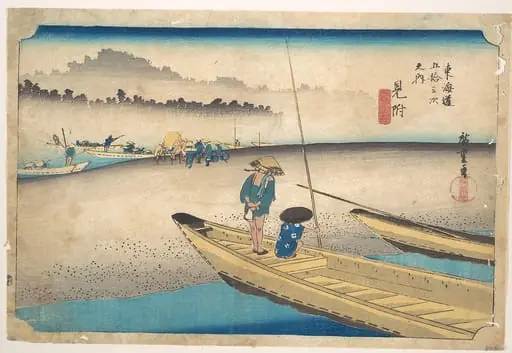 東海道五十三次 見附 天竜川図|Mitsuke; Tenryugawa Ferry, Station No. 29
 Untitled
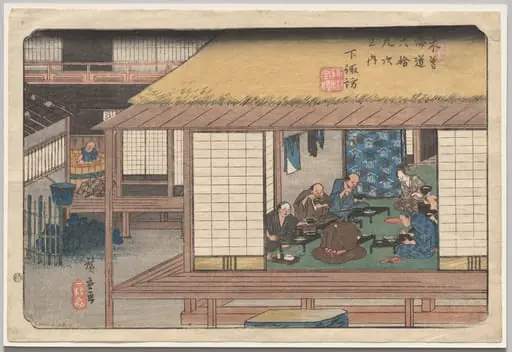 Shimosuwa, from Sixty-Nine Stations of the Kisokaidō
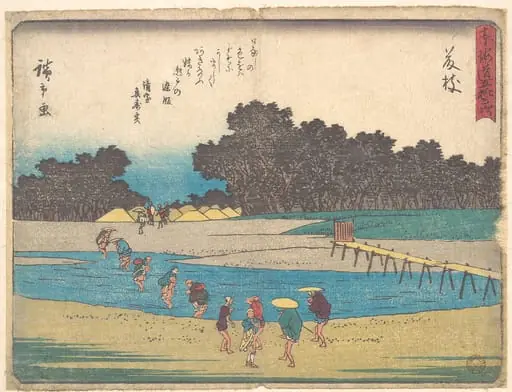 東海道五十三次 藤枝|Fujieda
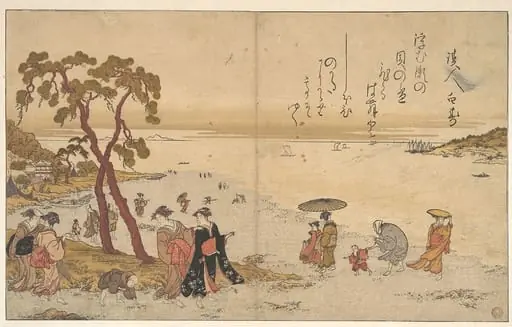 Untitled
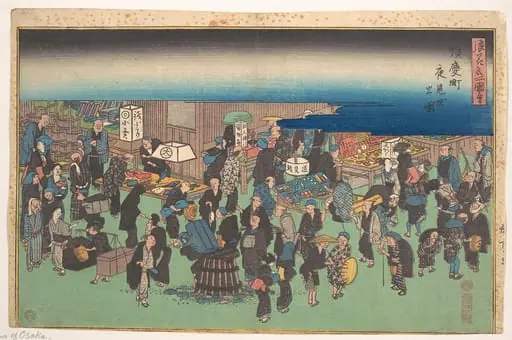 浪花名所図会 順慶町夜見世の図|Junkei machi Yomise no Zu
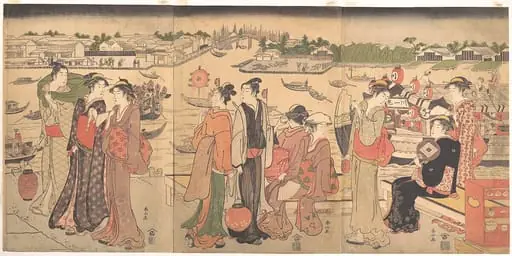 Untitled
 A Summer Evening by the River
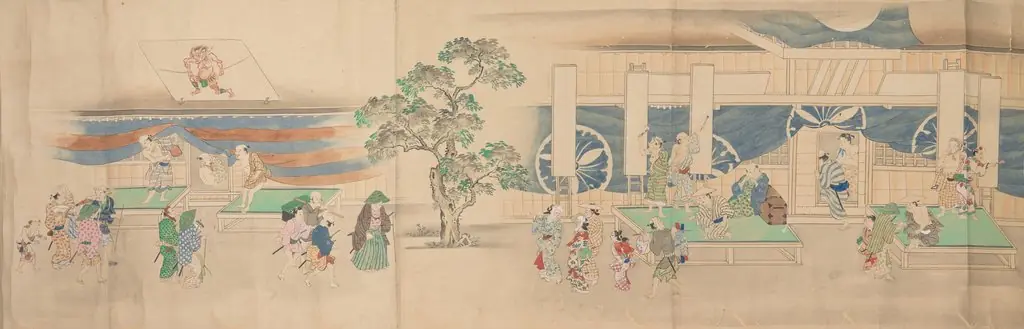 Kabuki Theater
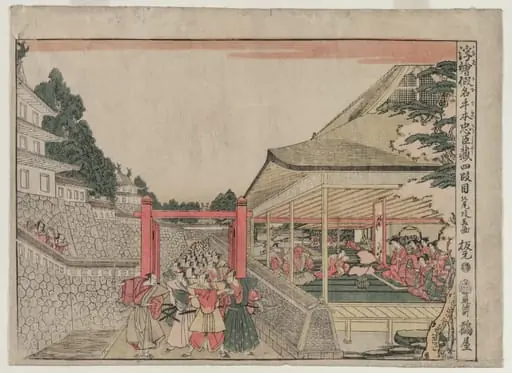 Chushingura: Act IV (from the series Perspective Pictures for The Treasure House of Loyalty)
 三俳優隅田川船遊び|Sumida River Holiday
- Amusements in Kyoto in the Four Seasons