Death and the Miser (outer doors); St. Nicolas with donor and St. Godelieve with donor (inner doors) by Jan Provoost
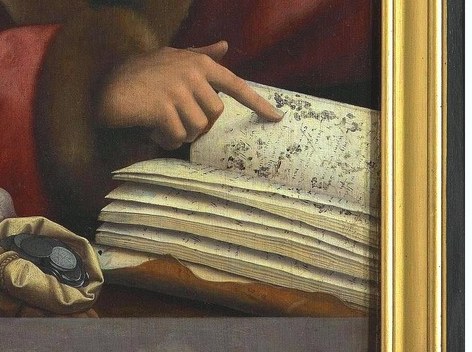
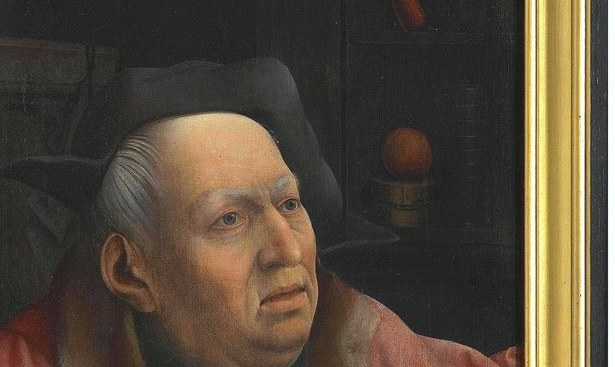
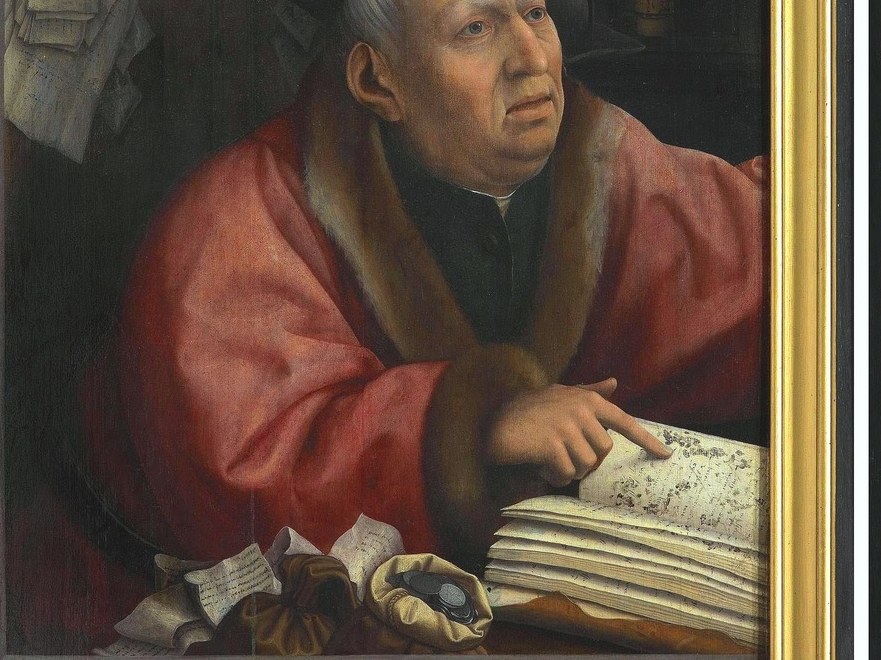
Jan Provoost's 'Death and the Miser', painted around 1520 and housed in the Groeningemuseum collection, tells a stark moral allegory. In this Northern Renaissance oil painting, a richly robed miser desperately clings to his worldly possessions, symbolized by his money bags and ledger book.
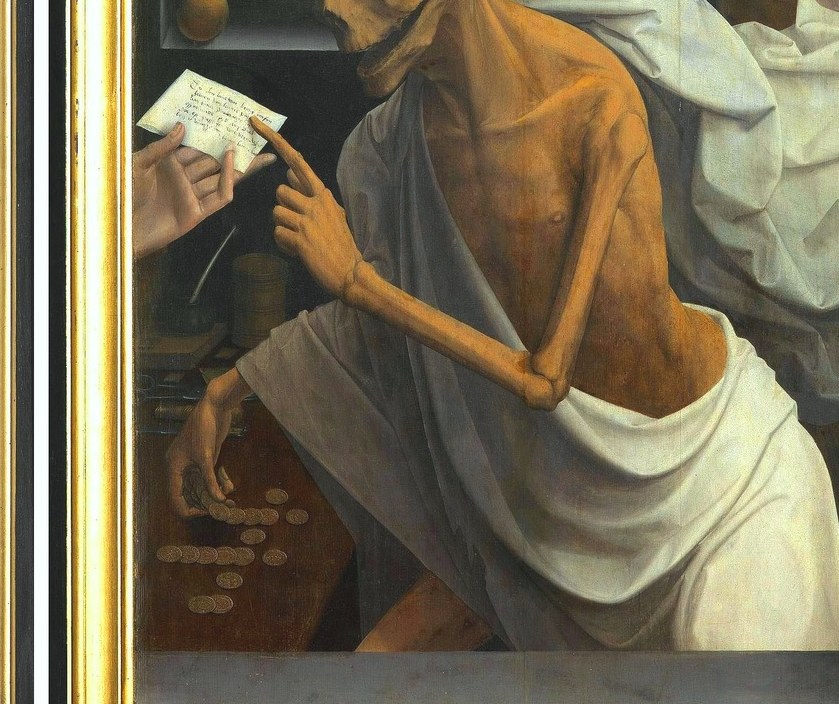
The skeletal figure of Death stands before him, not just present but actively delivering a summons. If you look closely at the paper Death holds, you can see a chilling detail: a message written in Latin.
This script translates to 'Come, I will not delay,' a direct and inescapable command. Provoost, a prolific artist who also worked as a cartographer and engineer, masterfully uses chiaroscuro to heighten the drama of this moment, emphasizing the fleeting nature of earthly wealth against the certainty of mortality. The painting serves as a powerful reminder of medieval Christian teachings on the Ars moriendi (the art of dying well).
What other hidden messages might Provoost have included?
Details
Transcript
This triptych depicts a wealthy man, near death. He clings to his gold and his open ledger book. But Death has come, holding an important paper. Look closely at the script written on it. The Latin reads: 'Come, I will not delay.' It is Death's final, unrefusable summons.