La Salle and Party Arrive at the Village of the Illinois. January 1, 1680 by Catlin, George
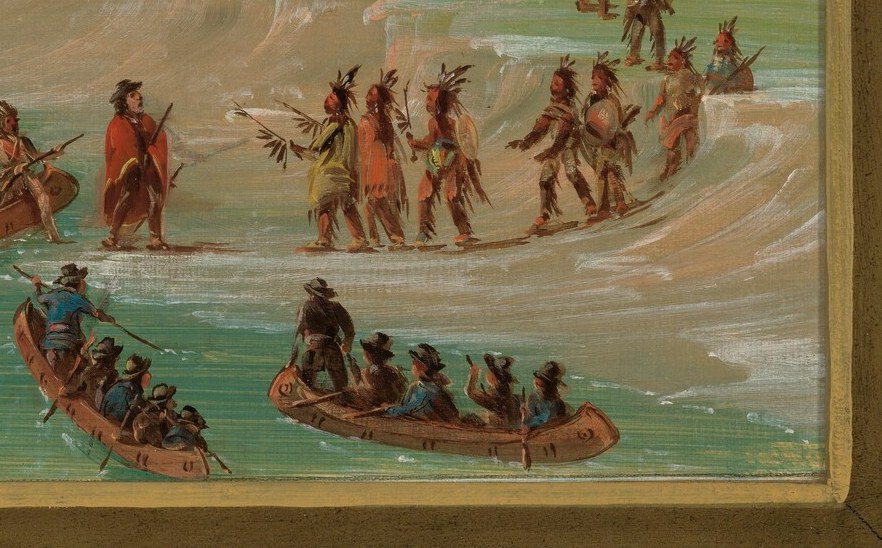
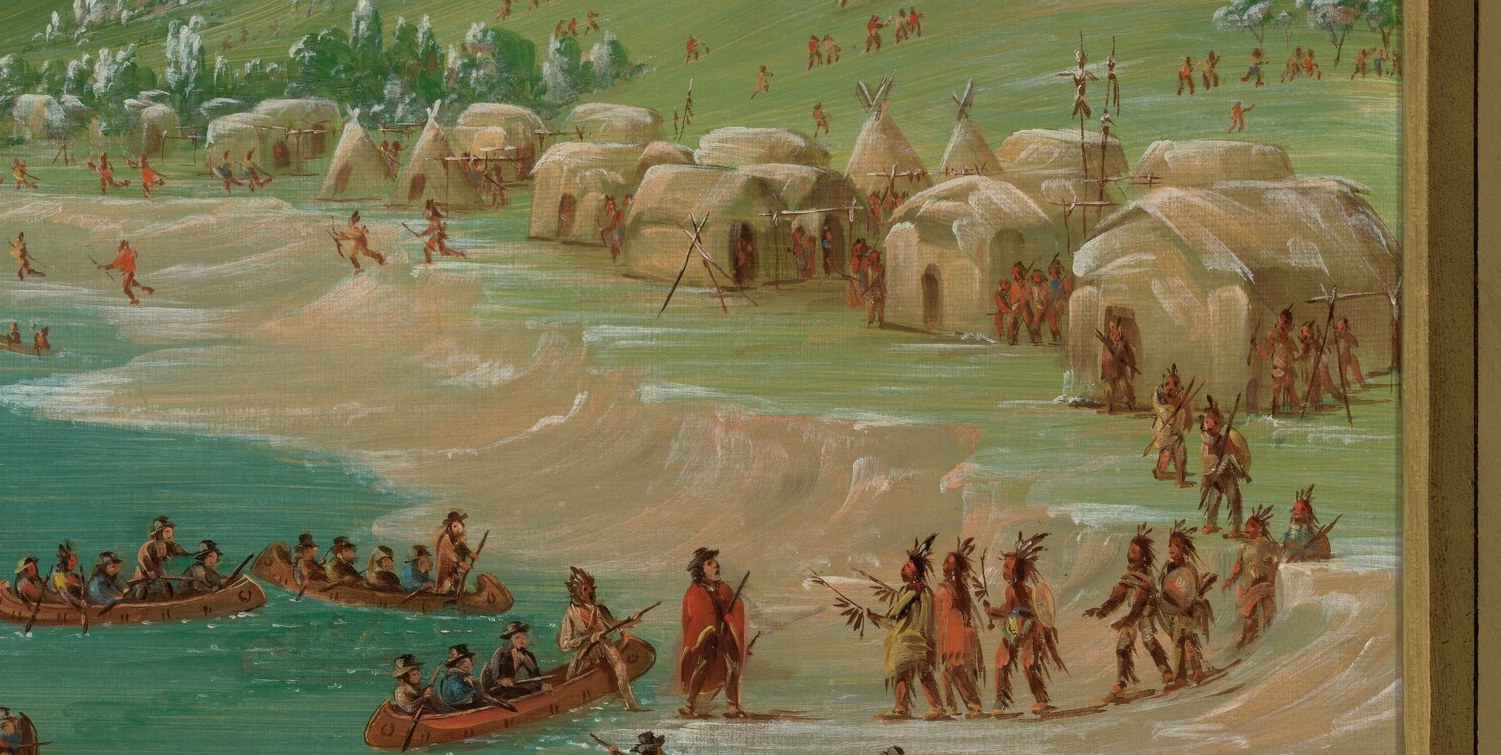
George Catlin's 1848 painting, "La Salle and Party Arrive at the Village of the Illinois," depicts a dramatic encounter that the artist himself never witnessed. Catlin, known for his documentation of Native American life, created this scene based on secondhand accounts, years after the actual event of January 1, 1680.
While the painting vividly portrays the arrival of French explorer La Salle's expedition, a tiny detail in the bottom left corner often goes unnoticed: the small number '10'. This seemingly minor mark is a catalog or inventory number, a quiet reminder of the artwork's journey through collections and its own documented history.
Catlin produced this work as part of a larger series documenting Native American life and frontier history. His extensive travels in the American West during the 1830s informed his artistic practice, blending ethnographic observation with historical narratives, even when based on stories rather than direct experience.
What other hidden marks or labels might an artwork carry, telling stories beyond its subject matter?
Details
Transcript
This painting shows an explorer's arrival at an Illinois village. The artist, George Catlin, painted this scene in 1848. But he relied on stories, not his own observation of 1680. The painting itself has hidden details from its own history. Look closely at the bottom left corner. A small number '10' hints at its catalog past.