The Triumph of Aemilius Paulus by Carle Vernet (French, 1758–1836)
View the artwork: The Triumph of Aemilius Paulus →
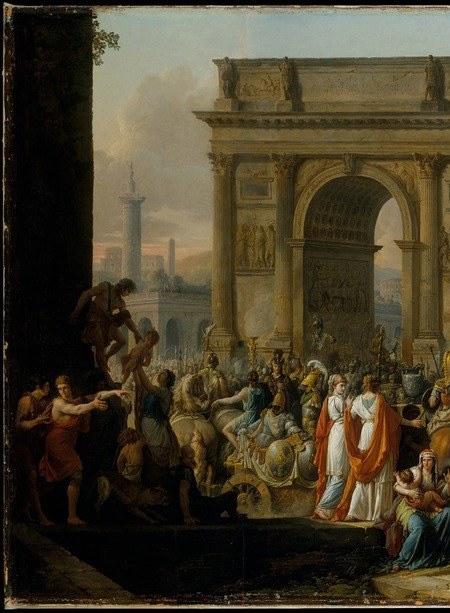
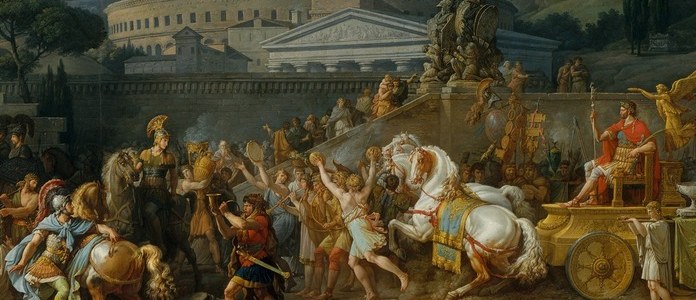
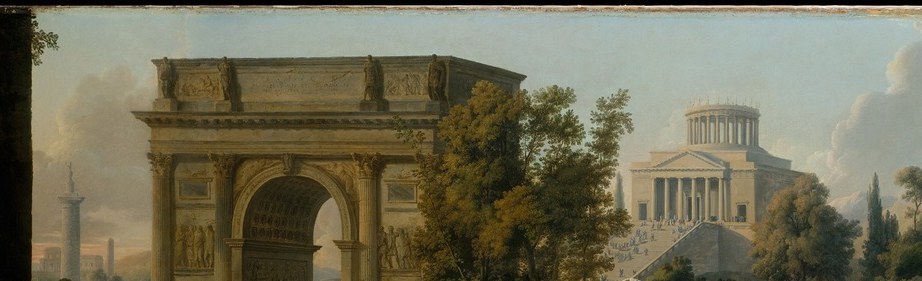
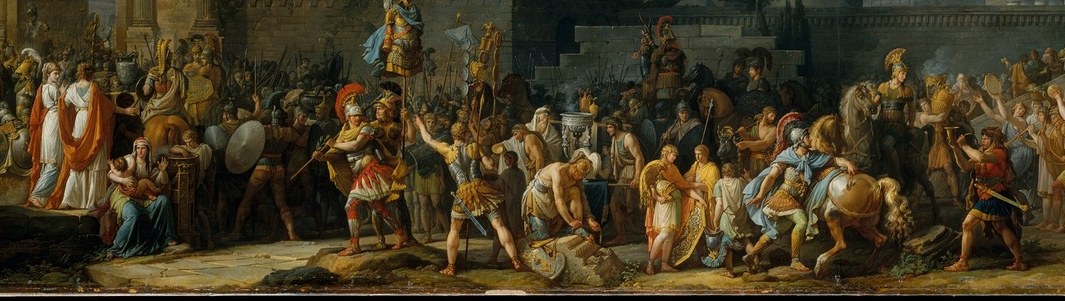
This is The Triumph of Aemilius Paulus, a fourteen-foot-wide oil painting by Carle Vernet, completed in 1789. It hangs today at the Metropolitan Museum of Art in New York, but it was born at the very last moment the old order in France could commission something this grand.
Look at the defeated King Perseus walking behind the gilded chariot. Under Roman custom, the captured king was the moral center of a triumph, proof that the conqueror's power was real. Vernet buried the story's emotional weight not in the general, but in the quiet figure following him.
Vernet painted this as his reception piece for the Académie Royale de Peinture et de Sculpture, the institution that decided who mattered in French art. It debuted at the Paris Salon in 1789. Within months, the French Revolution had begun. Within a few years, the Academy was abolished entirely. A canvas built to secure a place in a stable hierarchy instead watched that hierarchy collapse.
The painter adapted. Under Napoleon, Carle Vernet became known not for Roman processions but for battle scenes and horses, the subjects a new empire wanted. He had trained his whole life for one world and worked the rest of it in another. You can see the hinge right here.
#arthistory #frenchpainting #metmuseum
Details

Transcript
The artist finished this in 1789 to enter the French Academy. It was his audition. A fourteen-foot-wide job application. A Roman general rides a gilded chariot through his triumph. Behind him walks the defeated enemy king, now a prisoner. When this debuted at the Salon, France still had a king. Within months, the revolution began. The Academy vanished. The painter survived by reinventing himself under Napoleon. This canvas, meant to honor a conqueror, quietly entered a museum in 1906.