Artwork
The Triumph of Aemilius Paulus
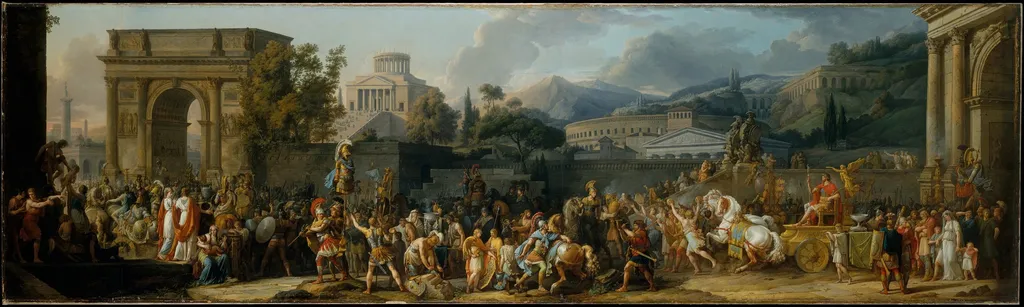
The Triumph of Aemilius Paulus is an oil painting by the Academic Art artist Carle Vernet. It dates from 1795 and is held in the collection of the Metropolitan Museum of Art.
About this work
In 1789, Carle Vernet presented a panorama over fourteen feet wide to the Academie Royale de Peinture et de Sculpture. It shows the Roman general Aemilius Paulus on a gilded chariot through Rome, with King Perseus of Macedon and his family led as prisoners after the Battle of Pydna in 168 B.C. More than a hundred figures and a dozen horses pass the temple of Jupiter Capitolinus.
Subject & Meaning
Created in 1795 by Carle Vernet, the painting reflects Enlightenment interest in heroic antiquity and the moral lesson of triumph over tyranny.
The Triumph of Aemilius Paulus portrays the Roman general Lucius Aemilius Paullus Macedonicus victorious over King Perseus of Macedon, a scene drawn from classical antiquity. In the composition the triumphant commander rides a horse, followed by a chariot laden with spoils, while a captive prisoner and a crowd of onlookers witness the celebration. The work's iconography emphasizes Roman martial virtue and the subjugation of Hellenistic royalty, with symbols such as armor, a laurel wreath, and the defeated king's surrender.
Created in 1795 by Carle Vernet, the painting reflects Enlightenment interest in heroic antiquity and the moral lesson of triumph over tyranny.
Technique & Style
Carle Vernet executed The Triumph of Aemilius Paulus in oil paint on a substantial canvas measuring 129.9 by 438.2 centimeters. Stylistically, the work aligns with the academic tradition. Its expansive horizontal format accommodates a complex, densely populated composition featuring a dynamic procession of figures, including soldiers, a king, and prisoners, alongside meticulously rendered elements such as horses, armor, and a chariot.
The painting depicts Lucius Aemilius Paullus Macedonicus and Perseus of Macedon, using the academic style to convey the grandeur and narrative detail of the historical triumph.
History & Provenance
The Triumph of Aemilius Paulus was executed by Carle Vernet in 1795. The painting depicts the Roman general Lucius Aemilius Paullus Macedonicus's victory procession following his defeat of Perseus of Macedon, aligning with Vernet's academic training and historical subject matter. Created in oil on canvas, the work entered the collection of the Metropolitan Museum of Art, where it is held today. The provided sources do not document any intermediary private ownership or the circumstances of its acquisition.
Overview
The Triumph of Aemilius Paulus is a large-scale oil painting created by Carle Vernet between 1787 and 1789. This ambitious work served as his reception piece for admission into the prestigious Académie Royale de Peinture et de Sculpture. Measuring over fourteen feet in width, the canvas depicts a significant historical event from ancient Rome: the grand procession celebrating the military victory of General Lucius Aemilius Paulus. Its monumental scope and detailed execution marked an early highlight in Vernet's career.
Legacy
This monumental canvas played a crucial role in establishing Carle Vernet as a prominent history painter early in his career. Its success demonstrated his skill in depicting complex historical narratives on a grand scale. While "The Triumph of Aemilius Paulus" showcased his classical leanings, Vernet would later shift his artistic focus.
Under the patronage of Napoleon, he became renowned for his equestrian and military scenes, a genre that would define much of his subsequent artistic output.
Artist & collection

Artist
Antoine Charles Horace Vernet, better known as Carle Vernet, was a French painter, the youngest child of painter Claude-Joseph Vernet and the father of painter Horace Vernet.

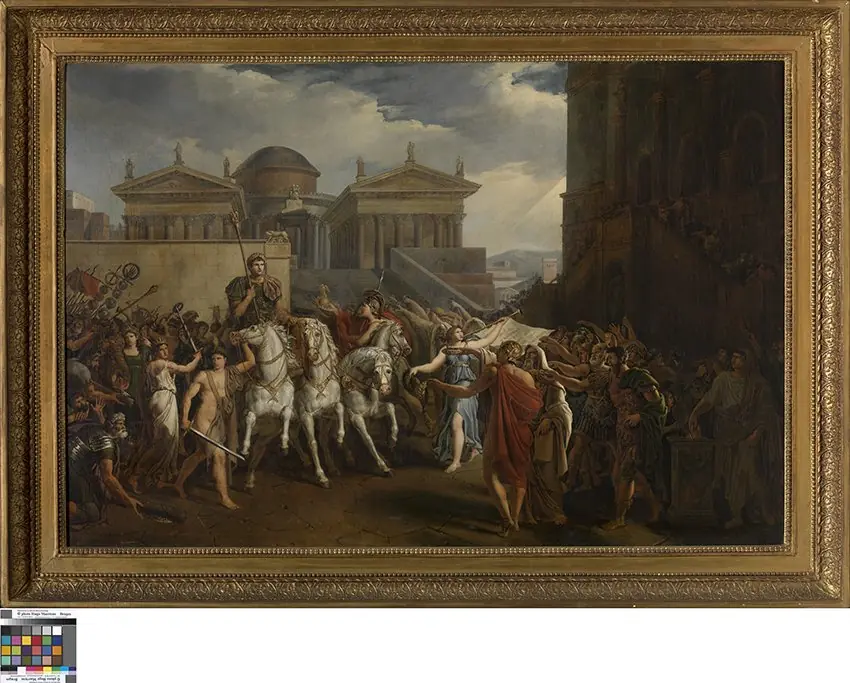 Triomftocht van keizer Trajanus
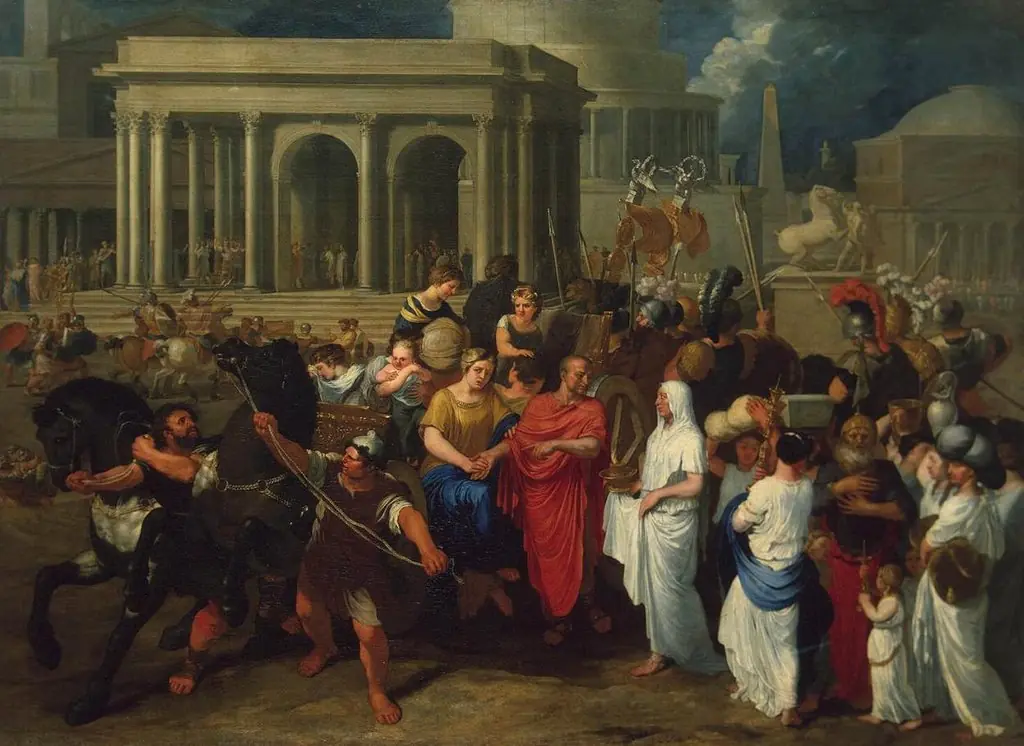 Lucius Albinus Giving his Carriage to Vestals
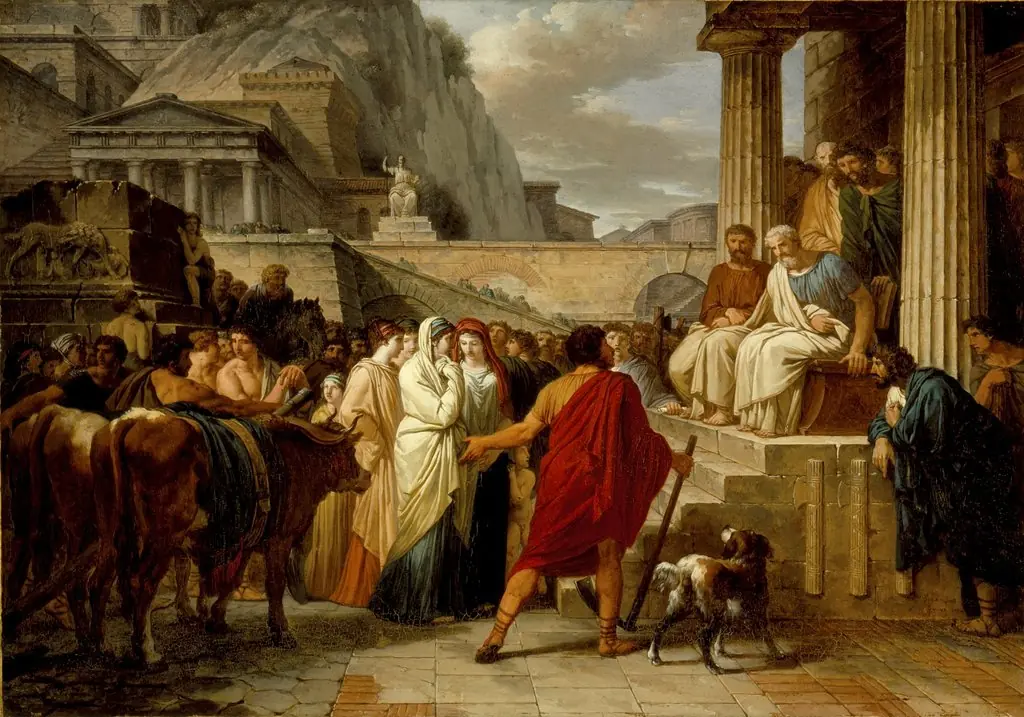 Caius Furius Cressinus Accused of Sorcery
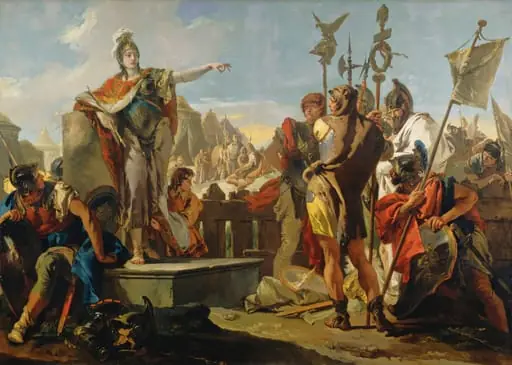 Queen Zenobia Addressing Her Soldiers
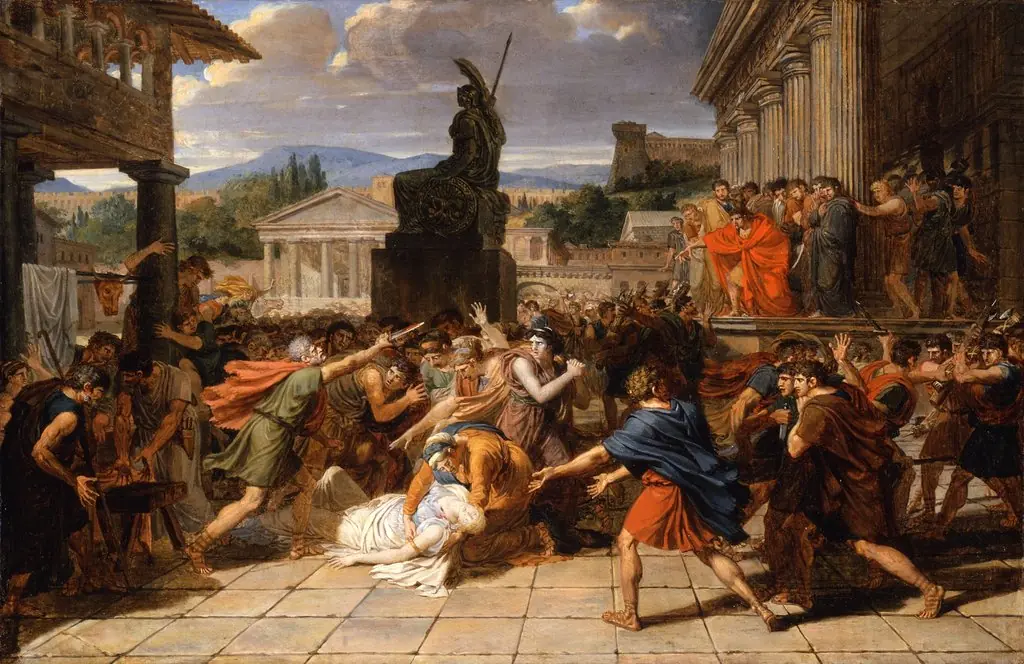 The Death of Virginia
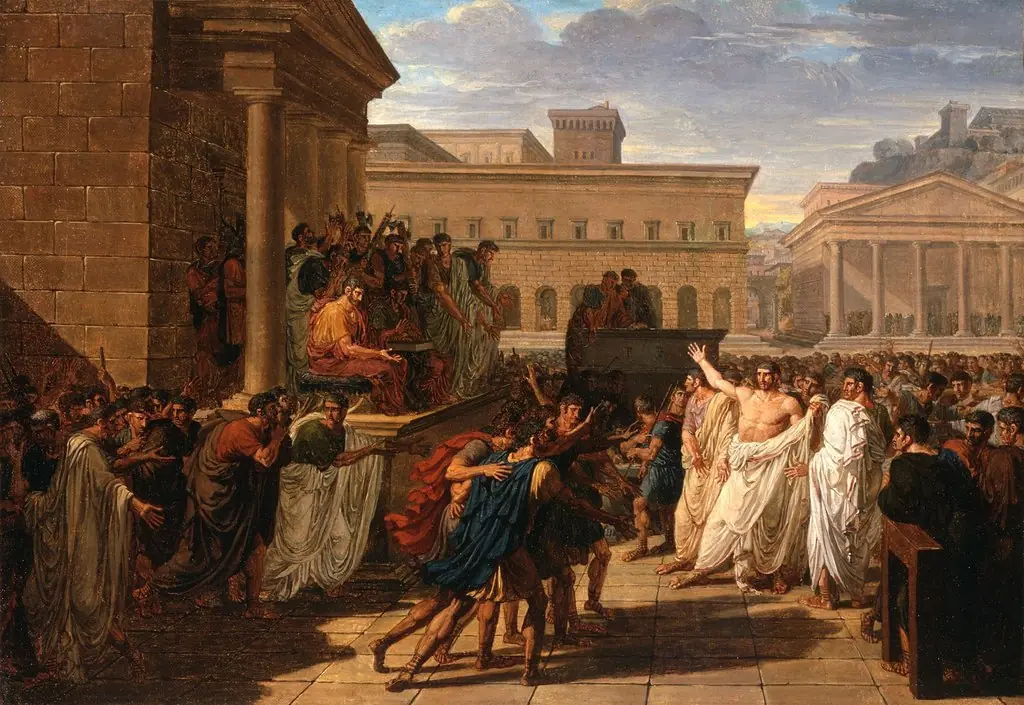 Brutus Listening to the Ambassadors from the Tarquins
 Le triomphe de Bonaparte ou la Paix
 Scipio Africanus Freeing Massiva
 Ruins of a Doric Temple
 Ancient scene of sacrifice
 Salomo ontvangt geschenken
- Triumphal Entry of Constantine in Rome