Saint Nicholas of Bari by Carlo Crivelli
Carlo Crivelli's "Saint Nicholas of Bari," painted in 1472, captures the revered saint with meticulous detail. This painting, now at The Cleveland Museum of Art, showcases Crivelli's unique blend of Late Gothic and early Renaissance styles.
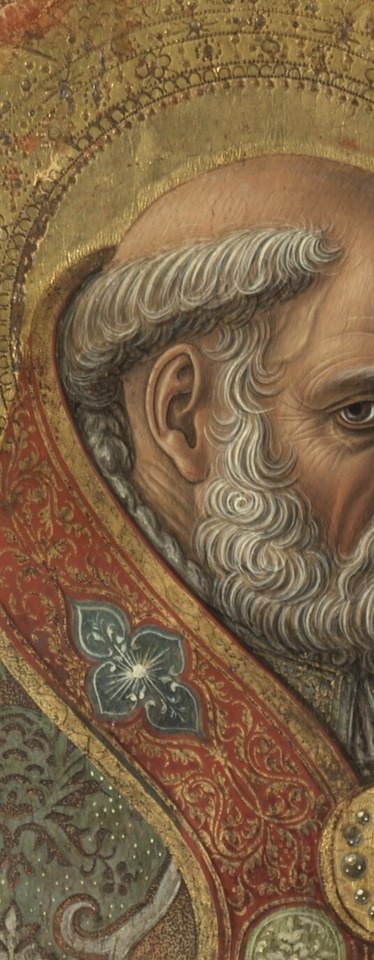
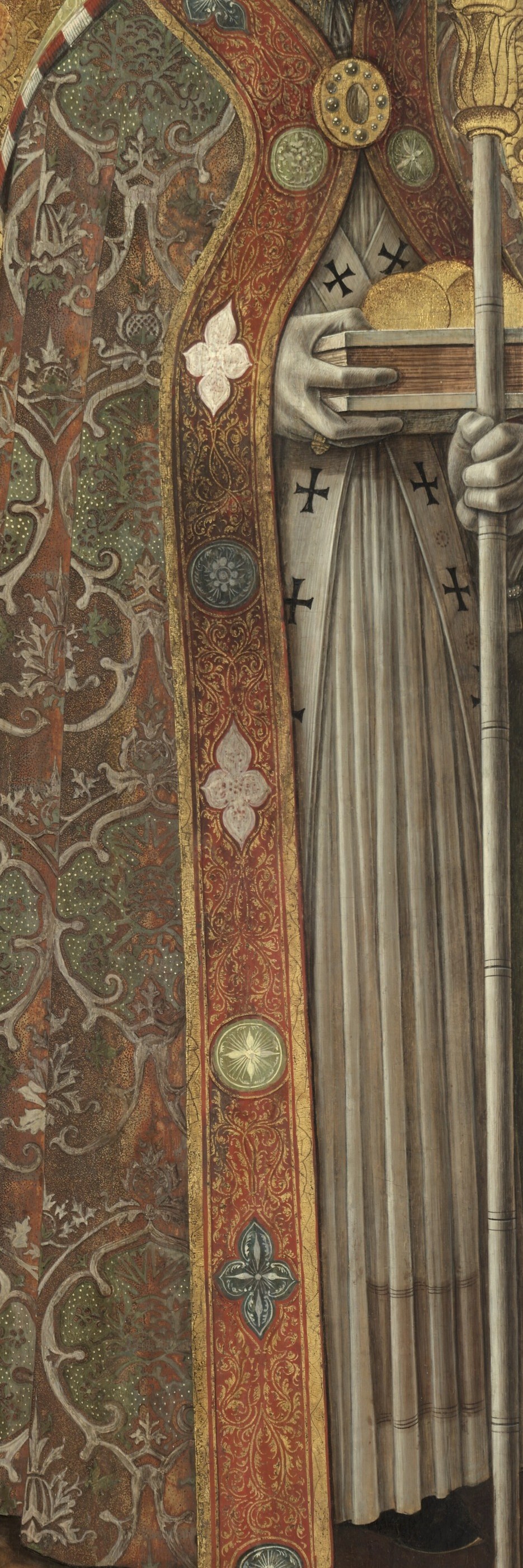
Look closely at the saint's weathered face and his hands, gently cradling a book and three loaves of bread. These loaves symbolize a miracle of sustenance, one of Saint Nicholas's well-known acts of charity.
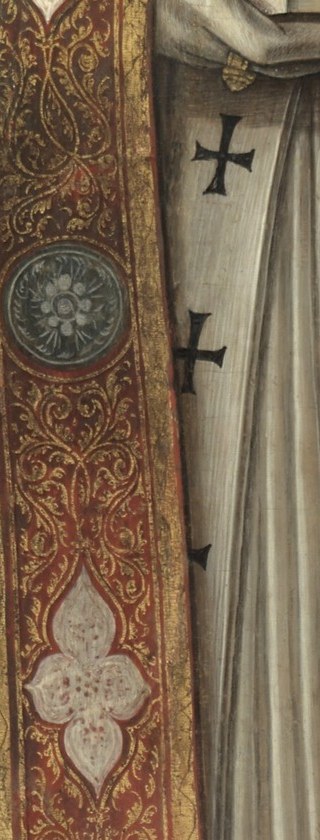
Crivelli, trained in the Veneto, spent most of his career in the March of Ancona, developing a distinctive personal style that set him apart from his contemporaries. His work is characterized by its decorative richness and intricate patterns, visible in the saint's ornate cope and mitre.
The painting invites us to reflect on Saint Nicholas's enduring legacy of quiet reverence and selfless giving. What details in his expression resonate most with you?
Details

Transcript
This is Saint Nicholas, painted in 1472. He was a bishop, known for quiet acts of charity. In his left hand, he holds a book and three loaves of bread. These loaves recall a miracle of providing food. The painter, Carlo Crivelli, worked far from Venice. His distinctive style emphasized intricate detail and rich patterns. His solemn face conveys centuries of quiet devotion.