Salvator Mundi by Domenico Fetti
Domenico Fetti painted this Salvator Mundi in 1622, and it now hangs in The Metropolitan Museum of Art. He died barely a year later, at thirty-four, leaving behind a small group of works that dissolve the hard edges of early Baroque Rome into something softer, closer to Venice.
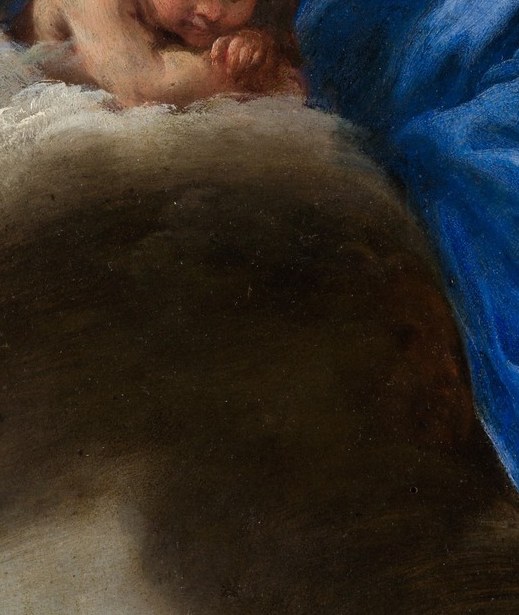
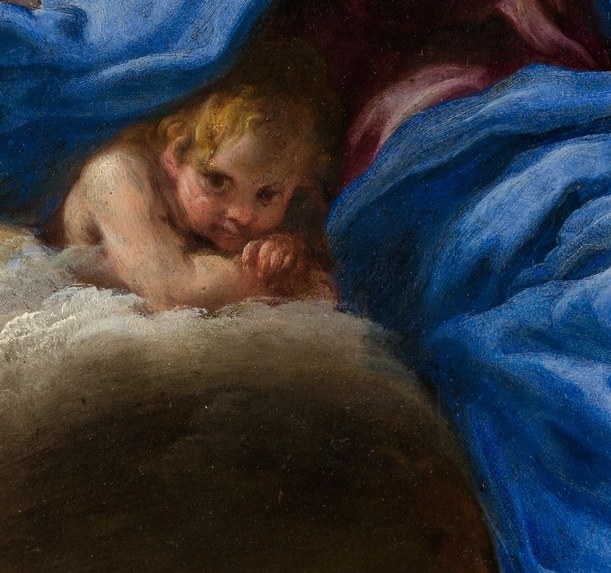
Watch the crystal orb in Christ's left hand. Fetti doesn't draw it with sharp spectral highlights or reflective glints the way a Northern painter might. He builds its translucency with a pooled, ambient light that seems to live inside the glass. The fingers curl around it without grasping, an offering rather than a possession.
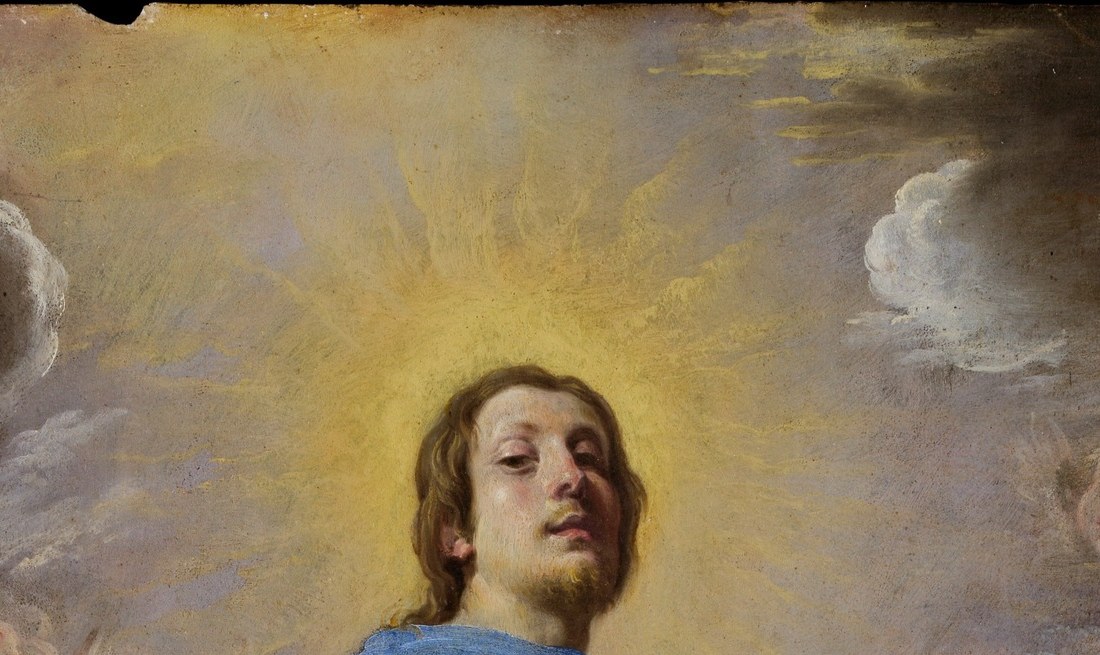
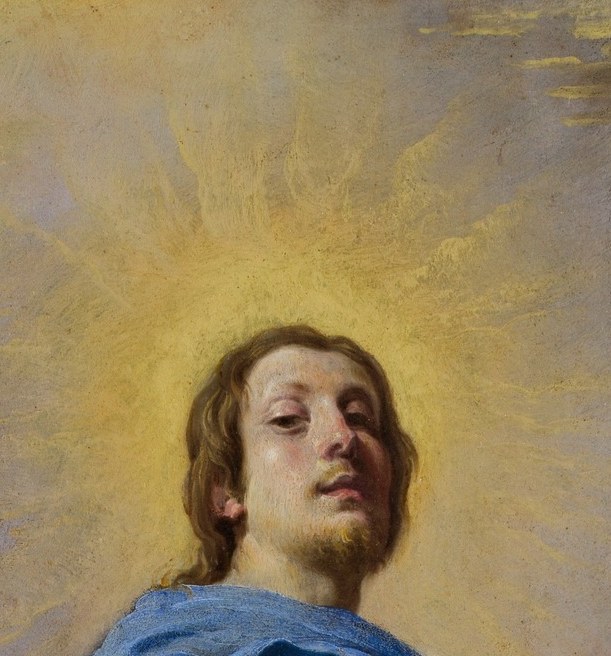
The same trick plays out in the golden halo. It isn't a solid disc laid behind the head. The gold warms the clouds themselves, bleeding into the right-hand cloud bank so the boundary between divinity and atmosphere becomes impossible to locate. You're looking at paint, but it reads as warm air.
Fetti moved between Rome, Mantua, and Venice, and you can feel the Venetian influence in this sfumato softness. The face is androgynous, downcast, luminous. It invites contemplation rather than commanding awe. A Salvator Mundi meant for private devotion, not a thunderous altarpiece.
Details

Transcript
A crystal ball floating in the dark. Paint, made to look like weightless glass. Fetti built the form with soft ambient light, not hard reflections. Now look at the halo. It breathes into the clouds, not a hard disc but warm air. This painter died at thirty-four, in Venice. He dissolved matter into light.