A Cavalryman by Alphonse de Neuville
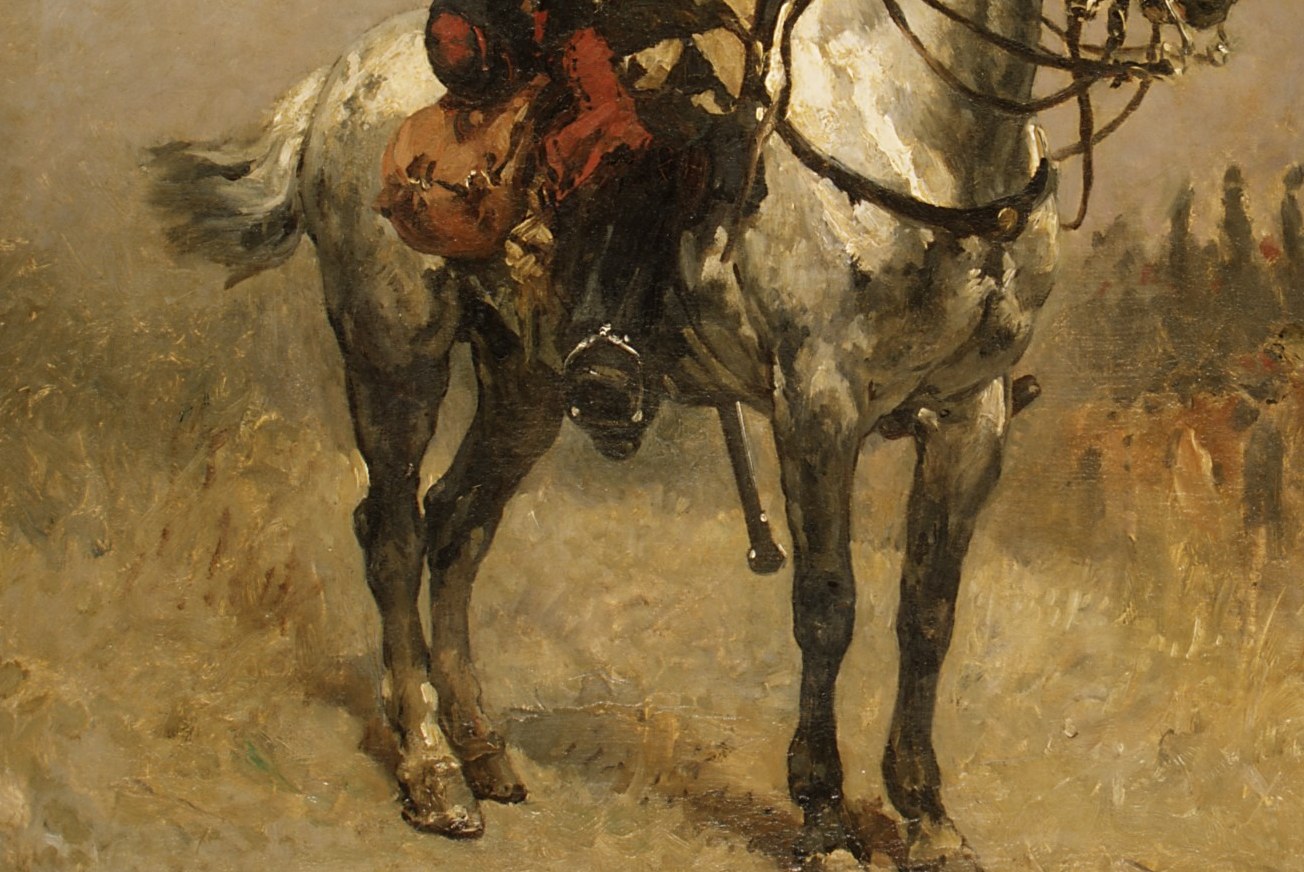
A Cavalryman (1884) is one of the last paintings Alphonse de Neuville ever made, he died the following spring, at 49.
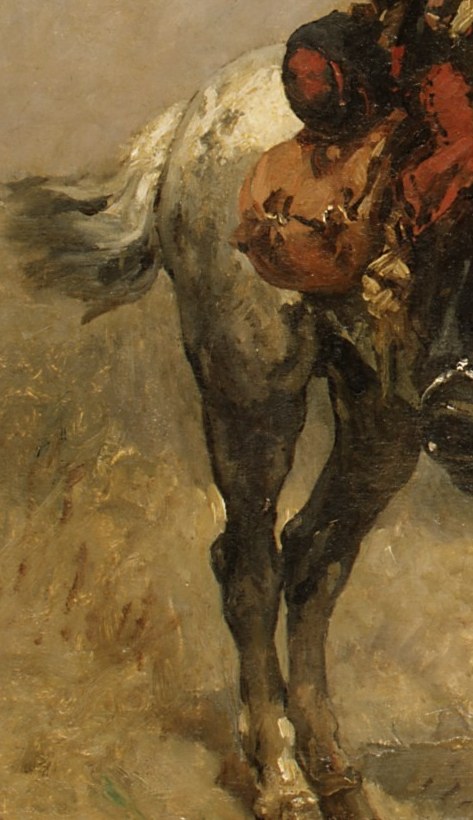
De Neuville was the great French painter of military valor: panoramic scenes from the Franco-Prussian War, the Crimean War, acts of desperate courage rendered in sprawling, dramatic canvases. Here, at the end, he chose to paint a single cavalryman in a yellow field, his sabre sheathed, his horse at rest.
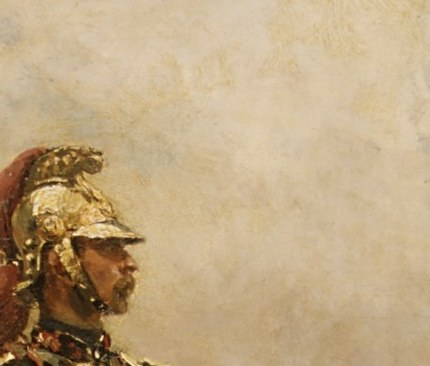
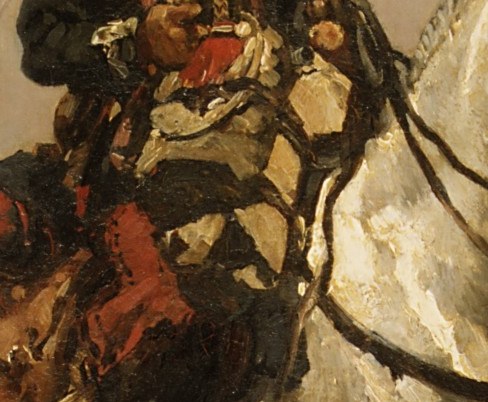
Look at the hands. The gauntleted fingers hold the reins with an ease that only comes from years in the saddle, this is not a raw recruit playing soldier, it is a man wholly at home. The helmet plume, gold braid, and saddlecloth are rendered with the costume-accuracy De Neuville was known for, but the painting's weight sits in the face beneath that shako: composed, a little weary, watching something we cannot see.
The painting lives at the Metropolitan Museum of Art in New York, a quiet counterweight to the artist's famous battle epics. For a man who spent his career staging French heroism for the public, this final portrait feels like a private report.
Details
Transcript
His name was Alphonse de Neuville. For twenty years, France paid him to paint her victories. Colossal battle scenes. Cannon smoke. Cavalry charges. Then, in 1884, with one year left to live, he painted this. No battlefield. No charge. Just a man and his horse. His hands rest with the ease of decades in the saddle. His sabre hangs unused. He is not riding to war. De Neuville died in 1885, at 49. This is his valediction.