Niagara by Church, Frederic Edwin
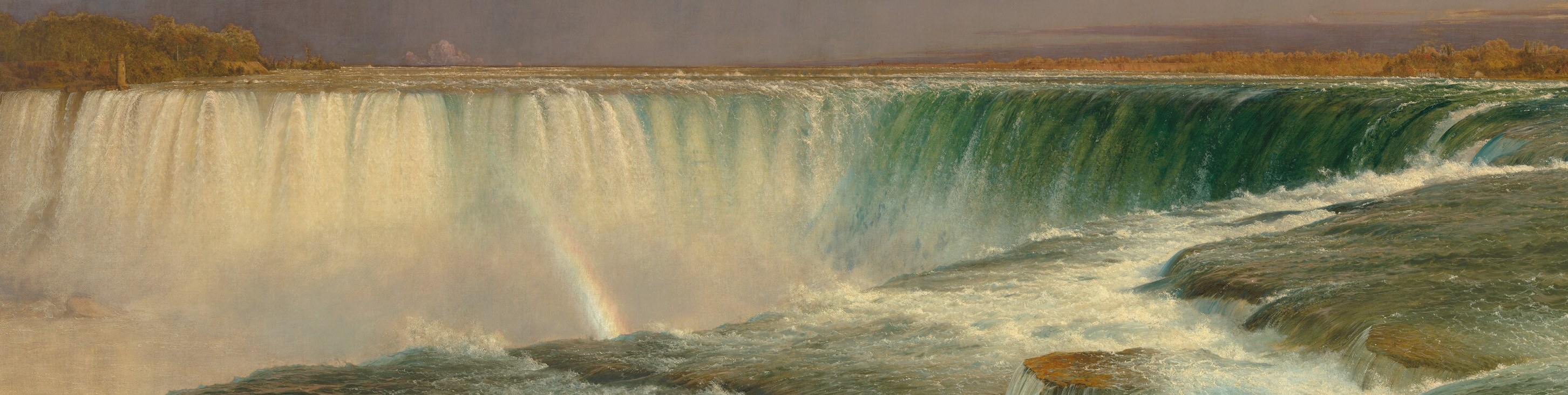
The secret of Frederic Edwin Church's *Niagara* (1857) is not the waterfall's thunder, but its impossible silence. This painting, held by the Corcoran Gallery of Art, was the blockbuster of its day, confirming Church as the premier American landscape painter.
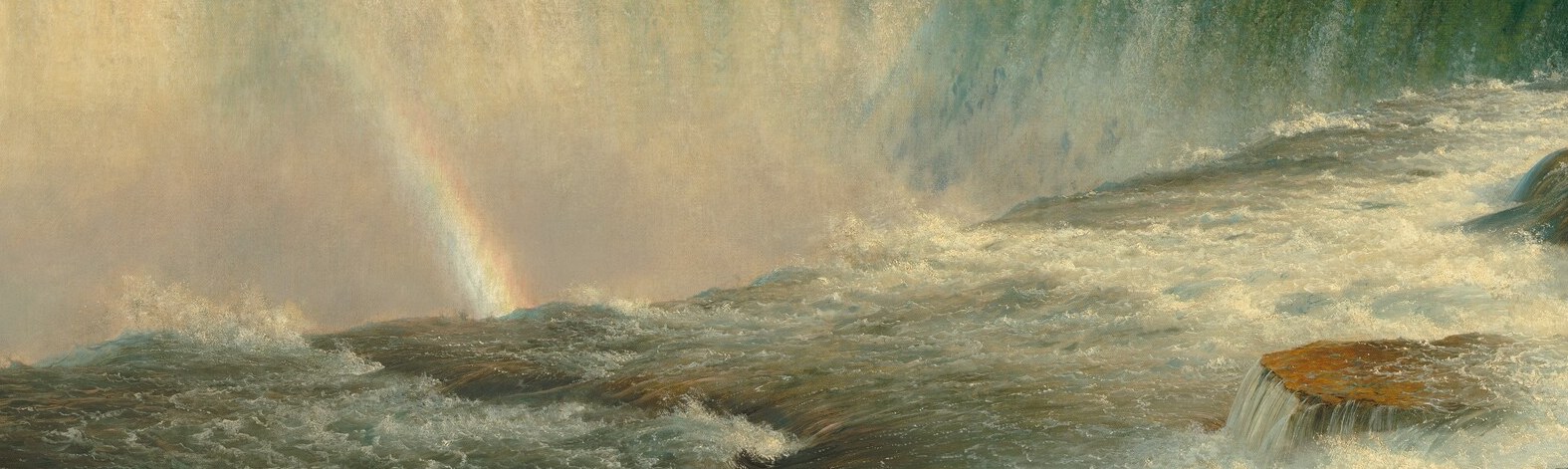
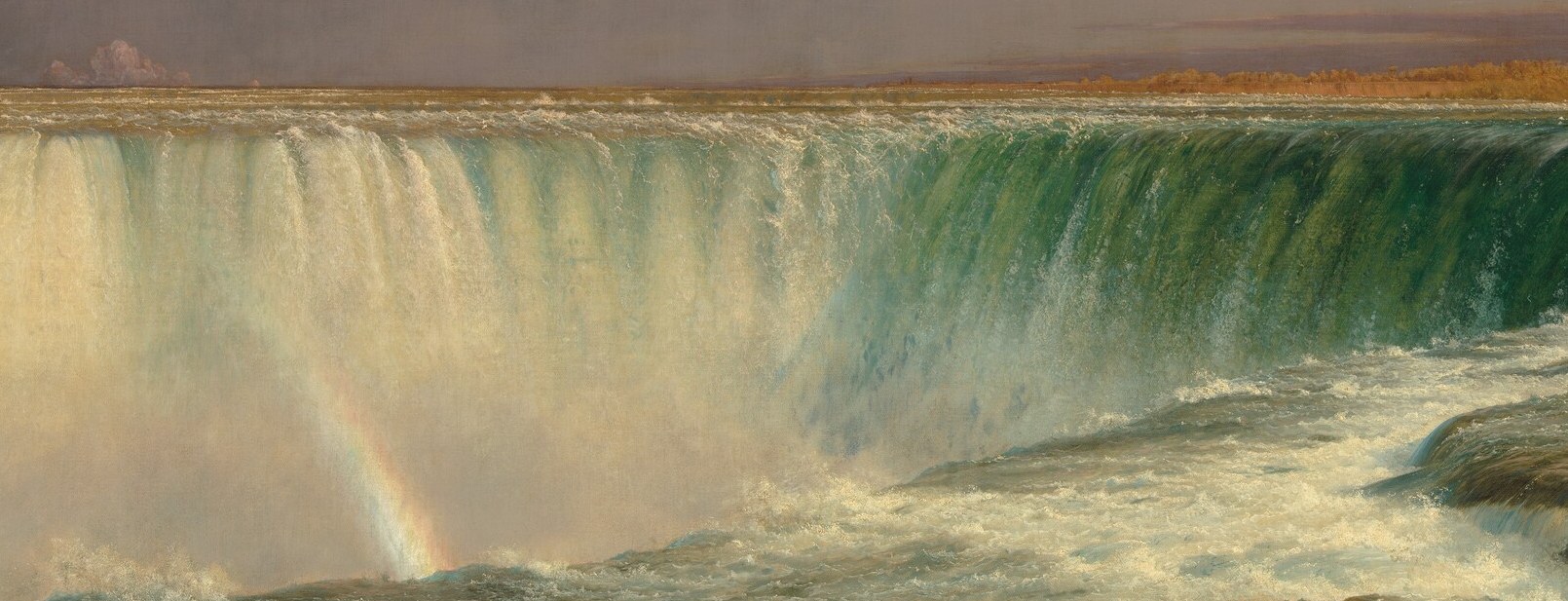
Look at the cascade itself. From a normal viewing distance, it reads as a solid wall of white. Move closer, and it resolves into countless overlapping veils, rivulets, and individual filaments of paint. Church wasn't depicting chaos; he was documenting every channel of water with a botanist's precision.
The specific jade-green of the water rushing toward the brink is another clue. Church captured the exact optical effect of sunlight penetrating racing shallows, a color observation that separates this from generic waterfall imagery.
Church prepared for this painting by making hundreds of oil sketches and pencil drawings at the falls in 1856. He exhibited the finished canvas as a single-painting spectacle, charging admission and using a darkened room to enhance its luminous effect. The rainbow in the central mist was his signature touch, converting overwhelming force into a promise of harmony.
Details


Transcript
From a distance, it's just a great wall of water. But look closer, past the rainbow and the mist. This painter didn't paint a waterfall. He painted millions of individual streams. Church sketched Niagara obsessively before he painted this. That green water is incredibly specific. Sunlight piercing racing shallows. He turned the nation's biggest symbol of raw power into a study of perfect visual control.