Woman by a Fence by Renoir, Auguste
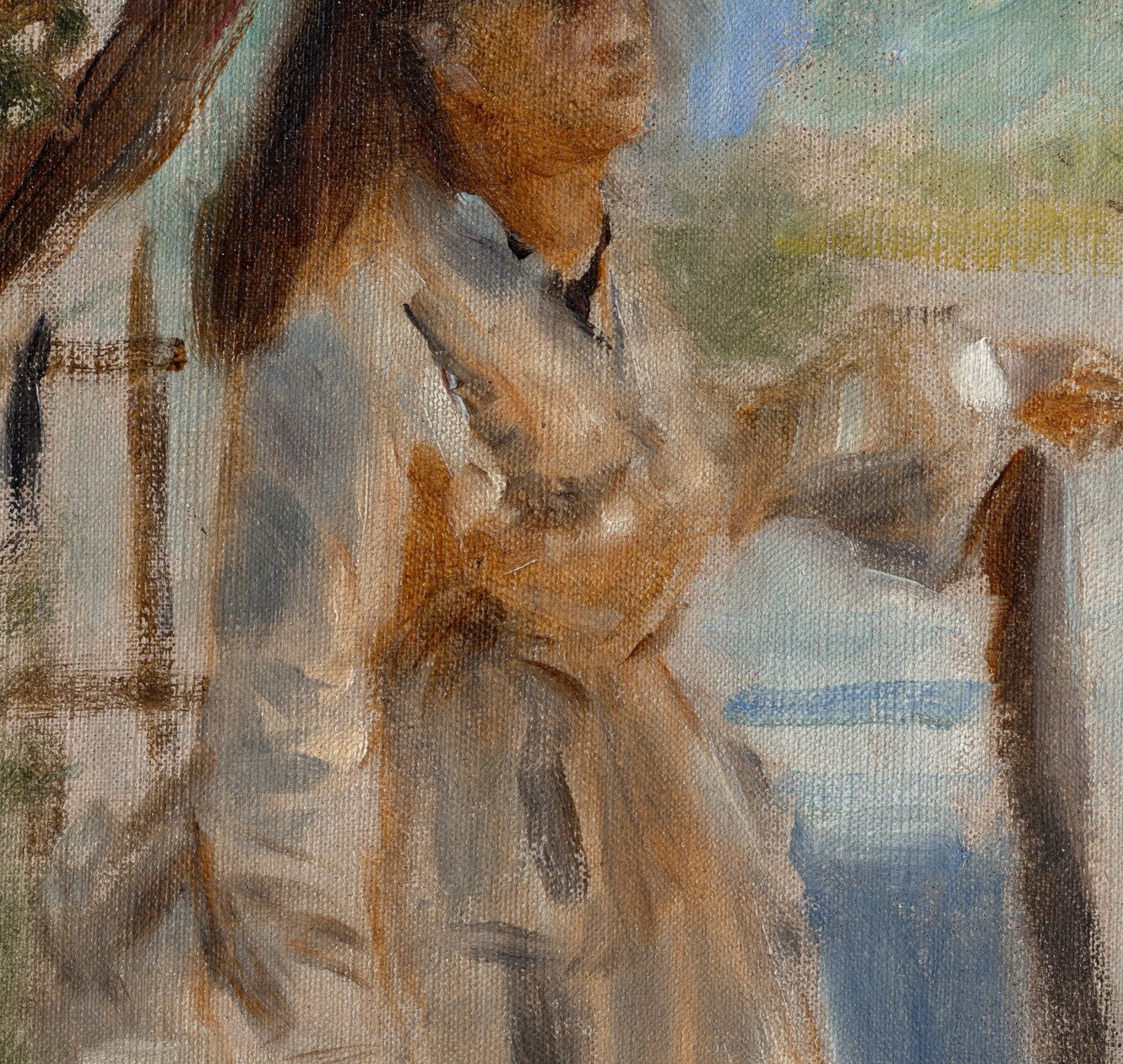
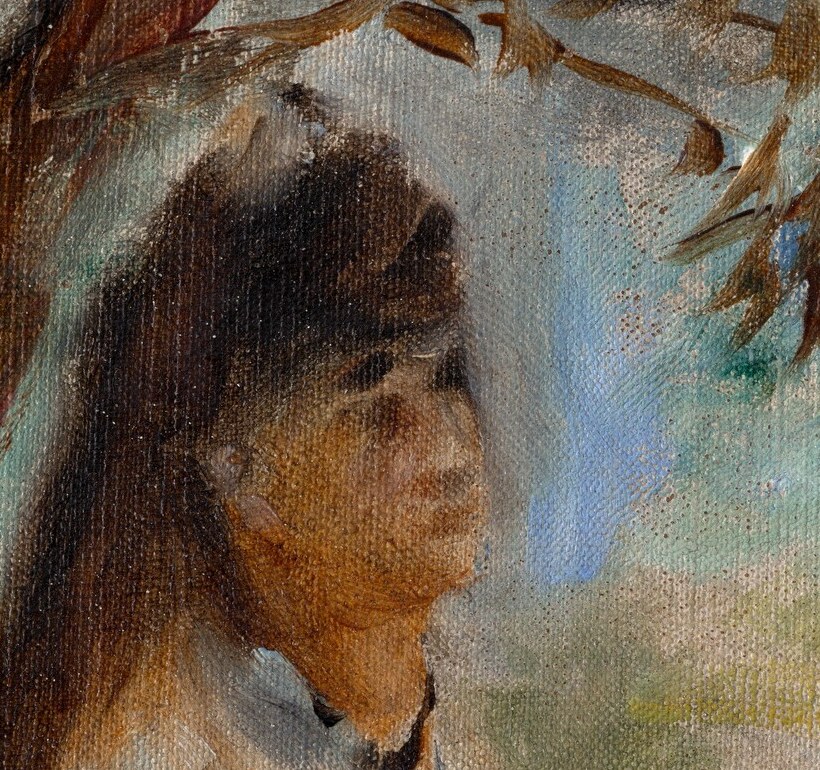
This is Auguste Renoir's *Woman by a Fence*, painted in 1866 when he was twenty-five years old, a full eight years before the first Impressionist exhibition. Most people know Renoir for the sun-dappled social scenes of the 1870s, but this early portrait shows the technique being invented before our eyes.
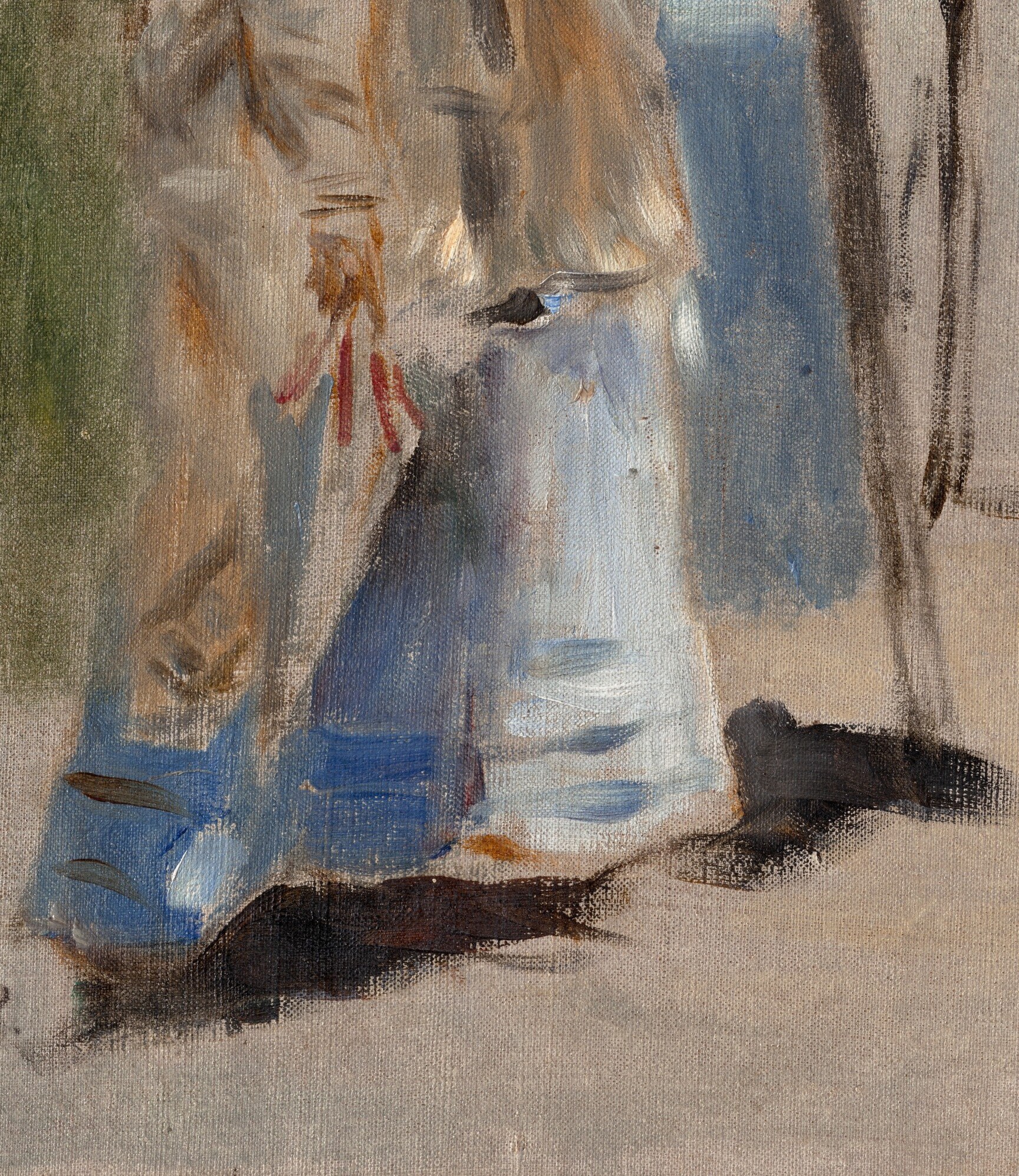
Look at the pale blue-white skirt. Those aren't blended colors. Renoir laid separate strokes of white and blue-gray directly onto the canvas, one beside the other, with no smoothing. Walk up close and you see individual marks. Step back and they fuse into solid fabric catching outdoor light. He's solving a hard technical problem, how to paint convincing volume without the academic finish his teachers demanded, and he's solving it with nothing but a loaded brush and quick, directional strokes.
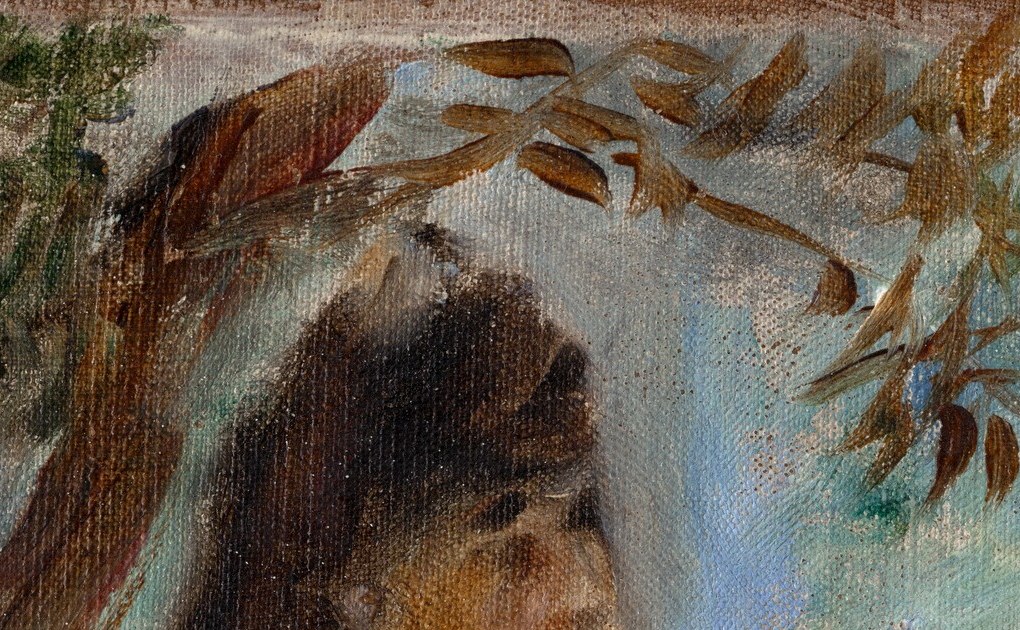
Renoir grew up near the Louvre, the son of a tailor and a seamstress. By thirteen he was painting porcelain in a factory, learning the luminous, transparent tones that would mark his entire career. A few years later he was in Charles Gleyre's studio alongside Monet, Sisley, and Bazille, the four of them pushing each other toward something lighter and truer. This painting sits right at the hinge: the hat and jacket still nod to the studio, but that skirt already belongs outdoors.
The painting lives now in a private collection, rarely seen. But anyone who does see it tends to stop at the skirt, because that's where the future shows up first.
Details

Transcript
1866. A young woman stands by a rustic fence. She's painted with a lightness that feels almost casual. But look at her skirt. These aren't blended colors. They're separate strokes of white and blue-gray laid side by side. From a step back, your eye mixes them into solid fabric catching sunlight. Renoir was 25. The Impressionist exhibitions were still eight years away. That skirt is him solving the problem in real time, with a brush.