The Forest Stream by Jacob van Ruisdael
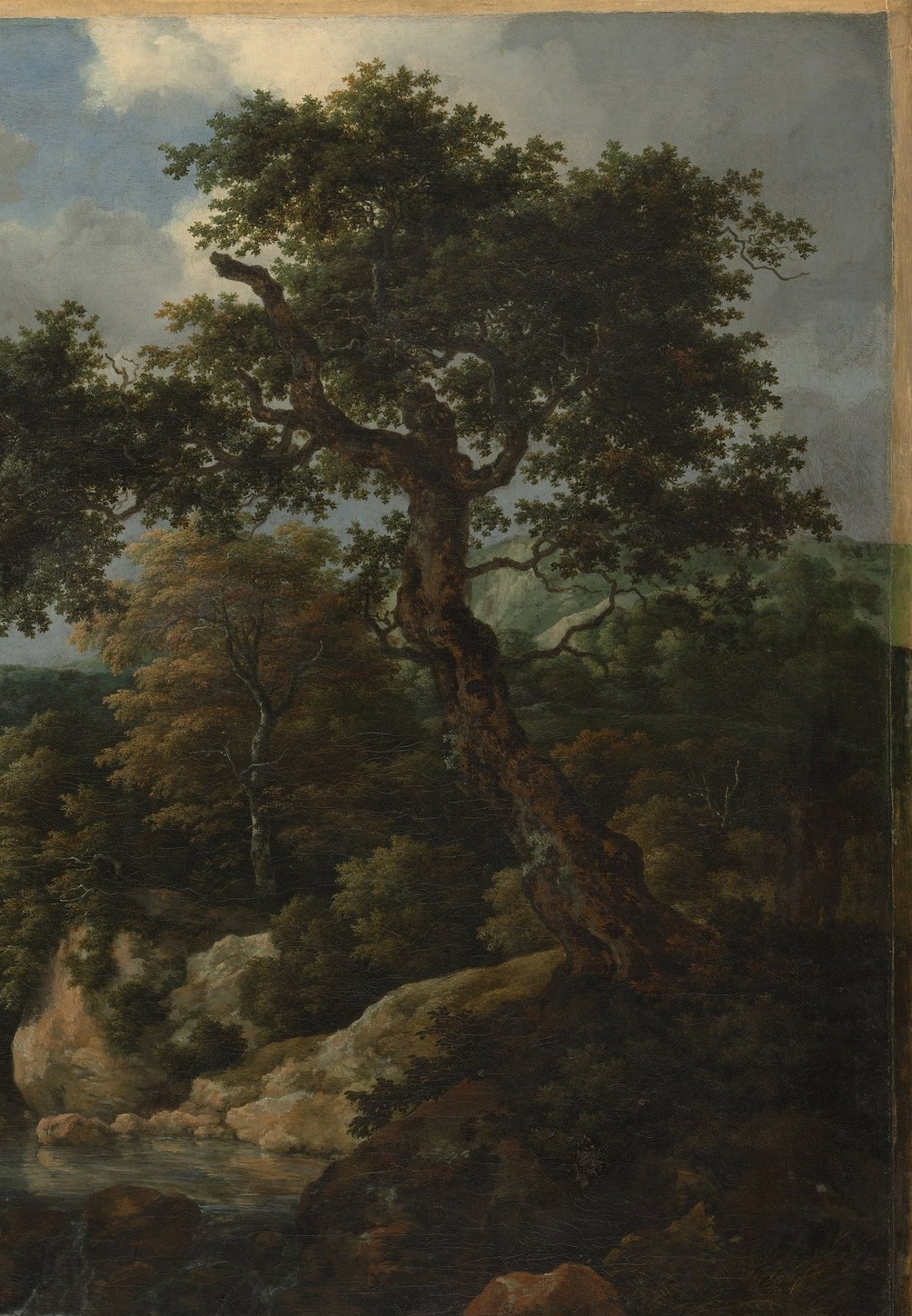
The Forest Stream, painted by Jacob van Ruisdael around 1660, is a landscape of a northern European old-growth forest that was already vanishing. Ruisdael lived and worked in Holland during the Dutch Golden Age, the most intensely urbanized landscape in Europe at the time. His paintings are not records of a place he saw out his window. They are constructed memories of a wilder world, assembled from drawings and imagination.
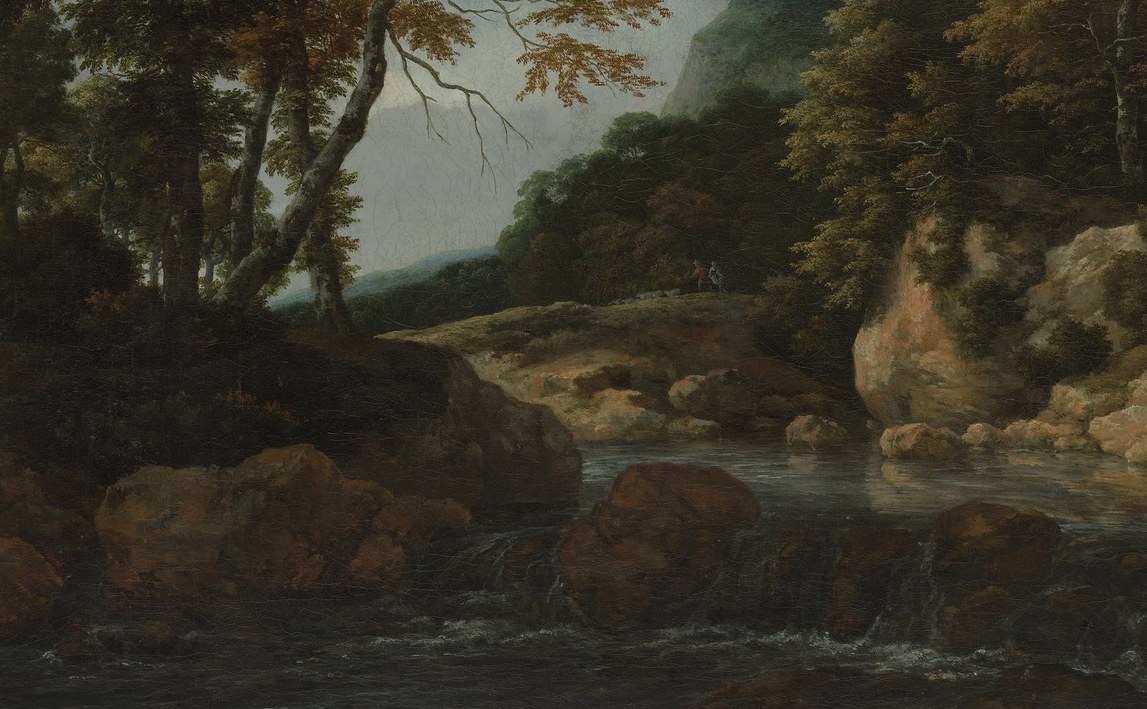
Follow the rocky stream as it cuts diagonally from the upper left toward the lower right. Ruisdael uses it to pull the eye deep into a shadowed forest floor. Sunlight breaks through the central gap in the canopy and catches the left bank foliage and the still water pooled among the boulders. Mossy rocks in the foreground anchor the composition with a dark, weighty presence.
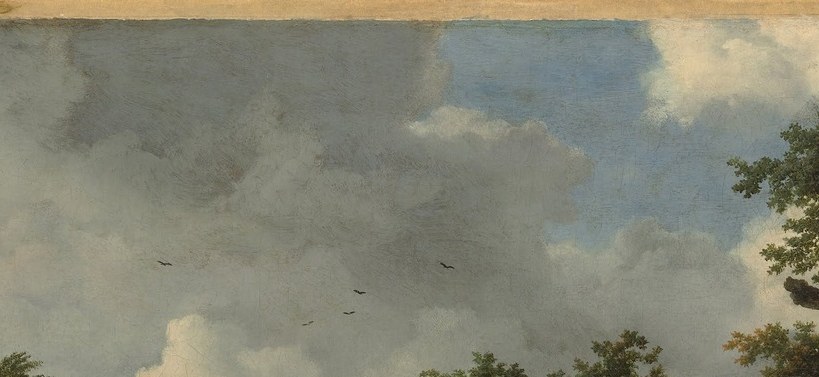
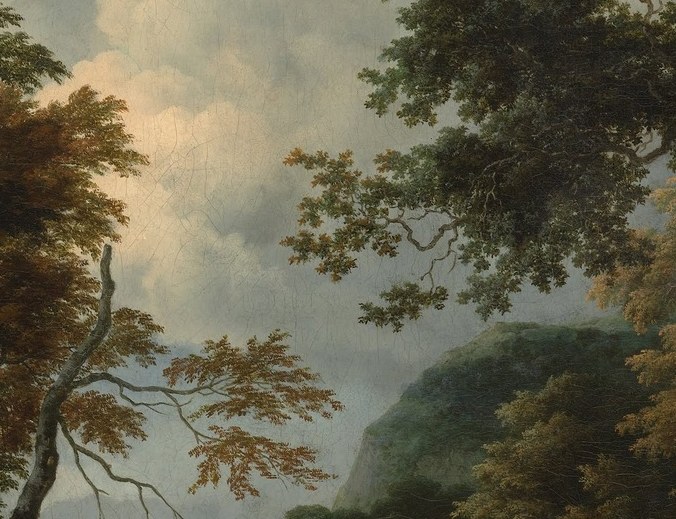
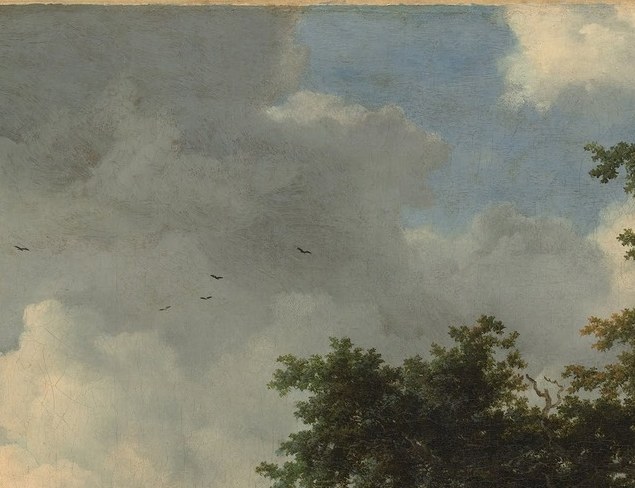
The painting carries Ruisdael's characteristic meditation on natural time. A dead branch silhouetted against the bright sky gap appears in many of his works as a deliberate motif: the living forest contains its own decay. Every generation that stood before a forest painting saw a landscape their children would have to travel further to find. That tension was already present in 1660, and it is what makes the canvas still breathe.
What do you notice first: the light breaking through the trees, or the darkness holding the foreground?
Details
Transcript
No figures. No road. Just a forest stream. This was painted around 1660, at the height of the Dutch Golden Age. The Netherlands was the most urbanized country in Europe. But Ruisdael painted forests no one alive had ever seen. This rocky stream pulls the eye diagonally into the dark. Look at the bare branch against the bright sky. Dead wood among the living trees. Ruisdael put this in many of his works. A quiet reminder in the wilderness: everything passes.