Adam Babcock by Copley, John Singleton
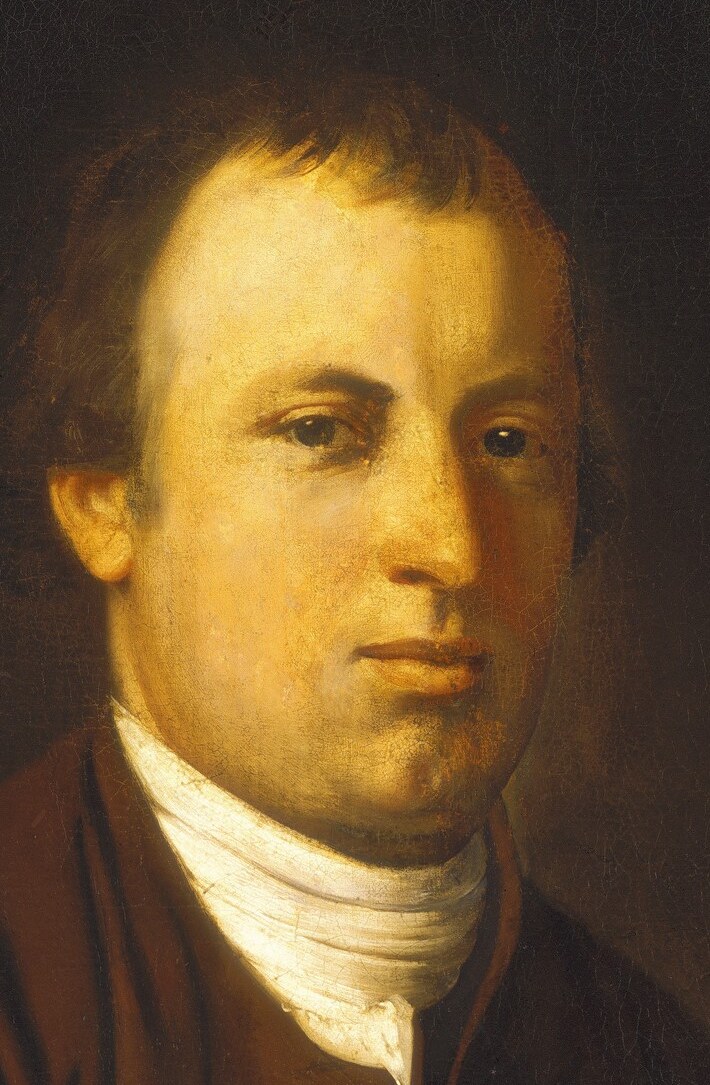
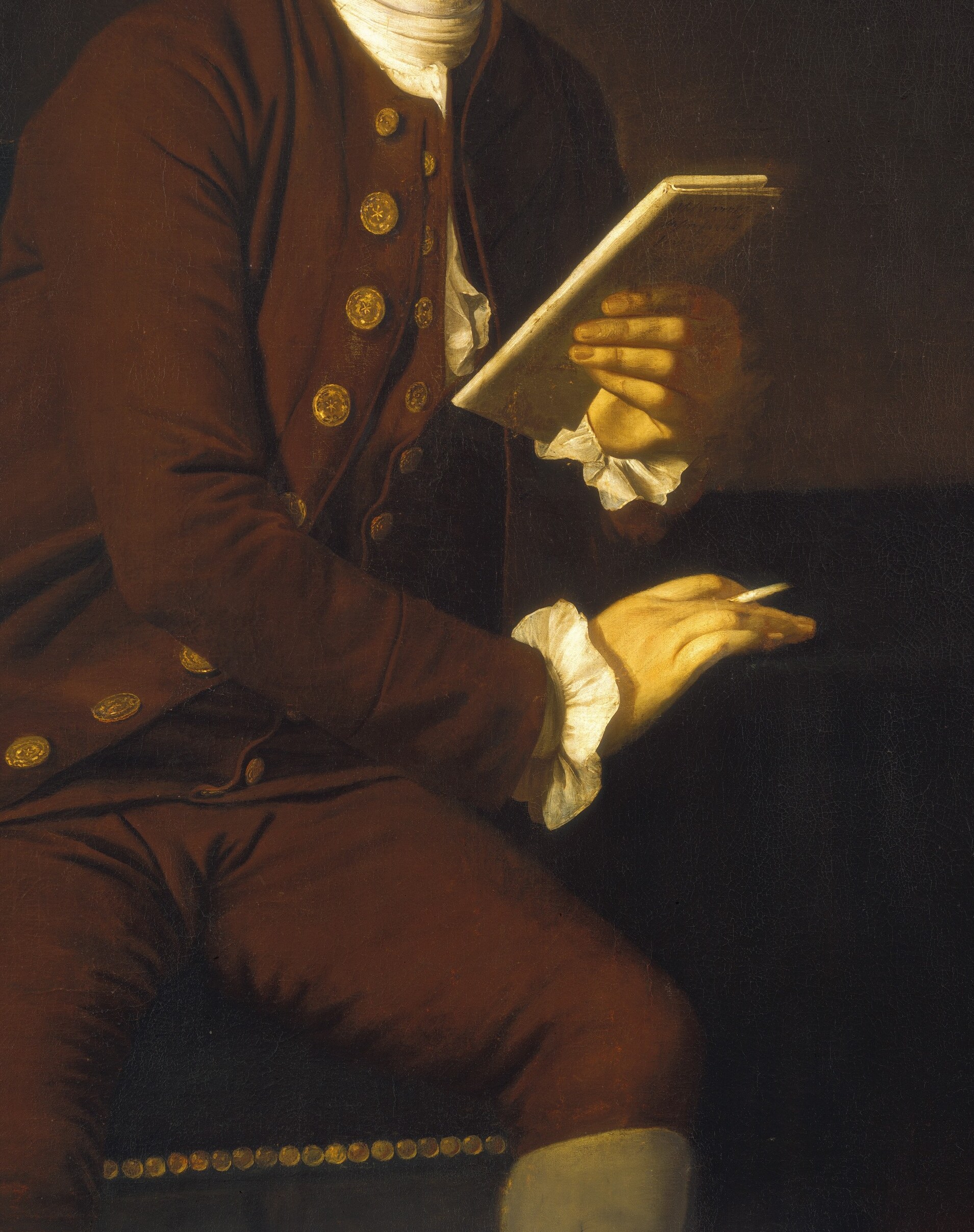
John Singleton Copley's "Adam Babcock," painted around 1774, captures the dignity and status of a prominent New Haven merchant and lawyer. This portrait, now at [Museum Name], is a remarkable example of colonial American art, showcasing Copley's meticulous attention to detail and ability to convey psychological depth.
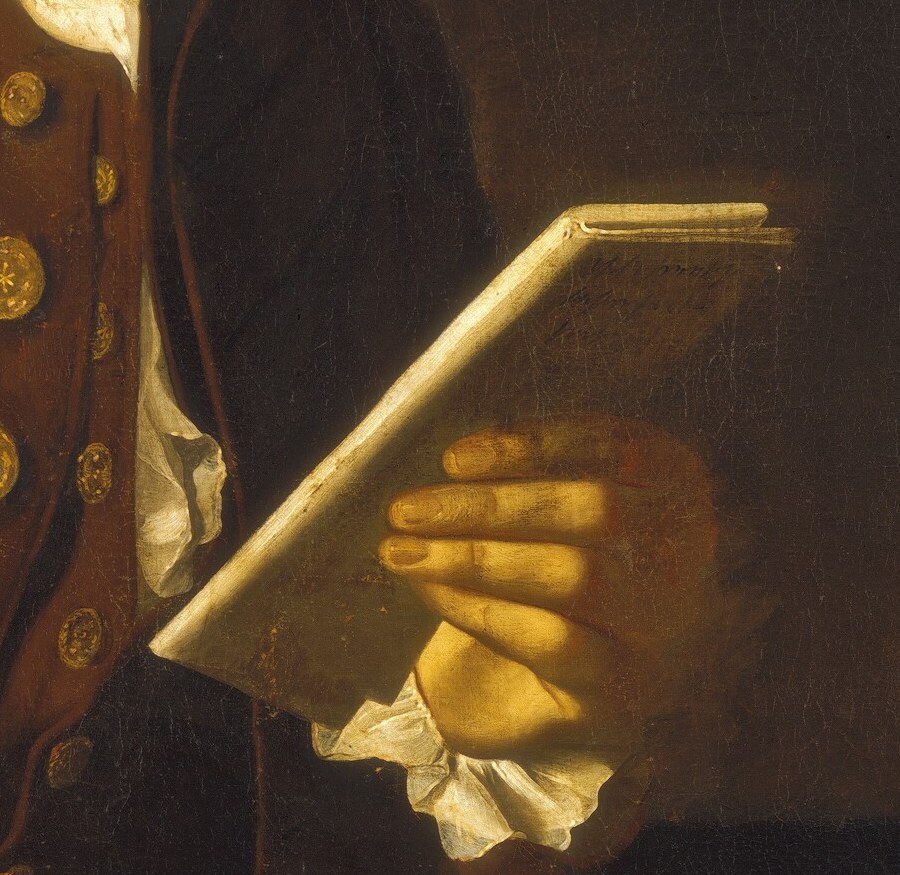
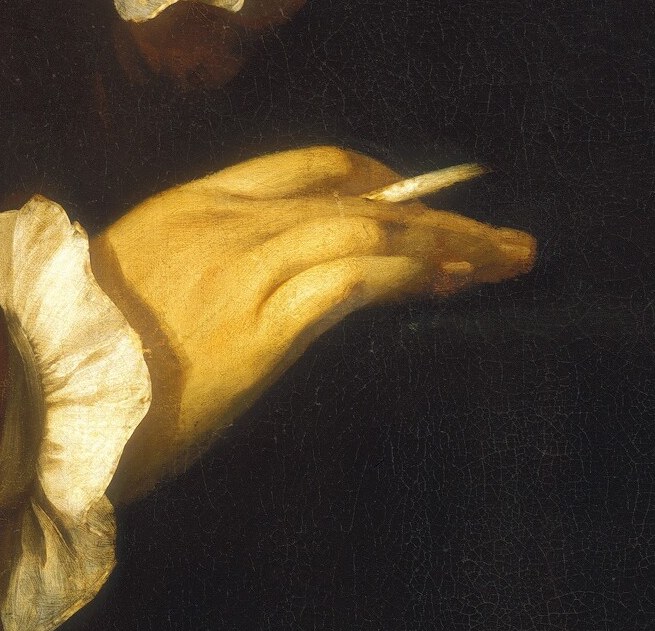
Look closely at Babcock's thoughtful expression and the objects he holds. The open book and quill pen are not mere accessories; they signify his intellectual pursuits and literacy, key virtues in the 18th century. The luxurious brown velvet coat, ruffled cuffs, and prominent gold buttons further emphasize his prosperity and social standing.
Created shortly before Copley's permanent move to Europe, this painting represents his mature American style. His use of chiaroscuro, contrasting bright light on the figure with a deep, shadowed background, gives the portrait a three-dimensional quality and highlights the textures of his attire. The work's provenance traces through private collections, eventually finding its home in a museum dedicated to colonial American art.
Copley’s portraits not only captured individual likenesses but also reflected the ideals of education and civic virtue prevalent during the Enlightenment in America. What do you think this painting tells us about the values of its time?
Details
Transcript
This man was a successful merchant and lawyer in 18th-century America. The painter captures his thoughtful concentration. He holds an open book, a sign of his learning and literacy. And a quill pen, poised as if he's about to write. Every detail, from his coat to his cuffs, shows his prosperity. This work exemplifies the painter's precise, realistic style before leaving America.