Campo Santa Maria Zobenigo, Venice by Canaletto
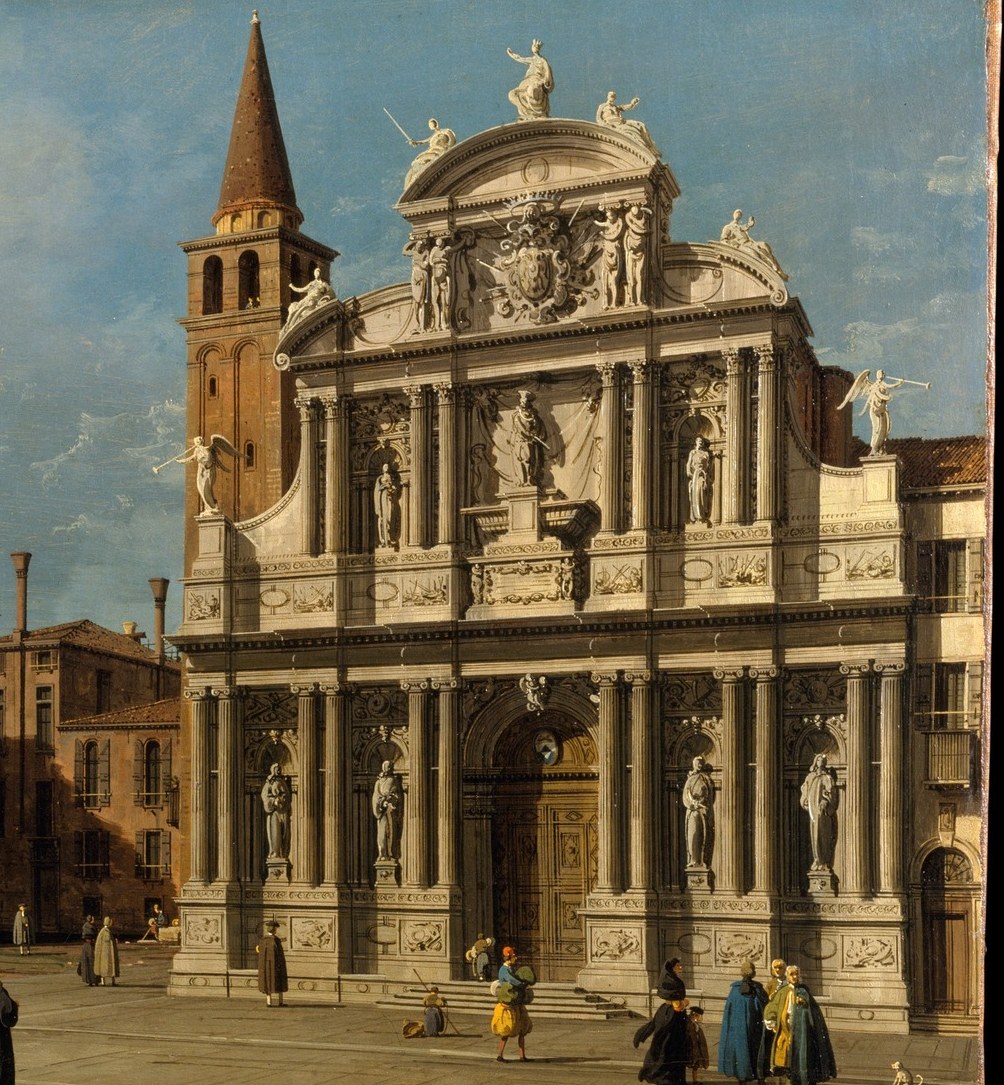
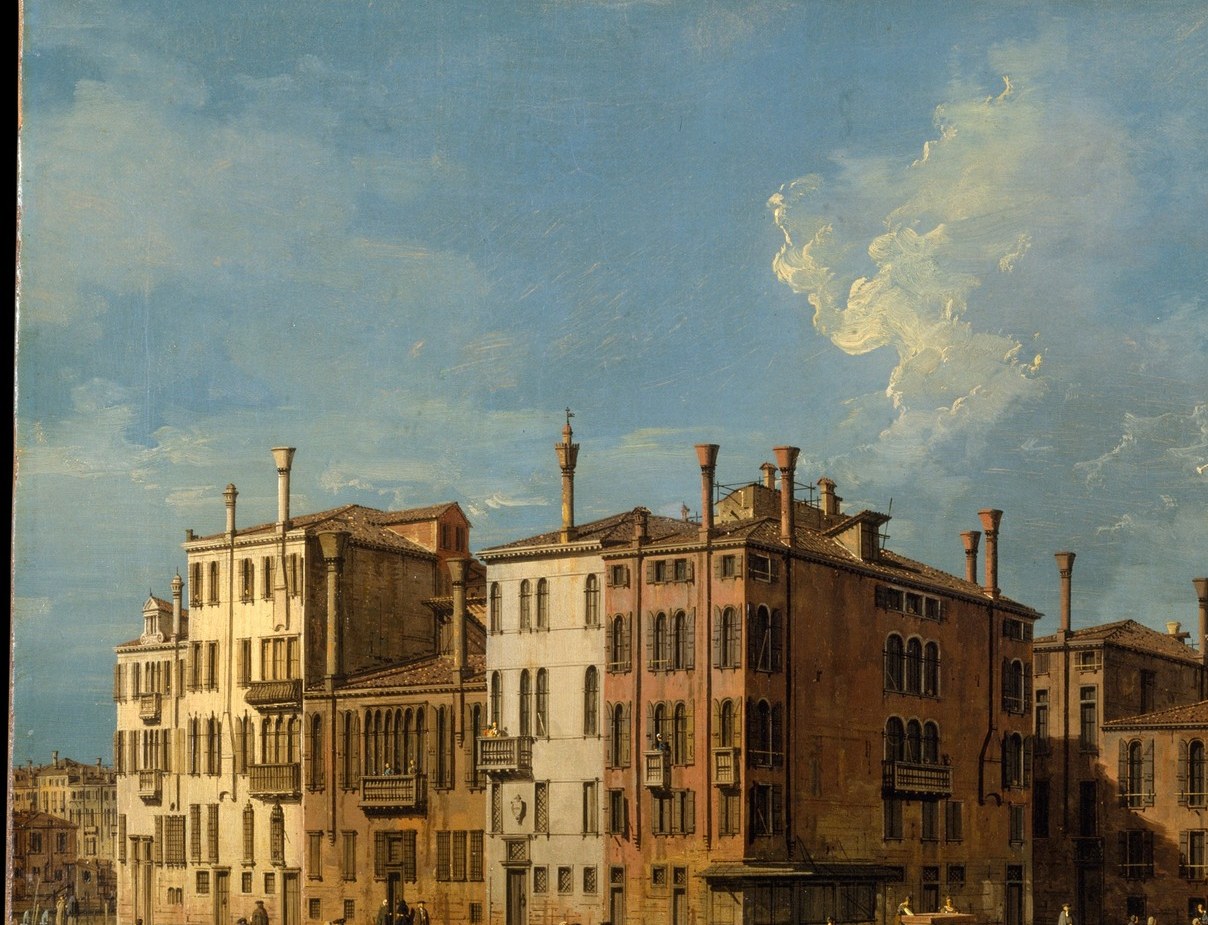
Canaletto's Campo Santa Maria Zobenigo, Venice, painted in 1734, looks at first like a textbook Grand Tour postcard: a sunny Venetian square, a tall campanile, small figures going about their day. But the church at its center is not what it pretends to be.
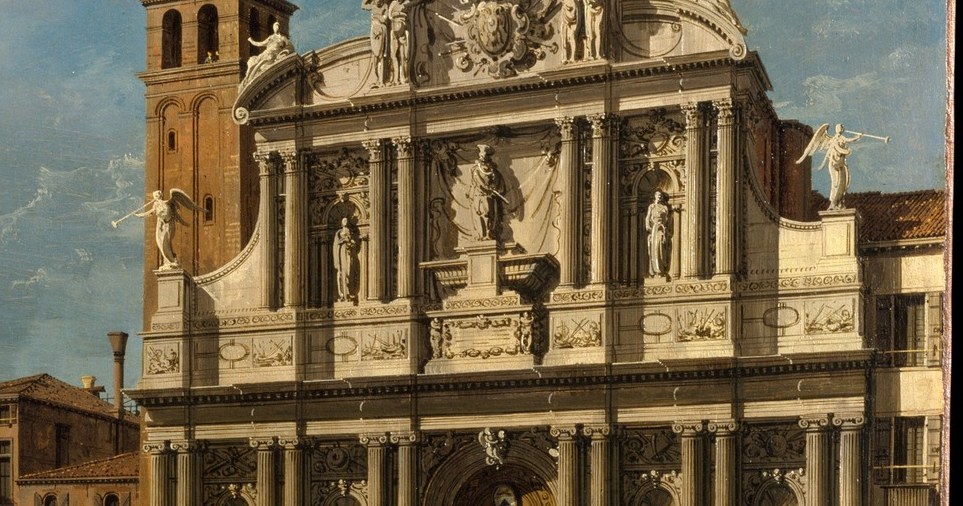
When you look closely at the mid-facade reliefs, you notice they are not biblical allegories. They are map-like carvings of walled cities and fortified harbors. These are the real places the Barbaro family once controlled: Zara, Candia, Corfu, and Split, among others. The church facade is a political argument, carved in stone.
The Barbaro family commissioned the rebuilding of Santa Maria del Giglio's facade as a dynastic monument. Canaletto painted it with exacting fidelity, every broken pediment and niched statue recorded, and so accidentally preserved this coded assertion of power for posterity. The map-reliefs are still there today.
Next time you see a Venetian church facade, ask what it's really saying. The stone has a long memory.
Details


Transcript
A sunlit Venetian campo, painted for English tourists. The church looks like a grand Baroque monument. But the stone is hiding something. Look at the reliefs. They are not saints. They are miniature maps of fortresses. Zara. Candia. Corfu. Split. Cities the Barbaro family ruled. A facade built not for prayer, but for political memory.