Two Angels by http://www.wikidata.org/.well-known/genid/f4c40715c3adc1b07276600761fe269d
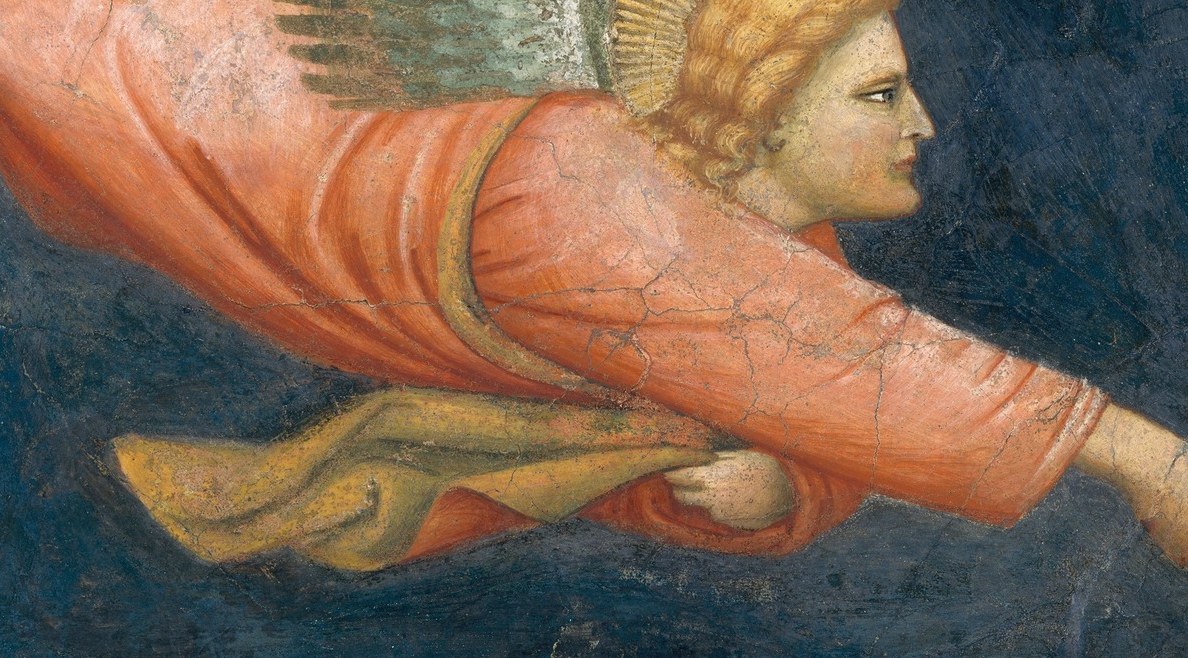
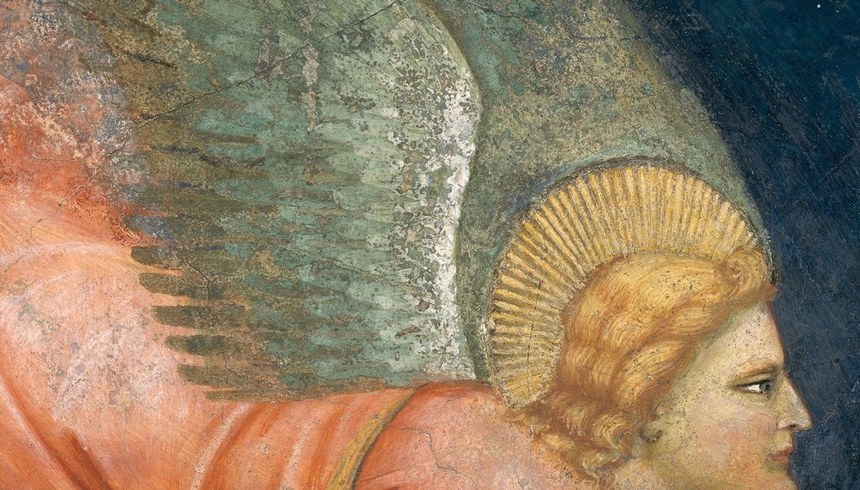
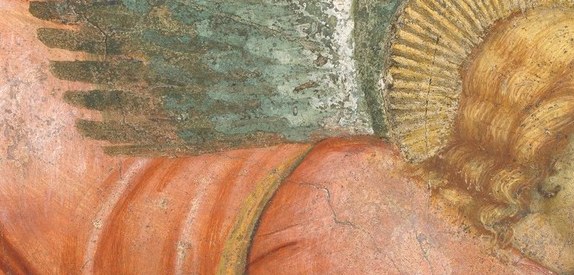
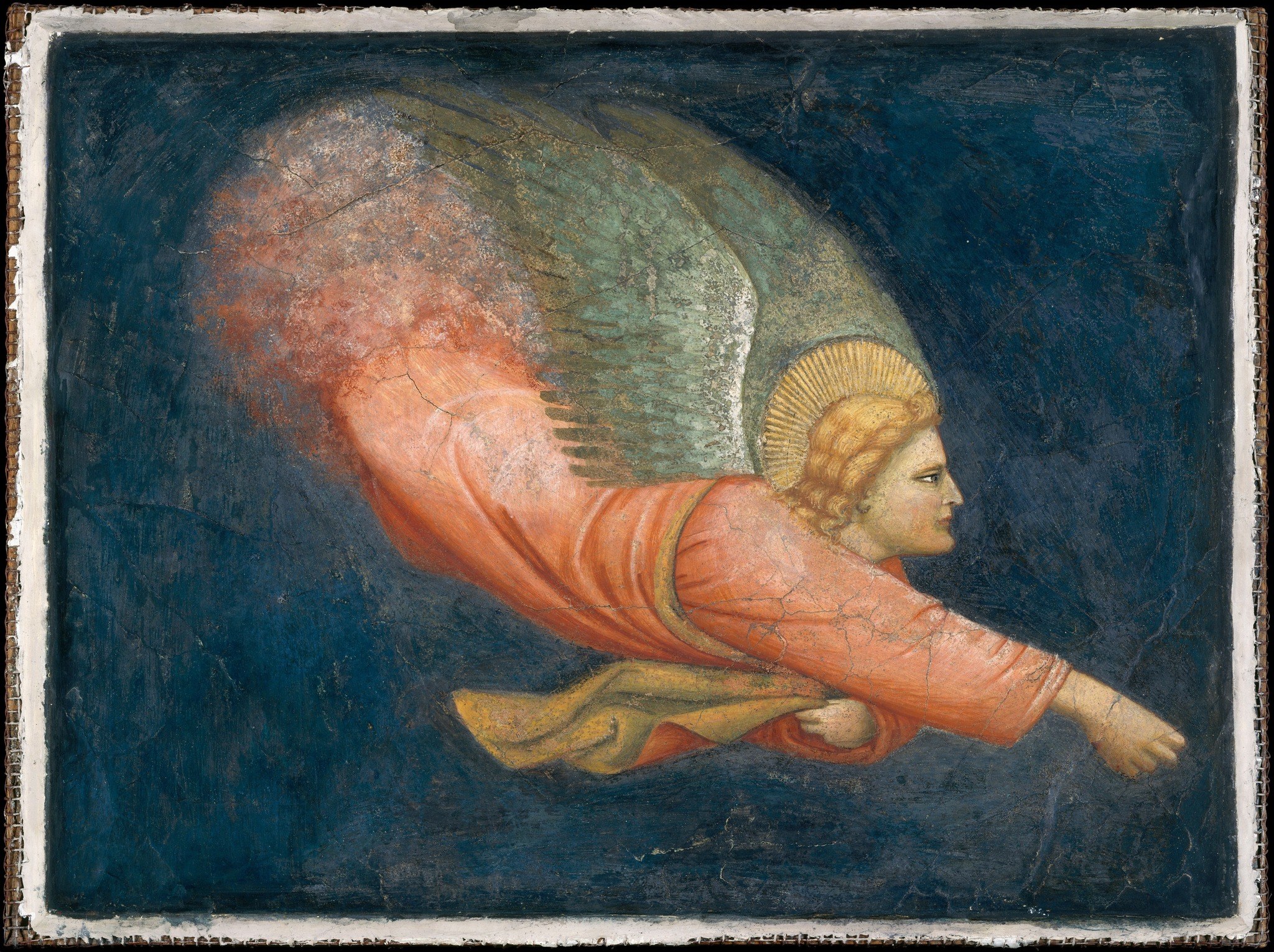
This fresco, "Two Angels" (c. 1400), showcases a solitary angelic figure in flight. The painting's most striking feature is the delicate angel, rendered in vibrant colors, set against a deep blue sky. Notice the flowing orange robe and the soft, feathered texture of the wings, all rendered in fresco technique, meaning applied to wet plaster. Over centuries, this technique is prone to cracking. Look closely at the network of cracks visible across the surface. These imperfections are not damage, but testaments to the artwork's age, showing it has survived over 600 years. It reminds us that art is fragile, yet enduring.
Details
Transcript
This angel seems to float in a dark sky. Look at the vibrant orange robe and yellow sash. The angel's left wing suggests soft, feathered grace. This is a fresco, painted directly onto plaster. Now look at the network of cracks. They show the fresco is over 600 years old.