Three Miracles of Saint Zenobius by Sandro Botticelli
View the artwork: Three Miracles of Saint Zenobius →
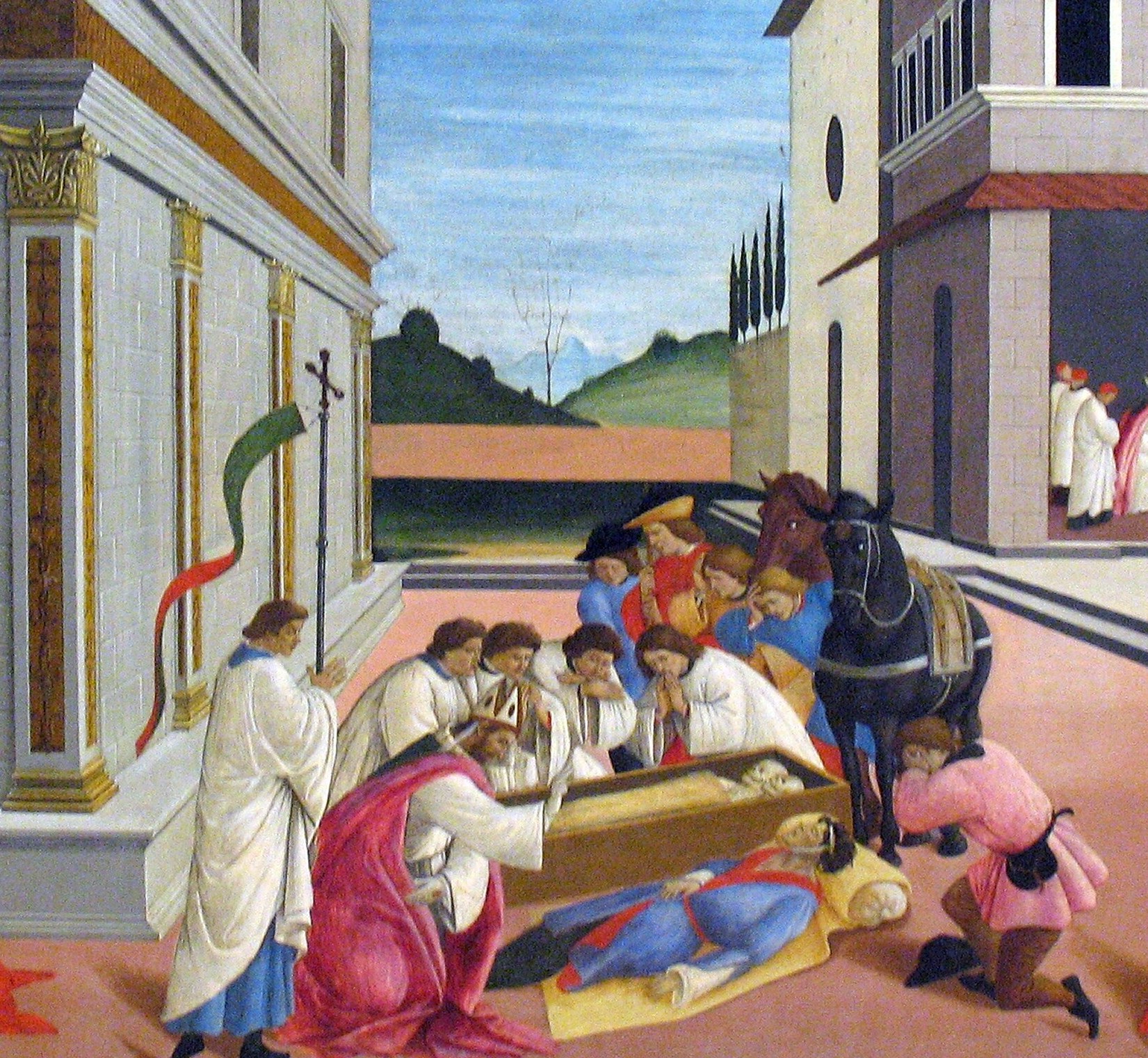
This is Sandro Botticelli's 'Three Miracles of Saint Zenobius,' painted around 1500 and held today at the National Gallery in London. Botticelli, known best for mythological scenes like 'The Birth of Venus,' here applies his linear grace to a complex narrative of a Florentine patron saint performing three separate resurrections. The painting is a masterclass in visual storytelling from a period when most viewers could not read.
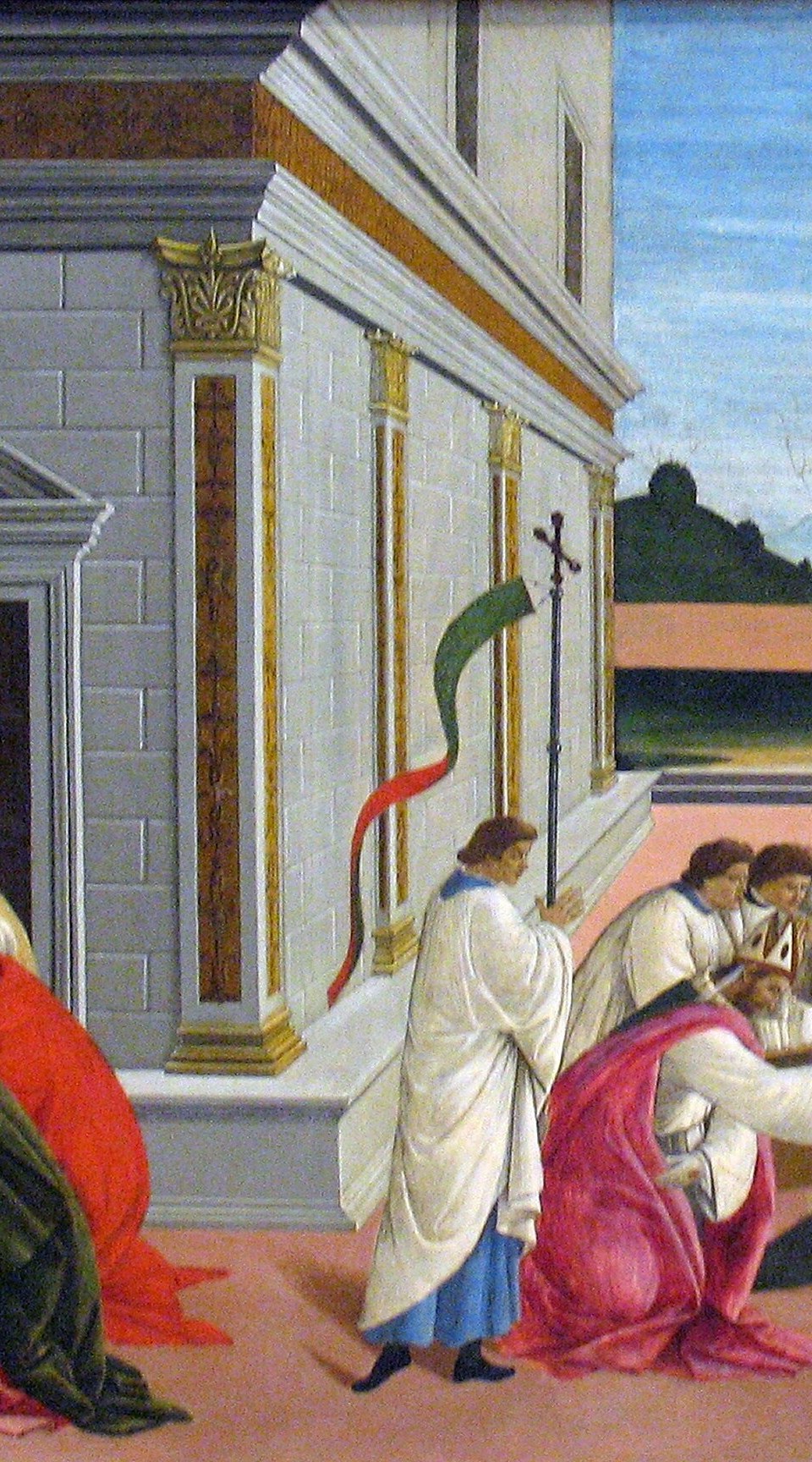
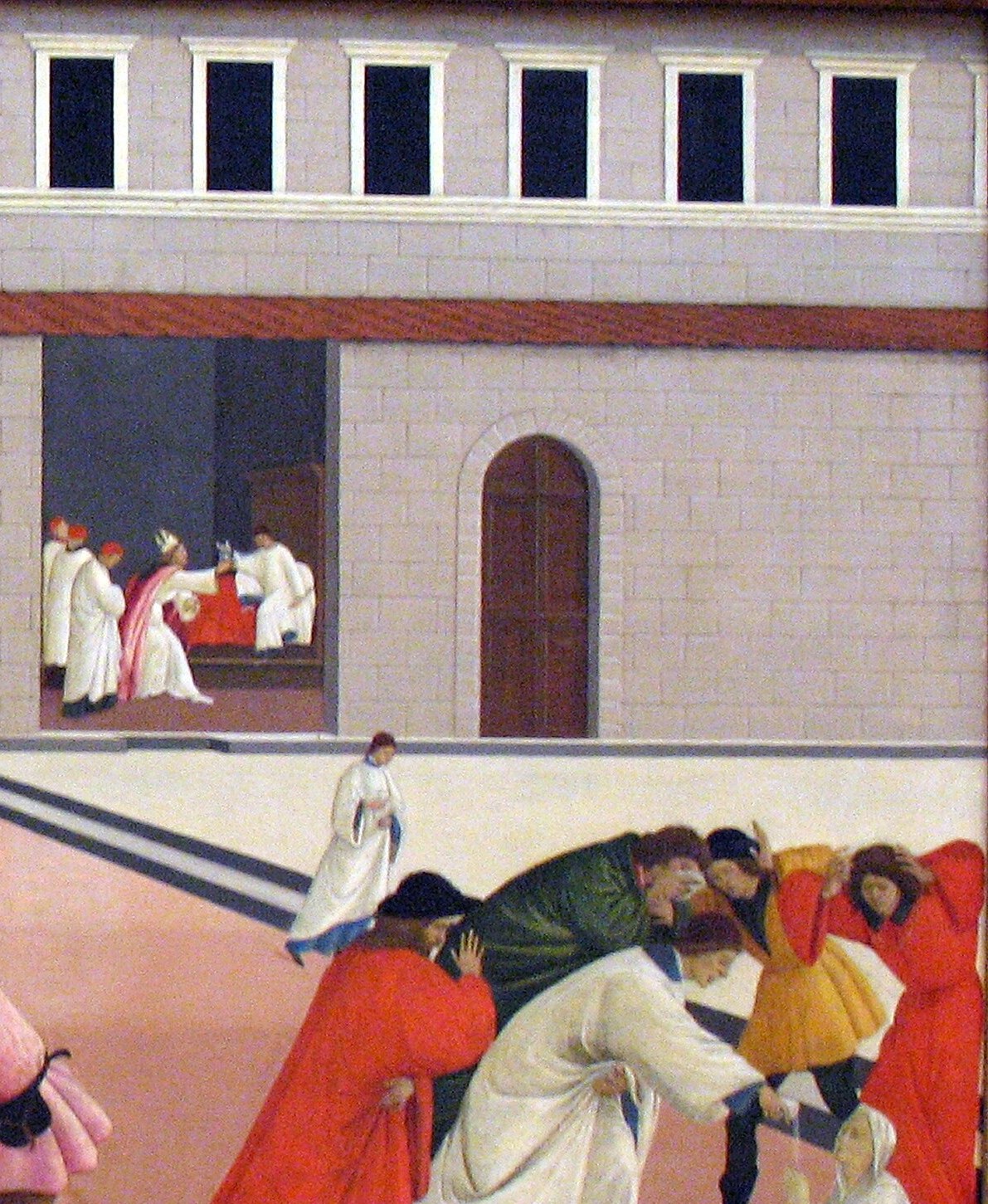
Look closely at the wide central building with the arched niches. It is not merely architecture: it is a punctuation mark. Botticelli uses its solid wall to divide the panel into three distinct episodes, a pre-cinematic montage technique that allows three moments in time to coexist on one continuous street. The pale pink sky washes over all three scenes, unifying them under a single ambient light.
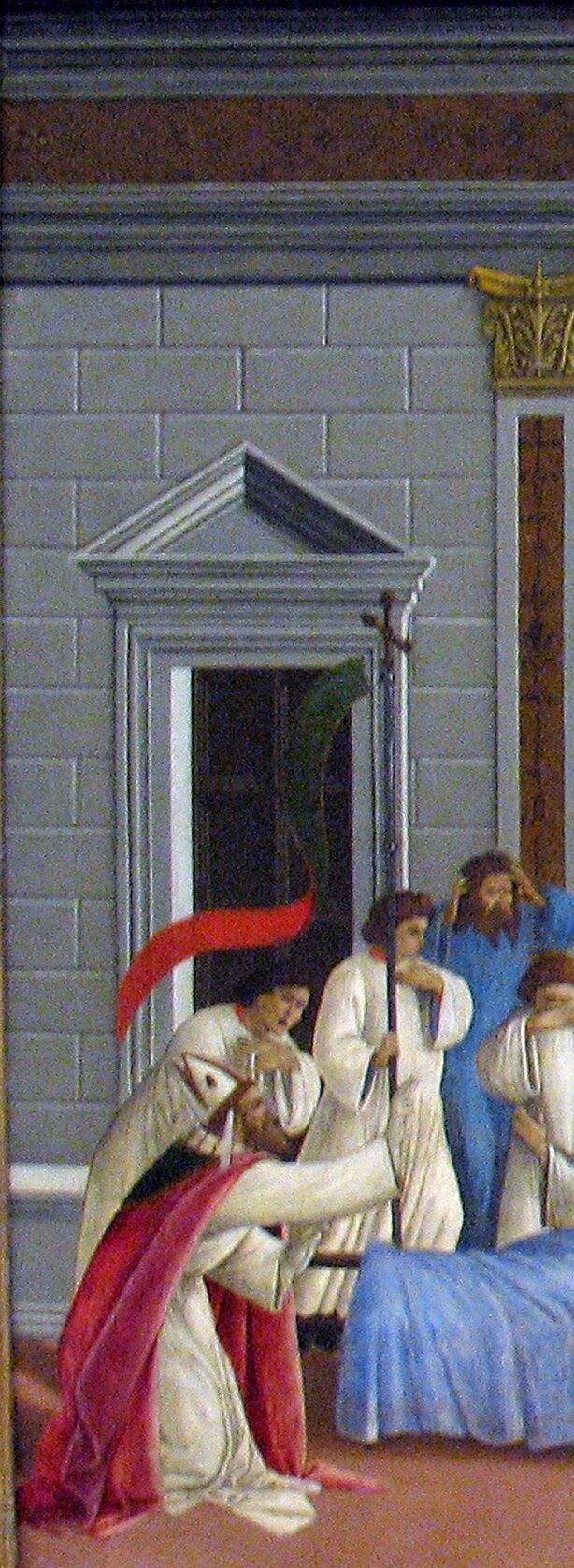
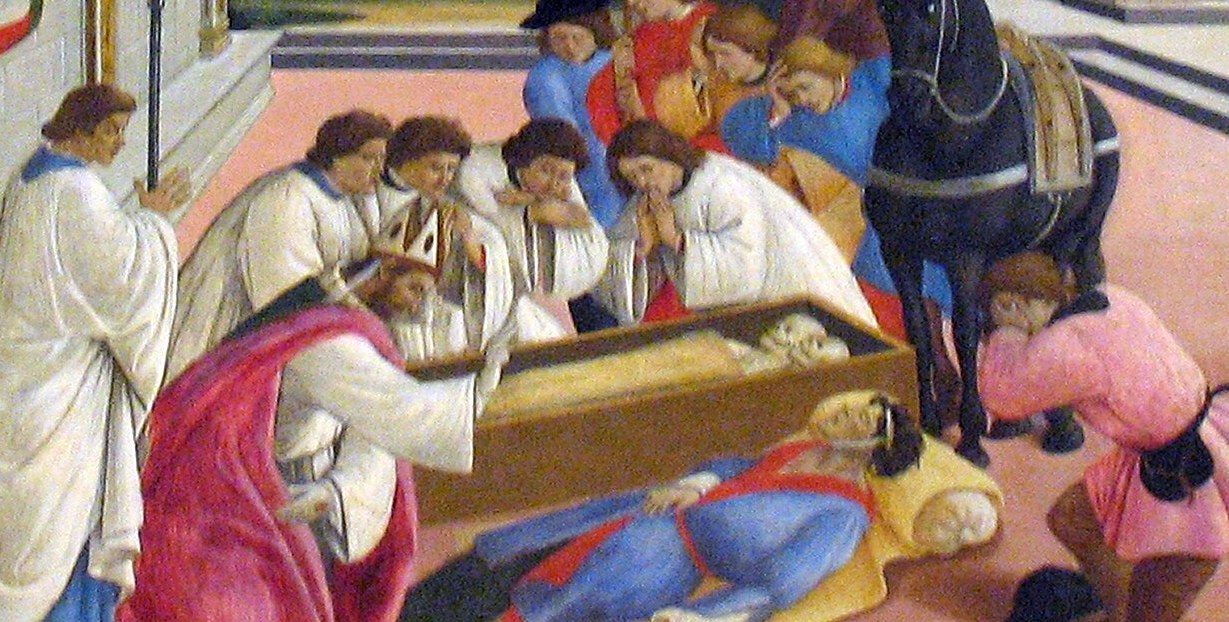
To follow the story, find the figure in ornate bishop's vestments. He appears in all three episodes. By dressing Saint Zenobius identically each time, Botticelli gave his audience a visual key to track the saint across the narrative without needing written labels. The repeated horizontal form of the prone body serves as the second constant: a visual signal for death, countered by the upright, active figures of the living around it.
The panel comes from Botticelli's late period, when his work grew more austere and spiritual under the influence of Savonarola's Florence. The crowd here is a gallery of Renaissance emotional states rendered in tempera: awe, grief, curiosity. What do you notice about the mounted figure on horseback entering from the right?
#arthistory #botticelli #renaissance
Details
Transcript
Three stories, one street. This building is a chapter break. Botticelli uses it to separate three moments in time. He appears in all three. Identical vestments tell you it is the same man: Saint Zenobius. Each scene shows a body revived. The horizontal form signals death. The upright figures signal life returned. Renaissance viewers could read this code instantly.