Artwork
Three Miracles of Saint Zenobius
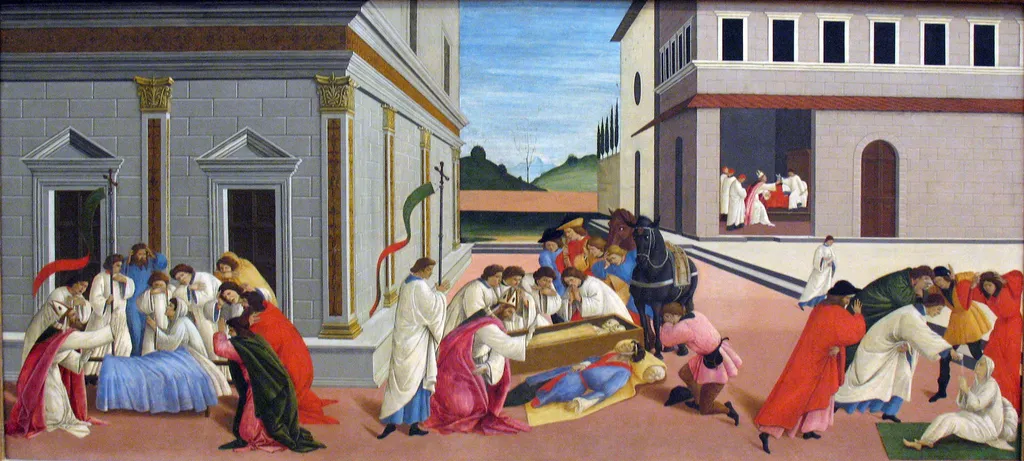
Three Miracles of Saint Zenobius is a tempera painting by the Early Renaissance artist Sandro Botticelli. It dates from 1500 and is held in the collection of the Metropolitan Museum of Art.
About this work
Subject & Meaning
The awe and astonishment of the bystanders witnessing these events serve as expressive focal points, emphasizing the divine power and meaning of the miracles.
The painting depicts three miraculous resurrections performed by Saint Zenobius, the fourth-century Bishop of Florence, set between the palaces and squares of the city. Based on Fra Clemente Mazza's 1487 biography of the saint, the narrative unfolds from left to right: first, Zenobius encounters a funeral procession and resurrects a deceased youth; second, he revives a man who was killed while transporting relics donated by Saint Ambrose, depicted as two skeletons in a coffin; and third, Saint Eugene receives blessed water and salt from Zenobius, then rushes across a piazza to use them to resurrect a dead female relative. The sequential scenes are partitioned by Renaissance architecture and landscape elements.
The awe and astonishment of the bystanders witnessing these events serve as expressive focal points, emphasizing the divine power and meaning of the miracles.
Technique & Style
The work is executed in tempera on a wooden panel, measuring approximately 67.3 cm high by 150.5 cm wide. Botticelli applied the paint with careful, linear brushwork that produces sharp, almost unreal profiles in the drapery and figures, a handling that contributes to the painting’s expressive clarity. Stylistically, the scene is narratively vivid, with distinct episodes organized by architectural settings and lively interaction among the figures.
The palette is bright, and the overall manner deliberately archaizes, recalling early Quattrocento masters such as Fra Angelico and Lorenzo Monaco, marking it among the artist’s later, more stylized productions.
History & Provenance
Three Miracles of Saint Zenobius is a tempera painting on wood panel attributed to Sandro Botticelli and dated to circa 1500‑1505. It forms the third panel of a four‑part series illustrating the Life of Saint Zenobius, drawing on Fra Clemente Mazza’s Vita published in 1487. The work was likely commissioned to adorn a spalliera in a private Florentine residence, possibly for a prelate or a confraternity.
After its creation the panel entered the collection of the Metropolitan Museum of Art in New York, where it is now conserved.
Three Miracles of Saint Zenobius is held by the Metropolitan Museum of Art in New York, where it forms part of the museum's collection of Sandro Botticelli's late works. The panel, measuring 67.3 by 150.5 cm, is executed in tempera on panel and dates to circa 1500. It is the third of a four-part series depicting scenes from the life of Saint Zenobius of Florence; the other panels are distributed among the National Gallery in London and the Gemäldegalerie in Dresden.
The painting is documented on the Metropolitan Museum of Art's official website and is also accessible through Google Arts & Culture and the Fondazione Federico Zeri image resources. No specific accession number or detailed exhibition history is recorded in the available sources.
Context
The Three Miracles of Saint Zenobius occupies a transitional position in Botticelli’s late career, often grouped among his final religious panels. Scholars note its deliberate archaizing style, evident in the sharp, almost linear drapery and heightened coloration, as a conscious return to early Quattrocento Florentine models exemplified by Fra Angelico and Lorenzo Monaco, aligning with broader trends in late Renaissance Florence toward stylistic revivalism. The work’s narrative clarity and spatial partitioning across three distinct episodes reflect Botticelli’s mature ability to orchestrate complex devotional iconography within domestic or confraternal contexts, as suggested by its probable function as a spalliera.
Its inclusion in a four-panel series dedicated to Saint Zenobius situates it within a localized Florentine hagiographic tradition, one reinvigorated by Fra Clemente Mazza’s 1487 Vita and cultivated by ecclesiastical patrons. While not a centerpiece of modern critical discourse, the painting’s technical and stylistic traits underscore Botticelli’s late-career synthesis of narrative immediacy and archaic formalism, bridging the innovations of his youth with the retrospective impulses of the 1490s–1500s.
Overview
This tempera painting, titled Three Miracles of Saint Zenobius, presents a dynamic outdoor gathering. A large assembly of individuals, dressed in vibrant robes, congregates around a figure lying on a stretcher before a stone edifice with arched entrances. The composition captures a moment of intense activity and varied reactions, from kneeling reverence to expressions of surprise, while additional figures on horseback approach the central event.
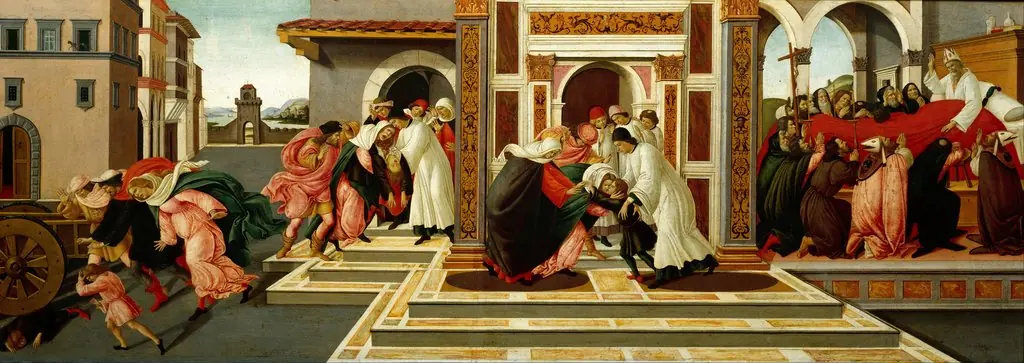
Artist & collection
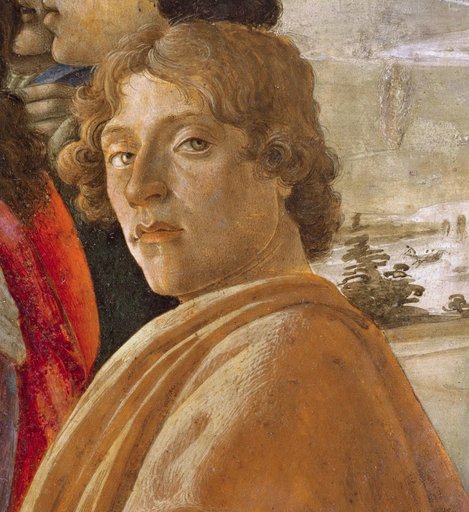
Artist
Alessandro di Mariano di Vanni Filipepi, better known as Sandro Botticelli or simply Botticelli, was an Italian painter of the Early Renaissance.

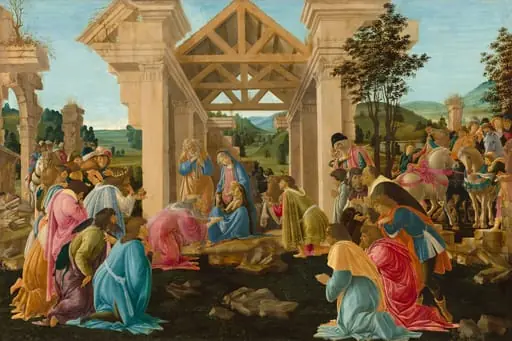
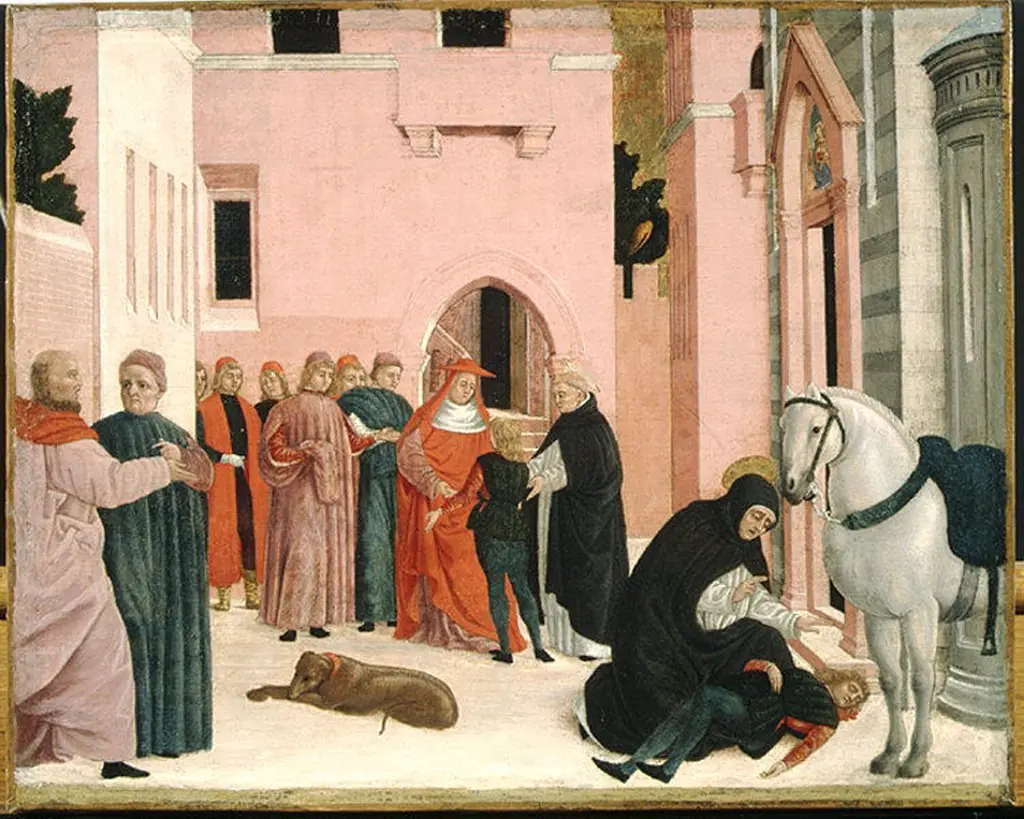 Saint Dominic Resuscitating Napoleone Orsini
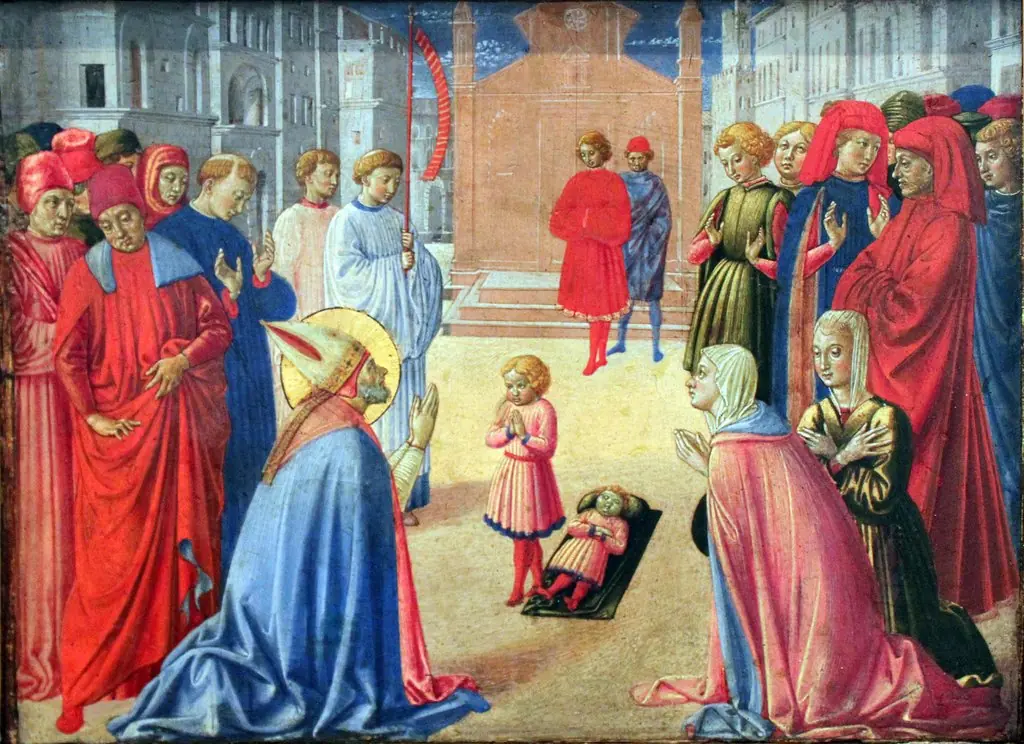 The hl. Zenobius raises a dead boy
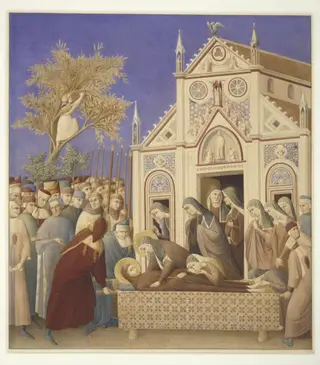 Copy after the painting The Body of St Francis Met by Santa Chiara by the Master of the St Francis Cycle in the Upper Church, San Francesco Assisi
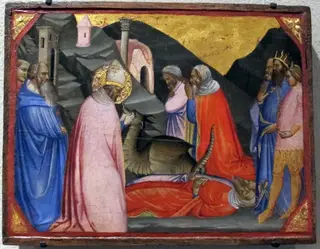 Saint Sylvester and the Dragon
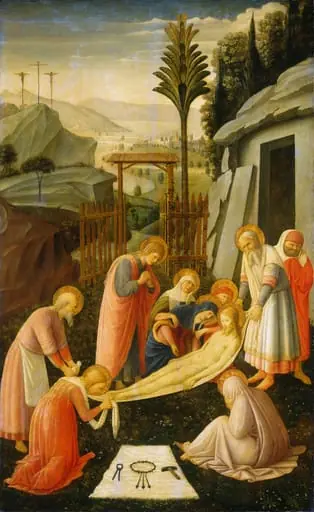 The Entombment of Christ
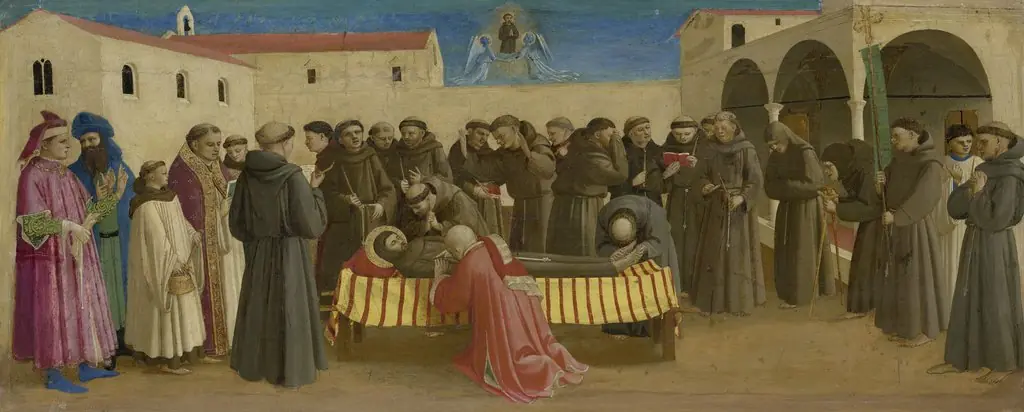 The Lamentation over St Francis
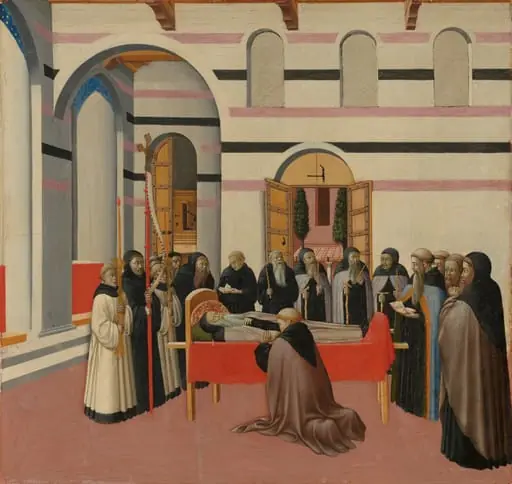 The Death of Saint Anthony
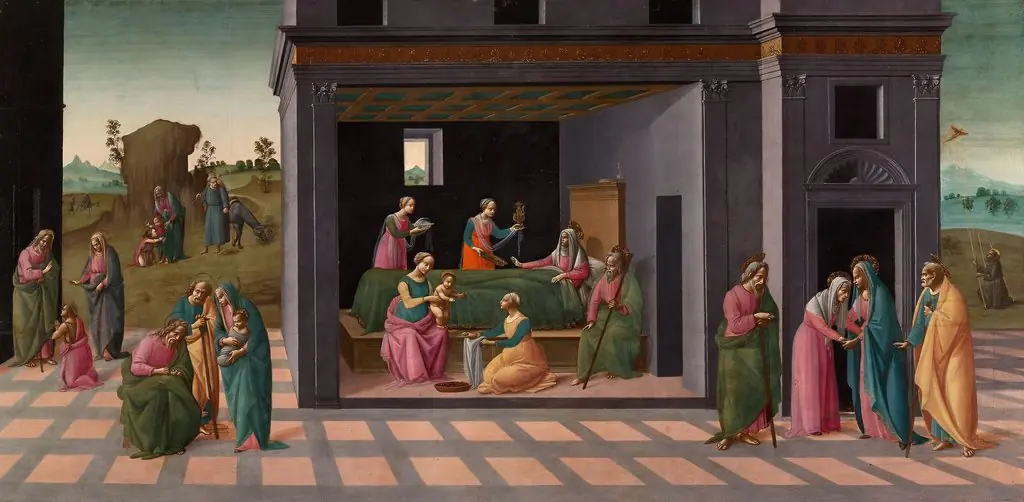 Scenes from the Life of Saint John the Baptist
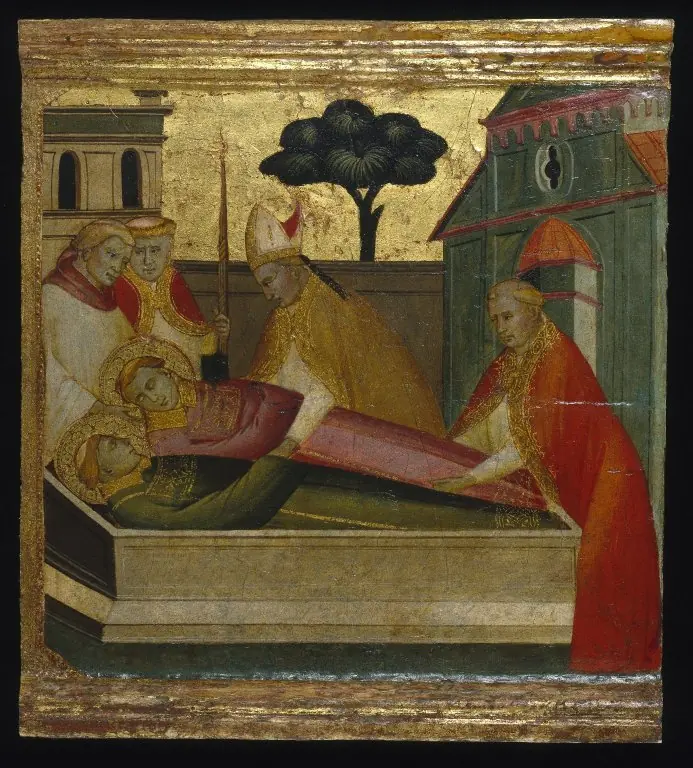 Saint Lawrence Buried in Saint Stephen's Tomb