The Love Letter by Johannes Vermeer
Johannes Vermeer's "The Love Letter," painted circa 1668, is a stunning example of his ability to render light and texture with incredible realism. Housed at the Rijksmuseum Amsterdam, it draws you into a quiet domestic moment, revealing a master at work.
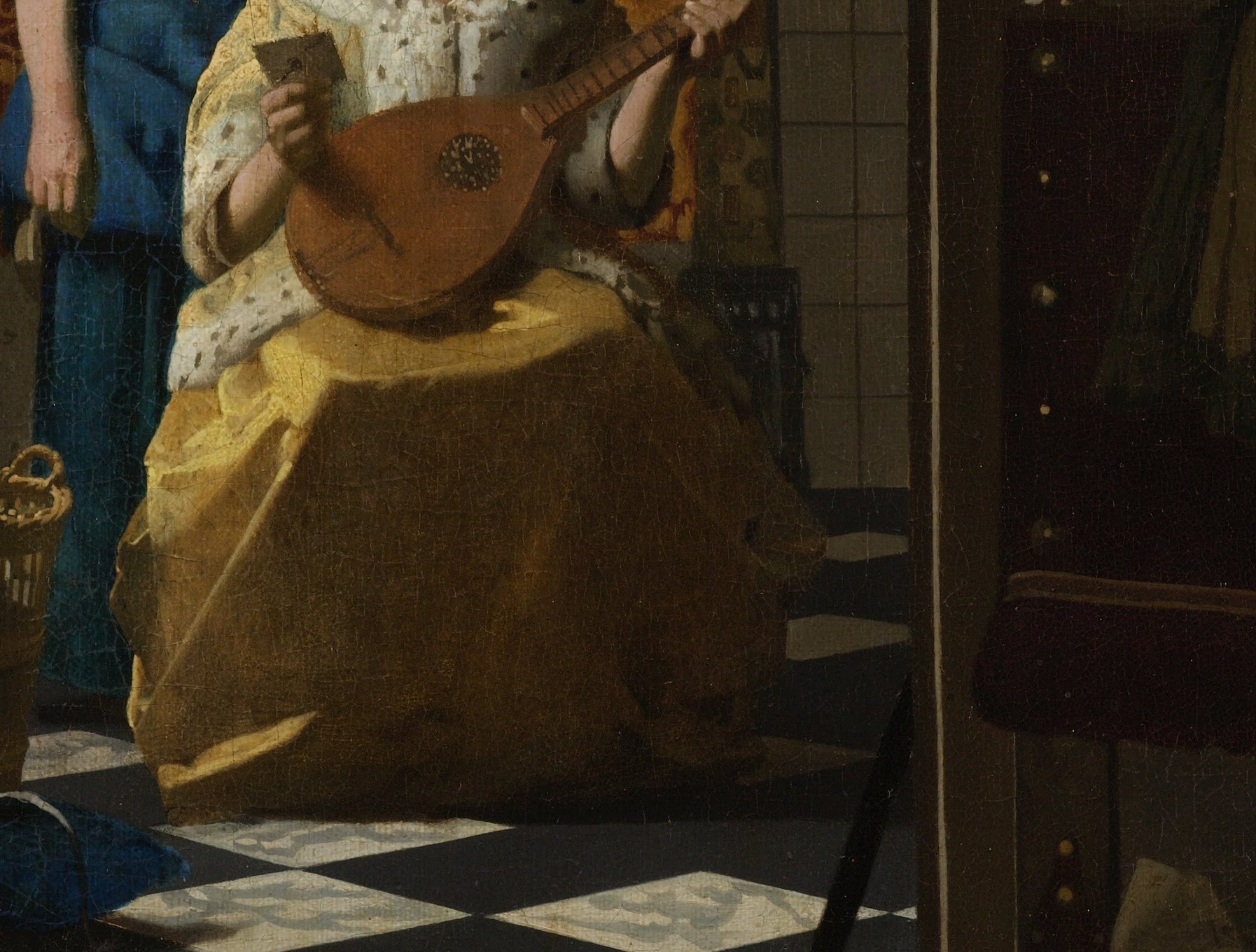
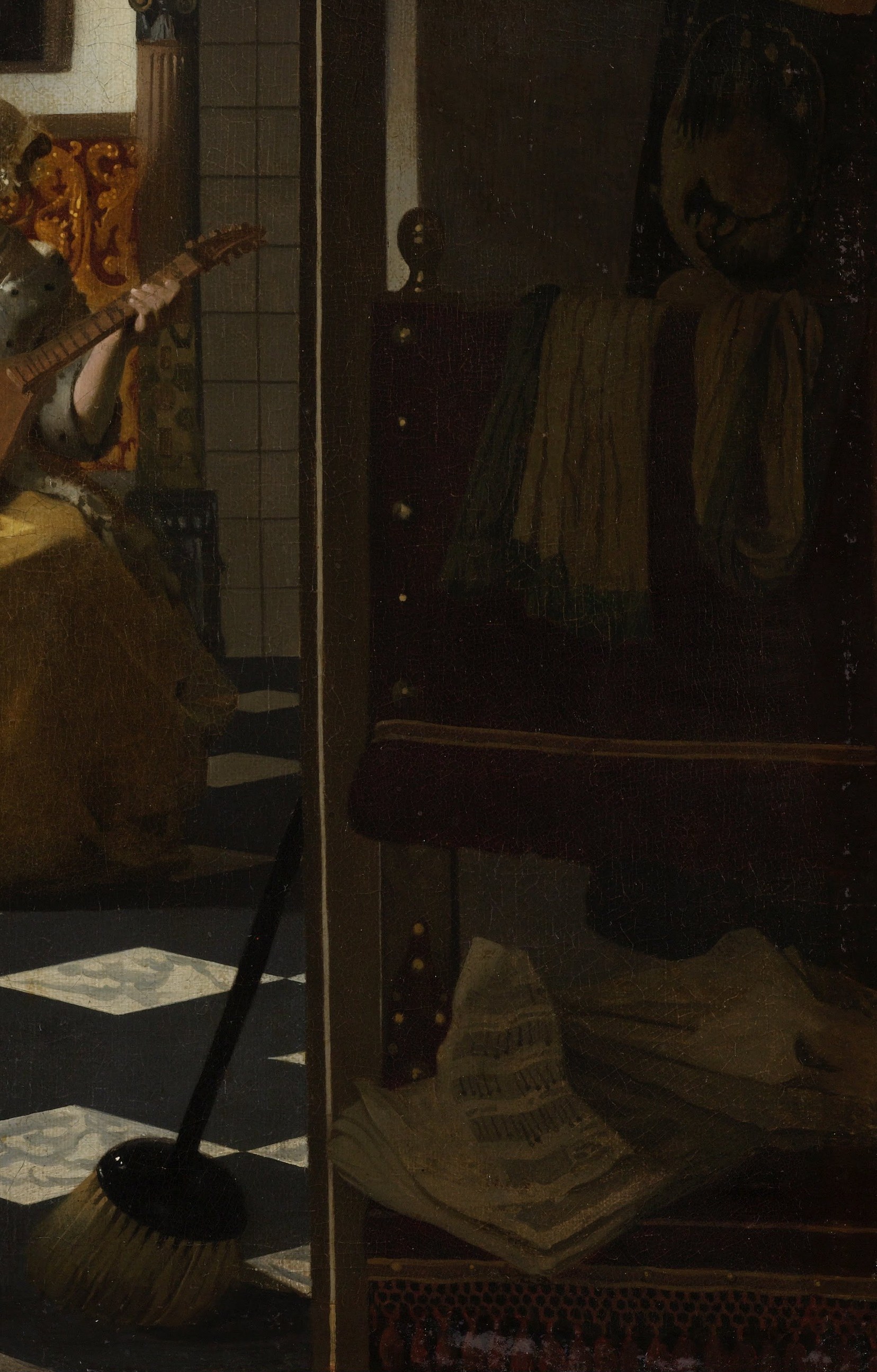
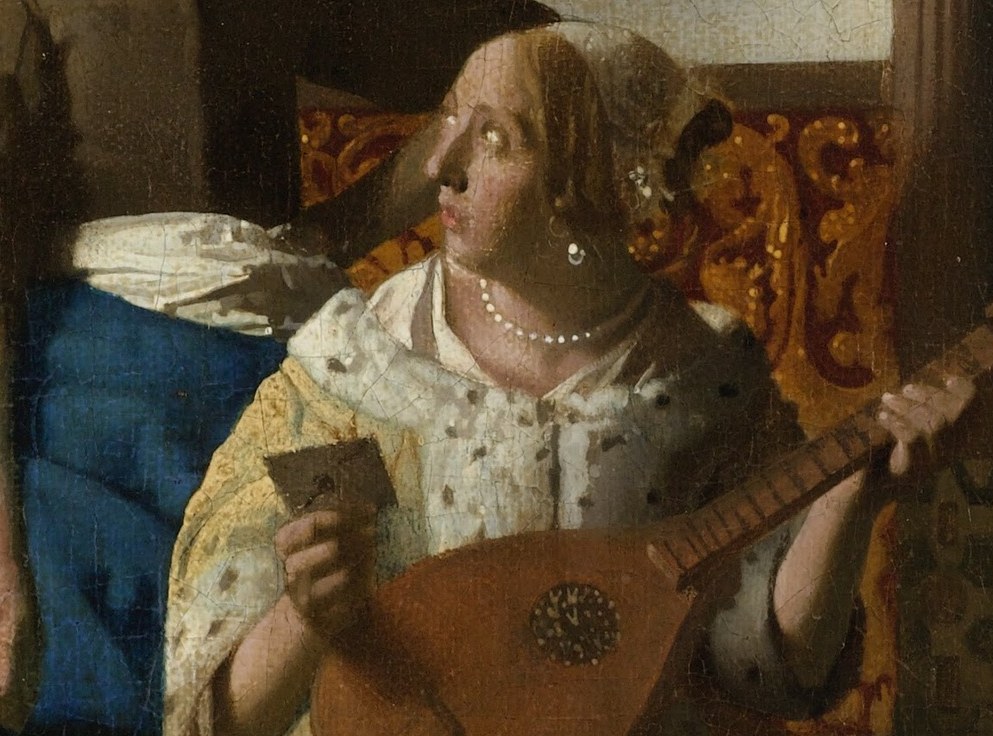
Notice how the artist creates the distinct feel of fabrics. From the glowing silk of the mistress's yellow skirt to the rougher weave of the tapestry and the crisp linen of the servant's apron, each material seems tangible under his brush. He achieved this through meticulous layering and the use of expensive, high-quality pigments.
Vermeer worked slowly and with immense care, often applying paint in tiny, distinct dots to build up the illusion of texture and light. This technique allows the painting to capture the subtle shifts in light across different surfaces, making the scene feel alive and immediate. Despite his meticulousness, Vermeer was only moderately successful in his lifetime, often earning more as an art dealer than a painter.
It's a testament to his unique vision that these domestic scenes, once overlooked, are now celebrated for their profound beauty and technical brilliance. What part of the painting catches your eye first?
Details
Transcript
This painter was a master of surfaces. He built up textures with tiny dots of paint. Look how the light catches the silk of her skirt. The servant's apron looks like real linen. Even the rough tapestry feels woven. His secret: expensive pigments applied in layers.