Annunciation to the Virgin by Master of the Salemer Altar
The "Annunciation to the Virgin," painted around 1500 by the Master of the Salemer Altar and housed at the Rijksmuseum, is more than just a beautiful religious scene; it's a painting full of hidden meanings.
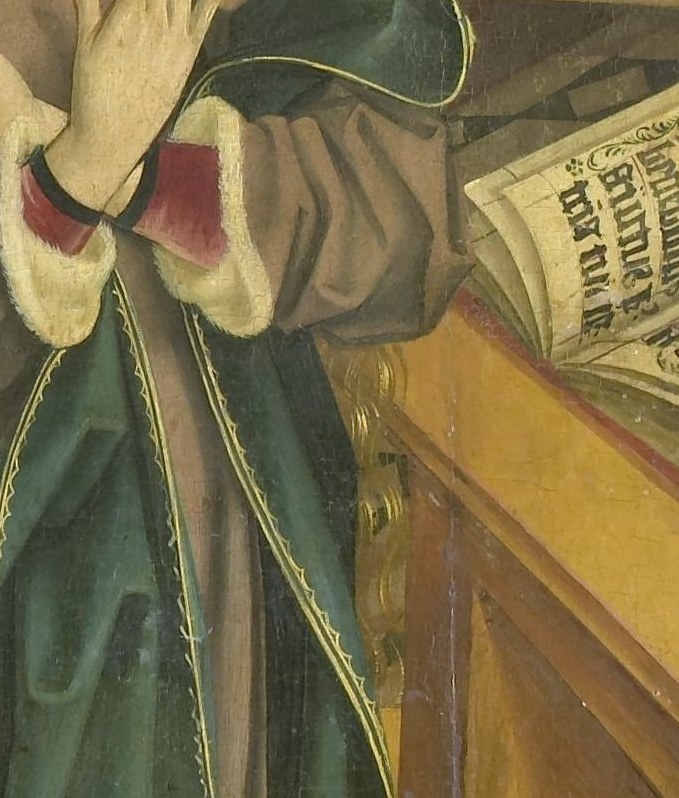
Look closely at the everyday objects surrounding Mary and the angel Gabriel. Each item, from the glass of water to the fruit, carries deep theological significance, enhancing the narrative of divine communication.
This work reflects the early 16th-century Northern European tradition of embedding sacred stories within familiar, domestic settings. By carefully observing these details, viewers could connect the divine event to their own daily lives, bridging the gap between the sacred and the mundane.
The artist's skill in using these symbols transforms the painting into a rich visual sermon, inviting contemplation on themes of purity, sin, and redemption. What other hidden messages do you think this painting holds?
Details
Transcript
This painting from 1500 tells a familiar story. But its message is hidden in plain sight. The clear water, for example, signals purity. This open book shows Mary's devotion to scripture. The fruit in the bowl symbolizes original sin. The plant, inscribed 'MATER,' refers to Mary as Mother. All these objects combine to tell a story of redemption.