Under a Cloud by Albert Pinkham Ryder
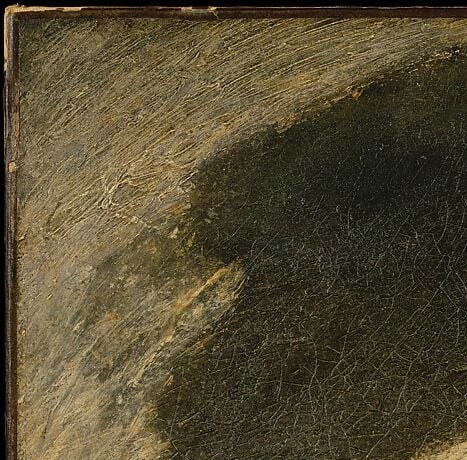
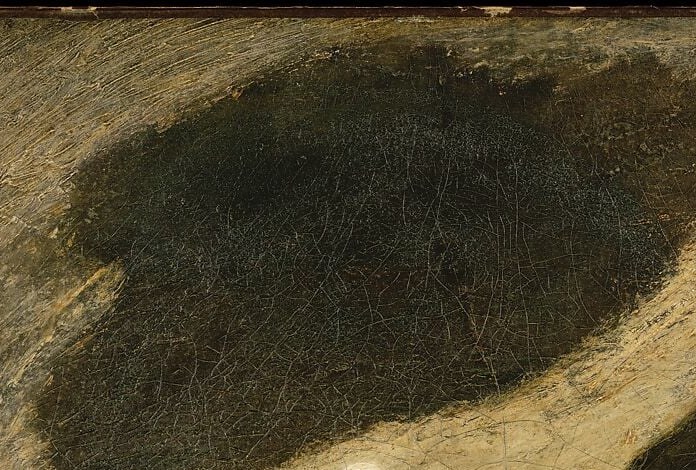
Albert Pinkham Ryder's 'Under a Cloud,' painted around 1900, at the National Gallery of Art, masterfully captures the dramatic power of the sea through a unique technique. Ryder was known for building up thick, swirling layers of oil paint, creating a textured, almost sculptural surface that conveys the motion and weight of the waves and sky.
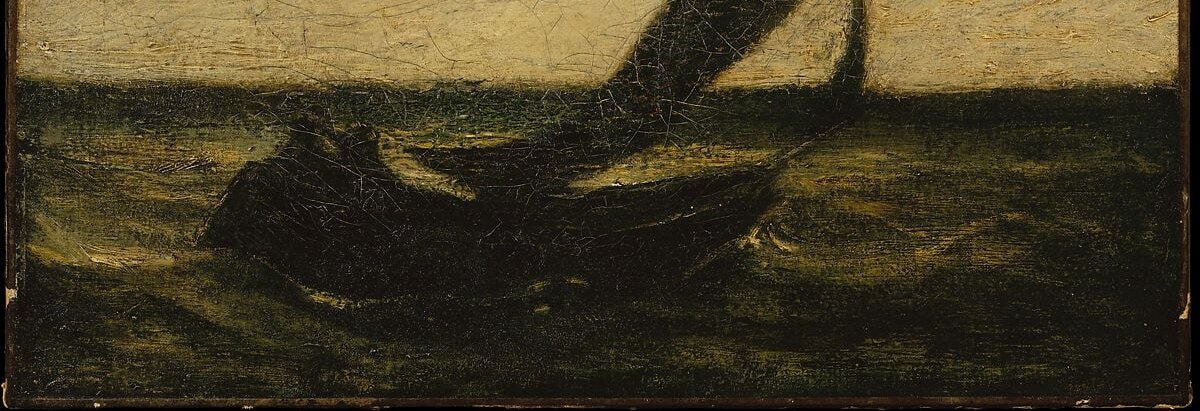
This painting features a solitary boat on choppy waters beneath an oppressive sky. While the scene appears somber, a subtle detail on the water's surface, a faint reflection, hints at a distant light source, offering a touch of hope amidst the storm.
Ryder dedicated his career to expressing the emotional resonance of nature, often working slowly and reworking his surfaces to achieve specific effects. His focus on mood and atmosphere over precise detail made him a pivotal figure in American Tonalism and early modernism. This work exemplifies his ability to convey the sublime power of nature.
What emotions does this dramatic seascape evoke for you?
Details

Transcript
This painter spent his life near the sea, capturing its moods. Here, a small boat struggles under a heavy, dark sky. He built up the paint in thick, swirling layers. Look closely at the water's surface, reflecting the gloom. But even in this storm, a faint light breaks through.