Initiation Cards (Tsakalis) by http://www.wikidata.org/.well-known/genid/efc693075c5d28ca4f622aa28c1df4d8
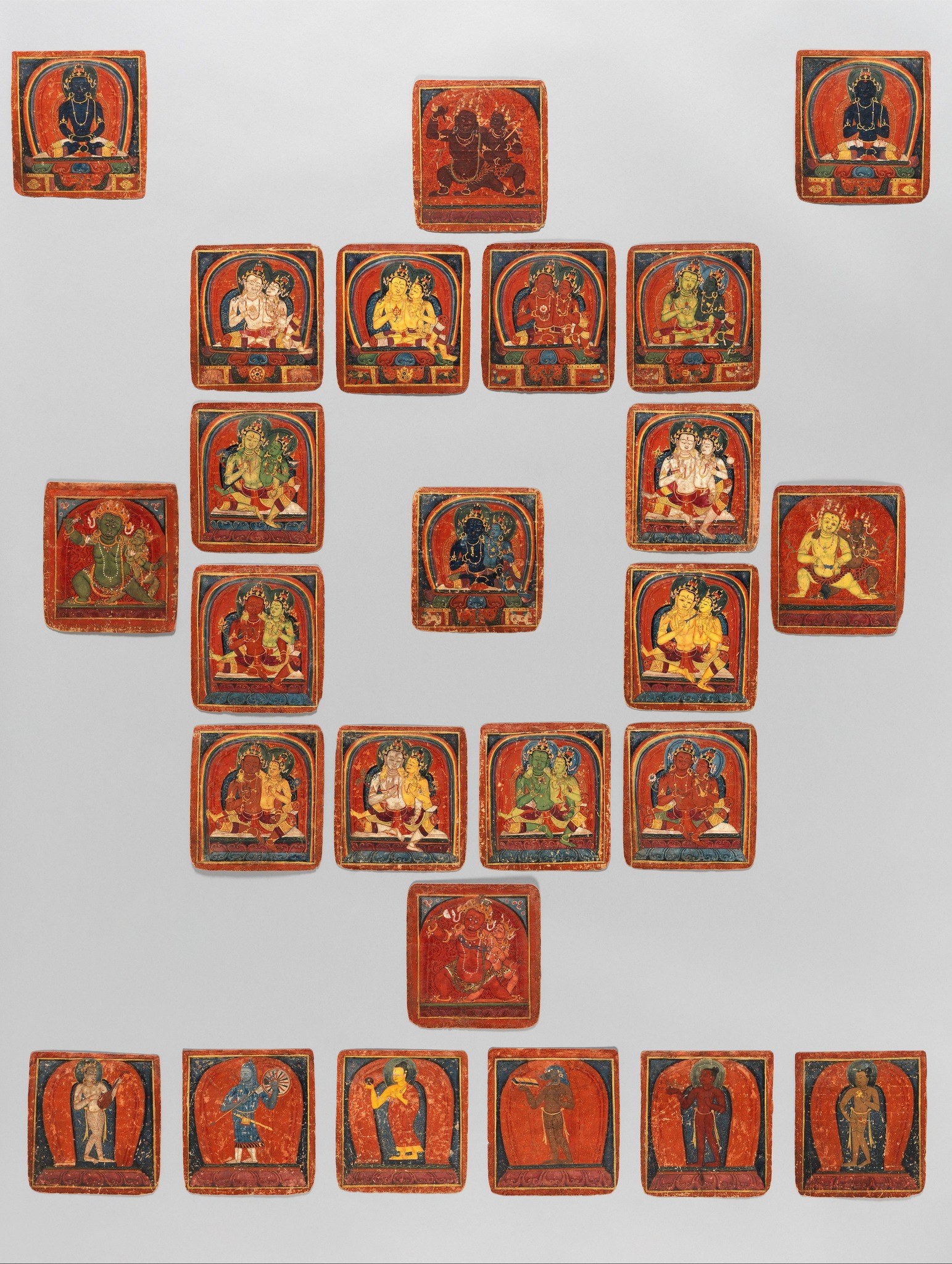
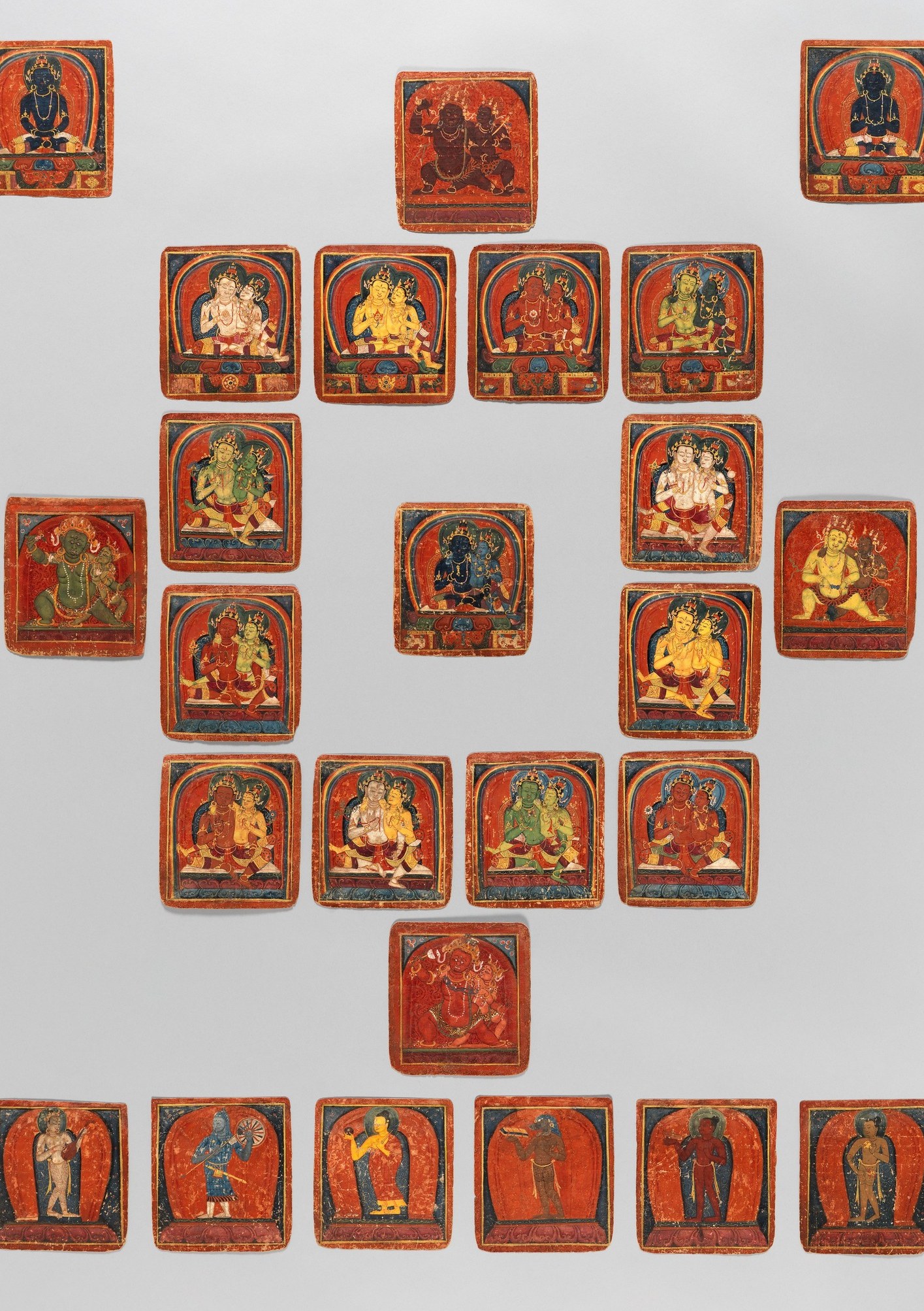
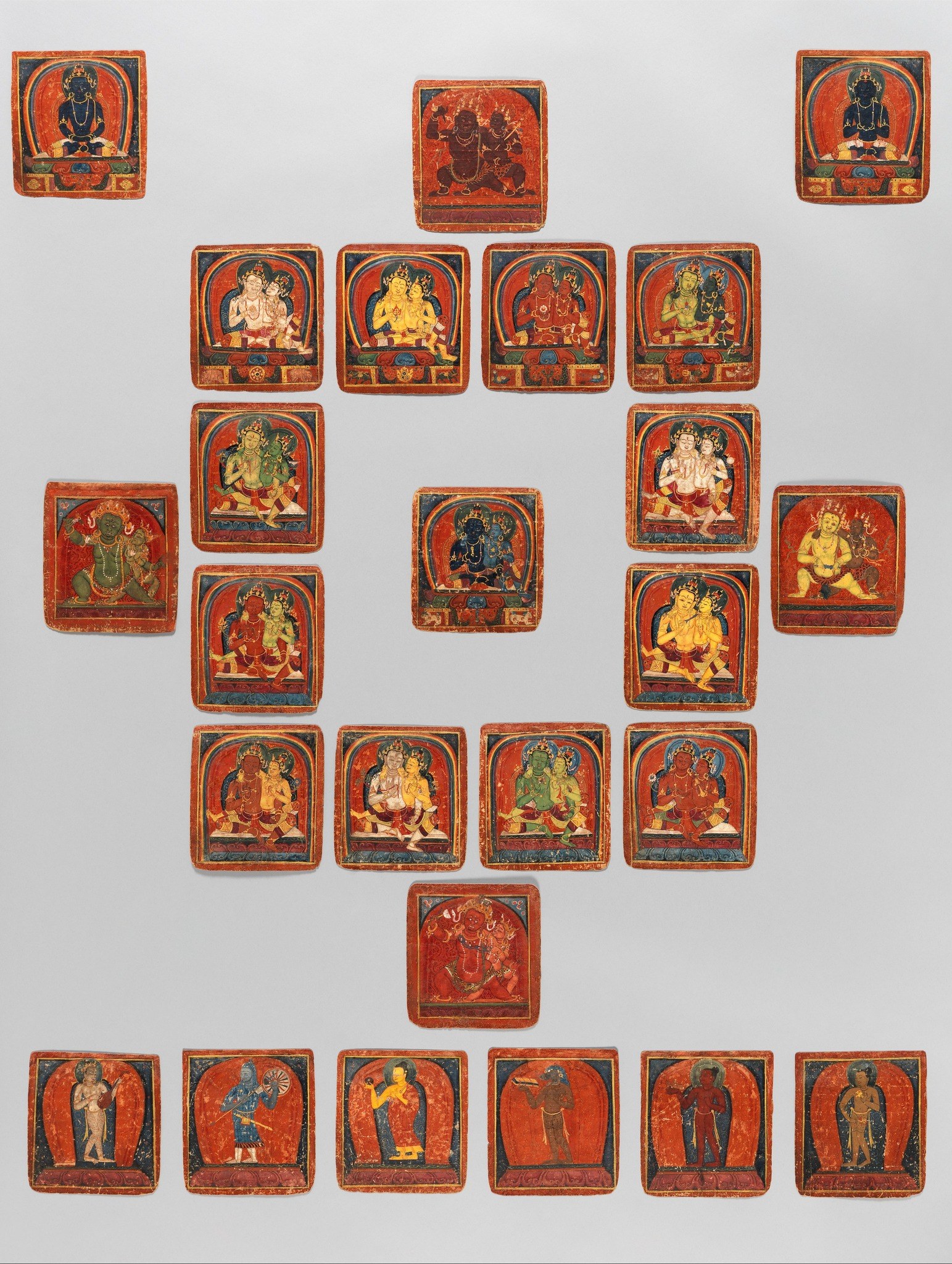
This is "Initiation Cards (Tsakalis)", a set of over twenty painted cards by an unknown Newari artist, dated to 1416. It is an actual ritual object from the Kathmandu Valley: a physical deck used by initiates to learn how to visualize a pantheon of tantric deities.
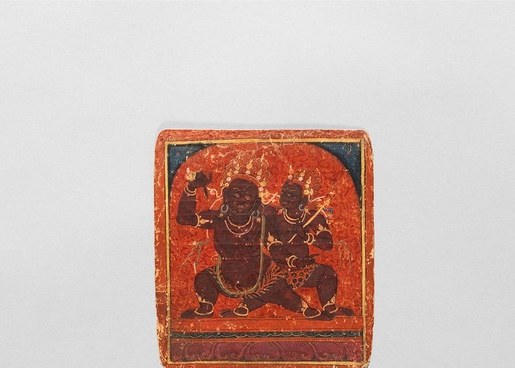
Look at the consistency. Every card has a black-and-gold border, every figure is set against a saturated red ground, and the deity skin is painted with a lustrous gold pigment. That gold is not decoration; in South Asian iconography it denotes divine radiance. The elephant-headed figure near the top center is immediately legible as Ganesha or a related tantric form, and a single isolated card at the very top marks what is likely the presiding or root deity of the sequence.
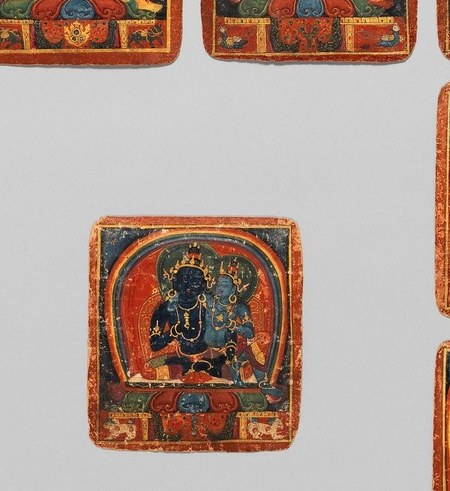
The deck is a teaching tool. Seated figures in meditation contrast with standing figures below, suggesting a progression. A tiny animal companion at one figure's feet identifies its affiliation, and a hand holding a drum encodes sound and cyclical time. A student would study each card, learning the attributes, postures, and colors that identify each deity by sight.
The wide unpainted paper margin is the quietest detail in the frame. It tells you these were loose painted cards laid onto a sheet that has survived for over six centuries. The sheet itself is the artifact. What feels like a mere painting is actually a window into how a fifteenth-century initiate learned to see the divine.
Details
Transcript
These look like painted playing cards. But the year is 1416, in the Kathmandu Valley. The consistent black-and-gold frames turn them into a ritual deck. Gold skin signals divine radiance, card after card. The elephant-headed deity anchors the whole set. A single isolated card at the top marks the presiding deity. The saturated red ground everywhere signals esoteric content. Initiates used these to learn a complete visual vocabulary of the sacred.