Facsimile of an Ojibbeway Robe by Catlin, George
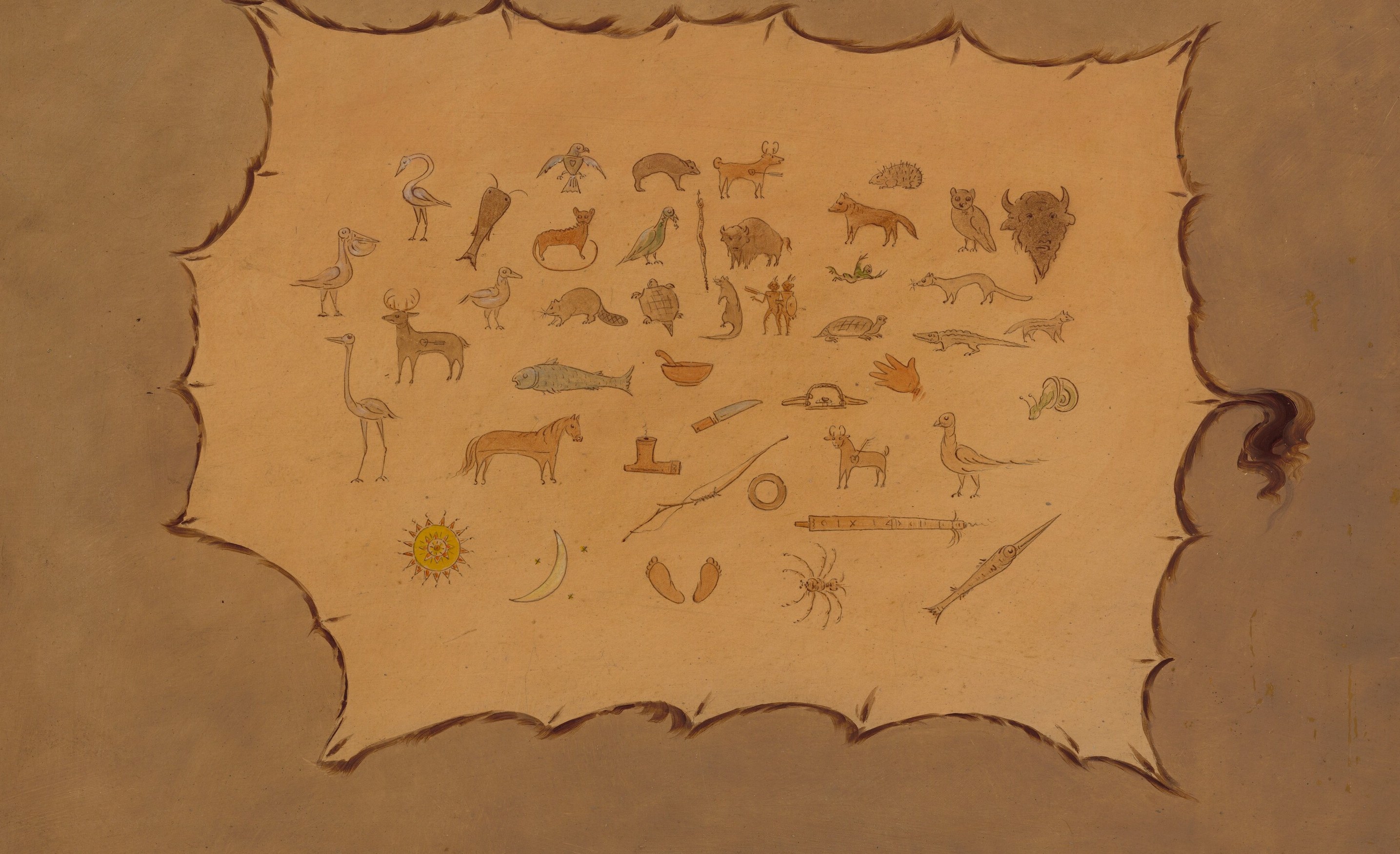
This striking oil painting, *Facsimile of an Ojibbeway Robe* by George Catlin, created between 1861 and 1869, offers a window into Ojibwe ceremonial attire and cosmology. It is part of the extensive collection at the Smithsonian American Art Museum.
Observe how the artist has rendered stylized animal figures like the buffalo and deer, alongside celestial symbols such as the sun and moon. These elements are not just decorative; they carry deep cultural narratives about hunting, seasonal cycles, and spiritual beliefs.
George Catlin, an American lawyer, painter, and traveler, became known for his detailed visual records of Native peoples. By the mid-1860s, he broadened his focus from portraits to include detailed studies of material culture, like this robe facsimile. This work reflects his commitment to preserving Indigenous visual traditions amidst rapid cultural change and growing Euro-American interest in ethnographic documentation.
What stories do you see woven into these symbols?
Details
Transcript
This painting records an Ojibwe ceremonial robe from 1865. Its wavy border mimics the original animal hide. The stylized buffalo represents strength and sustenance. The sun and moon symbols reflect Ojibwe cosmology. This artist, George Catlin, documented Native American cultures. He created it to preserve Indigenous visual traditions.